



How to ensure the anti - aging performance of epoxy pipes in production?
Nov 24, 2025
Leave a message
As a seasoned supplier in the epoxy pipe production industry, one of the most pressing questions I often encounter is how to ensure the anti-aging performance of epoxy pipes during production. Epoxy pipes are widely used in various industries, including water supply, sewage treatment, and oil and gas transportation, due to their excellent corrosion resistance, high strength, and long service life. However, over time, these pipes can be subject to aging, which can compromise their performance and durability. In this blog post, I will share some key strategies and best practices that we implement in our production process to ensure the anti-aging performance of epoxy pipes.
1. Material Selection
The first step in ensuring the anti-aging performance of epoxy pipes is to select high-quality raw materials. Epoxy resin is the primary material used in the production of epoxy pipes, and its quality directly affects the performance and durability of the final product. When selecting epoxy resin, we look for products that have excellent chemical resistance, high mechanical strength, and good adhesion properties. Additionally, we ensure that the epoxy resin has a low viscosity, which allows for easy processing and uniform distribution of the resin in the pipe wall.
In addition to epoxy resin, we also pay close attention to the selection of other raw materials, such as glass fiber, filler, and curing agent. Glass fiber is used to reinforce the epoxy resin and improve the mechanical strength of the pipe. We choose high-quality glass fiber with a high modulus of elasticity and good chemical resistance to ensure the long-term performance of the pipe. Filler is used to reduce the cost of the pipe and improve its dimensional stability. We select fillers that are compatible with the epoxy resin and have a low moisture absorption rate to prevent the formation of voids and cracks in the pipe wall. Curing agent is used to initiate the curing reaction of the epoxy resin and form a cross-linked network structure. We choose curing agents that have a long pot life and a fast curing speed to ensure the efficient production of the pipe.
2. Production Process Control
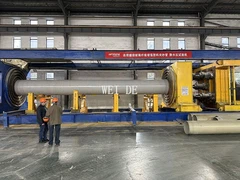
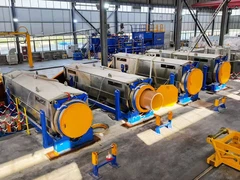
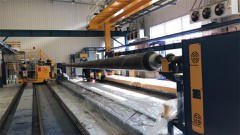
The production process of epoxy pipes is a complex and critical process that requires strict control to ensure the quality and performance of the final product. In our production process, we use advanced manufacturing equipment and technology to ensure the precision and consistency of the pipe production. For example, we use Epoxy Horizontal Winding Machine and Epoxy Pipe Winding Machine to wind the glass fiber and epoxy resin onto a mandrel to form the pipe wall. These machines are equipped with advanced control systems that can accurately control the winding speed, tension, and angle of the glass fiber to ensure the uniform distribution of the resin in the pipe wall and the high quality of the pipe.
In addition to using advanced manufacturing equipment, we also implement strict quality control measures throughout the production process. We conduct regular inspections and tests on the raw materials, semi-finished products, and finished products to ensure that they meet the relevant standards and specifications. For example, we test the mechanical properties, chemical resistance, and anti-aging performance of the epoxy pipes using advanced testing equipment and methods. We also conduct non-destructive testing on the pipes to detect any internal defects or flaws that may affect the performance and durability of the pipes.
3. Anti-Aging Additives
To further improve the anti-aging performance of epoxy pipes, we often add anti-aging additives to the epoxy resin during the production process. Anti-aging additives are chemicals that can prevent or slow down the aging process of the epoxy resin by inhibiting the oxidation, hydrolysis, and photodegradation reactions. There are several types of anti-aging additives that can be used in epoxy pipes, including antioxidants, UV stabilizers, and heat stabilizers.
Antioxidants are used to prevent the oxidation of the epoxy resin by reacting with the free radicals generated during the aging process. UV stabilizers are used to protect the epoxy resin from the harmful effects of ultraviolet radiation by absorbing or reflecting the UV light. Heat stabilizers are used to prevent the thermal degradation of the epoxy resin by reducing the rate of thermal oxidation and decomposition.
When selecting anti-aging additives, we consider several factors, such as the type of epoxy resin, the application environment of the pipe, and the cost of the additives. We choose additives that are compatible with the epoxy resin and have a high efficiency in preventing or slowing down the aging process. We also ensure that the additives do not have any negative effects on the mechanical properties, chemical resistance, and processing performance of the epoxy resin.
4. Surface Treatment
Surface treatment is another important factor that can affect the anti-aging performance of epoxy pipes. The surface of the epoxy pipe is often exposed to the environment, which can cause it to be subject to various forms of damage, such as abrasion, corrosion, and UV radiation. To protect the surface of the epoxy pipe and improve its anti-aging performance, we often apply a surface coating or treatment to the pipe.
There are several types of surface coatings and treatments that can be used on epoxy pipes, including epoxy coatings, polyurethane coatings, and ceramic coatings. Epoxy coatings are widely used on epoxy pipes due to their excellent adhesion, chemical resistance, and anti-corrosion properties. Polyurethane coatings are used to improve the abrasion resistance and weatherability of the epoxy pipe. Ceramic coatings are used to provide a hard and smooth surface that can resist abrasion, corrosion, and high temperatures.


In addition to applying a surface coating, we also implement other surface treatment methods, such as sandblasting, priming, and painting. Sandblasting is used to clean the surface of the epoxy pipe and create a rough surface that can improve the adhesion of the surface coating. Priming is used to apply a thin layer of primer to the surface of the epoxy pipe to improve the adhesion of the surface coating and prevent the corrosion of the pipe. Painting is used to apply a final layer of paint to the surface of the epoxy pipe to provide a decorative and protective finish.
5. Storage and Transportation
Proper storage and transportation are also important factors that can affect the anti-aging performance of epoxy pipes. Epoxy pipes should be stored in a dry, cool, and well-ventilated place to prevent them from being exposed to moisture, heat, and UV radiation. They should also be stored away from sources of fire and chemicals to prevent them from being damaged or contaminated.
During transportation, epoxy pipes should be protected from damage and vibration. They should be packed in a suitable packaging material, such as wooden crates or plastic bags, to prevent them from being scratched or dented. They should also be transported in a vehicle that is equipped with shock-absorbing devices to prevent them from being damaged by vibration.
Conclusion
Ensuring the anti-aging performance of epoxy pipes in production is a complex and challenging task that requires a comprehensive approach. By selecting high-quality raw materials, implementing strict production process control, adding anti-aging additives, applying surface treatment, and ensuring proper storage and transportation, we can significantly improve the anti-aging performance of epoxy pipes and extend their service life.
If you are interested in purchasing high-quality epoxy pipes with excellent anti-aging performance, please feel free to contact us for more information. We are committed to providing our customers with the best products and services, and we look forward to working with you.
References
- ASTM D2996 - Standard Test Method for Filament - Wound "Fiberglass" (Glass - Fiber - Reinforced Thermosetting - Resin) Pipe.
- ISO 14692 - Petroleum and natural gas industries - Glass - reinforced plastics (GRP) piping - Part 1: Vocabulary, symbols, applications and materials.
- ASME RTP - 1 - Reinforced Thermoset Plastic Corrosion - Resistant Equipment.
Send Inquiry