



How to improve the elasticity of epoxy pipes in production?
Dec 01, 2025
Leave a message
As a supplier in the epoxy pipe production industry, I've often been asked about how to boost the elasticity of epoxy pipes during production. Elasticity is a crucial factor as it determines how well the pipes can withstand stress, pressure changes, and environmental impacts without cracking or breaking. In this blog, I'll share some practical tips and insights based on my years of experience in the field.
1. Material Selection
The first step in improving the elasticity of epoxy pipes is choosing the right materials. Epoxy resin is the base material, and its quality and properties play a significant role. Look for epoxy resins with high flexibility and elongation at break. These resins can stretch more before they break, which directly contributes to the pipe's elasticity.
Another important material is the reinforcement fibers. Glass fibers are commonly used in epoxy pipe production because they are strong and relatively inexpensive. However, different types of glass fibers have different properties. For example, E-glass fibers are known for their good electrical insulation and mechanical properties, while S-glass fibers are stronger and more flexible. Consider using S-glass fibers or a combination of different types to enhance the pipe's elasticity.
You can also add elastomers to the epoxy resin. Elastomers are rubber-like polymers that can increase the flexibility and toughness of the epoxy. They work by absorbing energy when the pipe is under stress, preventing cracks from forming and spreading. There are various types of elastomers available, such as nitrile rubber, silicone rubber, and polyurethane. Choose an elastomer that is compatible with the epoxy resin and the intended application of the pipe.
2. Manufacturing Process Optimization
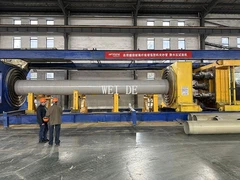
The manufacturing process has a huge impact on the elasticity of epoxy pipes. One of the key processes is filament winding. This is where the reinforcement fibers are wound around a mandrel in a specific pattern using a Epoxy Filament Winding Machine. The winding pattern and tension can affect the pipe's mechanical properties, including its elasticity.
For better elasticity, use a helical winding pattern with a relatively low winding angle. A helical pattern distributes the stress more evenly along the pipe, reducing the likelihood of stress concentration. A low winding angle allows the fibers to stretch more easily when the pipe is under pressure, increasing its flexibility.
The curing process is also critical. Curing is the process of hardening the epoxy resin by applying heat or a chemical catalyst. The curing temperature and time should be carefully controlled to ensure that the epoxy resin cures properly. Over-curing can make the pipe brittle, while under-curing can result in a weak and less elastic pipe. Follow the manufacturer's recommendations for the curing process and monitor the temperature and time closely.
3. Design Considerations
The design of the epoxy pipe can also influence its elasticity. The wall thickness of the pipe is an important factor. A thicker wall can provide more strength, but it may also reduce the pipe's flexibility. On the other hand, a thinner wall can increase the elasticity, but it may not be able to withstand high pressures. Find the right balance between wall thickness and elasticity based on the intended application of the pipe.
Another design consideration is the diameter of the pipe. Larger diameter pipes tend to be more flexible than smaller diameter pipes because they have a larger surface area to distribute the stress. However, larger diameter pipes may also require more material and be more difficult to manufacture. Consider the trade-offs between diameter, elasticity, and cost when designing the pipe.
You can also add features to the pipe design to enhance its elasticity. For example, you can incorporate corrugations or ribs into the pipe wall. These features can increase the pipe's flexibility by allowing it to bend more easily without cracking. They can also improve the pipe's resistance to external forces, such as impact and vibration.
4. Quality Control
Quality control is essential to ensure that the epoxy pipes have the desired elasticity. During the production process, conduct regular inspections and tests to monitor the quality of the materials, the manufacturing process, and the final product.
For material inspection, check the quality of the epoxy resin, reinforcement fibers, and elastomers before using them. Make sure they meet the required specifications and are free from defects. You can perform tests such as viscosity measurement, tensile strength testing, and chemical analysis to verify the quality of the materials.
During the manufacturing process, monitor the winding pattern, tension, curing temperature, and time. Use sensors and monitoring systems to ensure that these parameters are within the specified range. Conduct in-process inspections to check for any defects or deviations from the design.
After the pipes are manufactured, perform final tests to evaluate their elasticity. You can use methods such as tensile testing, flexural testing, and impact testing to measure the pipe's mechanical properties. Compare the test results with the design requirements to ensure that the pipes meet the desired quality standards.
5. Equipment Upgrades
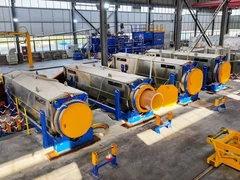
Investing in advanced equipment can also help improve the elasticity of epoxy pipes. For example, a High-pressure Petroleum Pipeline Production Line can provide more precise control over the manufacturing process, resulting in pipes with better mechanical properties. These production lines often have features such as automated winding systems, temperature control systems, and quality monitoring sensors, which can help ensure consistent quality and improved elasticity.


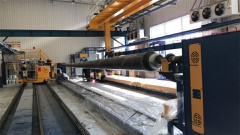
An Epoxy Horizontal Winding Machine is another important piece of equipment. It allows for more efficient and accurate filament winding, which can enhance the pipe's elasticity. These machines can be programmed to wind the fibers in a specific pattern and tension, ensuring that the pipes have the desired mechanical properties.
In conclusion, improving the elasticity of epoxy pipes in production requires a comprehensive approach that includes material selection, manufacturing process optimization, design considerations, quality control, and equipment upgrades. By following these tips and best practices, you can produce epoxy pipes with better elasticity, which can increase their performance, durability, and reliability.
If you're interested in purchasing high-quality epoxy pipes or learning more about our production capabilities, feel free to reach out to us for a procurement discussion. We're always happy to help and look forward to working with you.
References
- "Epoxy Resins: Chemistry and Technology" by Clayton A. May.
- "Fiber Reinforced Composites: Materials, Manufacturing, and Design" by Daniel R. Askeland and Pradeep P. Phule.
- "Handbook of Composite Materials" edited by Suresh K. Varma, Igor M. Daniel, and William W. Grimes.
Send Inquiry