



What are the inspection methods for epoxy pipes after production?
Jan 07, 2026
Leave a message
As a dedicated supplier of epoxy pipes, I understand the critical importance of thorough inspection methods after production. Ensuring the quality and integrity of our epoxy pipes is not only a matter of meeting industry standards but also a commitment to our customers' satisfaction and safety. In this blog post, I'll delve into the various inspection methods we employ to guarantee that our epoxy pipes meet the highest quality benchmarks.
Visual Inspection
The first line of defense in our inspection process is visual inspection. This is a simple yet effective method that allows us to quickly identify any obvious defects on the surface of the epoxy pipes. Our trained inspectors carefully examine each pipe, looking for signs of cracks, chips, uneven surfaces, or any other visible irregularities.
Visual inspection provides an immediate assessment of the pipe's overall appearance. It can reveal issues such as improper curing of the epoxy resin, which may manifest as discoloration or rough patches on the surface. Any pipes that fail the visual inspection are immediately removed from the production line to prevent further processing.
Dimensional Inspection
Accurate dimensions are crucial for the proper installation and performance of epoxy pipes. We use precision measurement tools such as calipers, micrometers, and laser measuring devices to ensure that each pipe meets the specified diameter, wall thickness, and length requirements.
Dimensional variations can affect the pipe's structural integrity and its compatibility with other components in a piping system. For example, if the diameter of a pipe is too large or too small, it may not fit properly with connectors or fittings, leading to potential leaks or pressure issues. By regularly checking the dimensions of our epoxy pipes, we can ensure a high level of precision and consistency in our products.
Pressure Testing
Pressure testing is one of the most important inspection methods for epoxy pipes, especially for applications where the pipes will be subjected to high internal pressures. This test involves filling the pipe with a liquid (usually water) and applying a specified pressure for a set period of time.
During the pressure test, we closely monitor the pipe for any signs of leakage or deformation. If a pipe fails the pressure test, it indicates a potential weakness in the pipe's structure, which could lead to catastrophic failure in real - world applications. We use state - of - the - art pressure testing equipment to ensure accurate and reliable results. This method helps us to verify that our epoxy pipes can withstand the pressures they will encounter in their intended use, whether it's in a water supply system or an industrial process.
Chemical Analysis
Epoxy pipes are made from a combination of epoxy resin and other additives. Chemical analysis is used to ensure that the composition of the epoxy resin and the additives meets the required specifications. We use techniques such as Fourier - transform infrared spectroscopy (FTIR) and gas chromatography - mass spectrometry (GC - MS) to analyze the chemical components of the epoxy pipes.
Chemical analysis helps us to detect any impurities or deviations in the resin formulation. For example, if the epoxy resin contains too much of a certain additive, it may affect the pipe's mechanical properties, such as its strength and flexibility. By ensuring the correct chemical composition, we can guarantee that our epoxy pipes have consistent performance characteristics.
Ultrasonic Testing
Ultrasonic testing is a non - destructive testing method that uses high - frequency sound waves to detect internal flaws in the epoxy pipes. This technique is particularly useful for identifying defects such as voids, delaminations, or inclusions that may not be visible on the surface.
During ultrasonic testing, a transducer sends ultrasonic waves into the pipe, and the waves are reflected back when they encounter a defect. By analyzing the reflected waves, our technicians can determine the location and size of the internal flaws. This method allows us to assess the internal quality of the pipes without causing any damage, ensuring that only pipes with high internal integrity are released for sale.
Hardness Testing
The hardness of an epoxy pipe is an important property that can affect its abrasion resistance and long - term durability. We use hardness testing methods such as the Rockwell or Shore hardness tests to measure the hardness of the epoxy pipes.
A pipe with the appropriate hardness will be better able to withstand the mechanical stresses and abrasion it may encounter during installation and use. For example, in a mining application where the pipes may be exposed to abrasive materials, a harder pipe will have a longer service life. By regularly testing the hardness of our pipes, we can ensure that they meet the performance requirements of different applications.
Impact Testing
Impact testing is used to evaluate the ability of epoxy pipes to withstand sudden impacts. This is especially important for pipes that may be exposed to physical shocks during transportation, installation, or operation.
We typically use the Charpy or Izod impact test methods to measure the impact resistance of our pipes. In these tests, a specimen of the pipe is struck with a pendulum, and the energy absorbed by the specimen during the impact is measured. A higher impact resistance indicates that the pipe is less likely to crack or break under sudden loads, providing greater reliability in the field.
Adhesion Testing
In epoxy pipes, the adhesion between the epoxy resin and any reinforcement materials (such as fibers) is crucial for the pipe's structural integrity. Adhesion testing is performed to ensure that the epoxy resin adheres firmly to the reinforcement materials.
We use various methods such as pull - off tests or shear tests to measure the adhesion strength. Poor adhesion can lead to delamination, which can significantly reduce the pipe's mechanical properties. By ensuring strong adhesion, we can enhance the overall performance and durability of our epoxy pipes.
Use of Advanced Equipment in Production
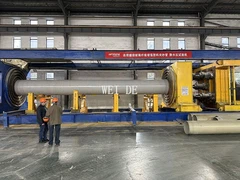
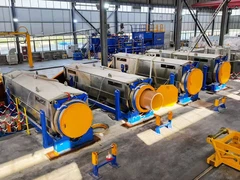
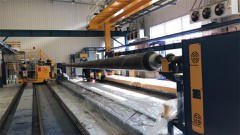
To produce high - quality epoxy pipes, we also rely on advanced production equipment such as the Epoxy Filament Winding Machine, Epoxy Pipe Winding Machine, and High - pressure Petroleum Pipeline Production Line. These machines help us to create pipes with consistent quality and precise dimensions.


Combined with our comprehensive inspection methods, the use of advanced equipment ensures that our products are of the highest standard. Whether you are in the water treatment industry, oil and gas sector, or any other field that requires reliable piping solutions, our epoxy pipes are designed to meet your needs.
Conclusion
At our company, we are committed to providing the best - quality epoxy pipes to our customers. Through a combination of these comprehensive inspection methods, we can ensure that every pipe that leaves our production line meets or exceeds the industry standards.
We understand that the reliability of your piping system depends on the quality of the pipes you use. That's why we spare no effort in our quality control process. Whether it's a small - scale project or a large - scale industrial application, you can trust our epoxy pipes to deliver outstanding performance.
If you are in the market for high - quality epoxy pipes, we invite you to contact us for a procurement discussion. Our team of experts is ready to assist you in selecting the right pipes for your specific needs and to provide you with all the information you require.
References
- ASTM International. (Year). Standard Test Methods for Epoxy Pipe Products.
- ASME. (Year). Boiler and Pressure Vessel Code, Section for Fiberglass - Reinforced Epoxy Pipe Applications.
- ISO. (Year). International Standards for Epoxy Pipe Manufacturing and Testing.
Send Inquiry