



What are the limitations of using an Epoxy Pipe Winding Machine for other composite materials?
Nov 07, 2025
Leave a message
Hey there! I'm a supplier of Epoxy Pipe Winding Machines, and I've been in this industry for quite a while. Today, I want to chat about the limitations of using an Epoxy Pipe Winding Machine for other composite materials.
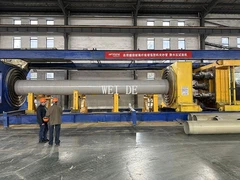
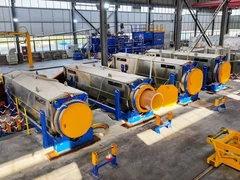
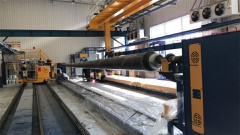
First off, let's understand what an Epoxy Pipe Winding Machine is. It's a specialized piece of equipment designed mainly for manufacturing epoxy pipes. You can check out more details about it on our Epoxy Pipe Winding Machine page. These machines work by winding epoxy - impregnated fibers around a rotating mandrel to create strong and durable pipes. They're really good at what they're made for, but when it comes to using them for other composite materials, there are some bumps in the road.
1. Material Compatibility
One of the biggest limitations is material compatibility. Epoxy Pipe Winding Machines are optimized for epoxy resins. Epoxy has unique properties like good adhesion, low shrinkage during curing, and high chemical resistance. When you try to use other composite materials, such as polyester resins or phenolic resins, the machine might not work as smoothly.
For example, polyester resins have a different viscosity compared to epoxy. The resin delivery system of an Epoxy Pipe Winding Machine is calibrated for the viscosity of epoxy. If you use polyester, it might flow too fast or too slow through the system. This can lead to uneven resin distribution on the fibers, which in turn affects the quality of the final composite product. You can learn more about composite resin systems on various industry blogs and research papers.
Phenolic resins also have their own quirks. They require different curing conditions than epoxy. Epoxy Pipe Winding Machines are set up for the curing process of epoxy, which usually involves a relatively low - to - moderate temperature range. Phenolic resins often need higher temperatures and longer curing times. Using the machine for phenolic - based composites without proper adjustments can result in incomplete curing, weakening the final product.
2. Fiber Handling
Another limitation is related to fiber handling. Epoxy Pipe Winding Machines are designed to work with specific types of fibers commonly used in epoxy pipe production, like glass fibers. These machines have tension control systems that are calibrated for the properties of glass fibers.
When you switch to other fibers, such as carbon fibers or aramid fibers, things get tricky. Carbon fibers are much stiffer and more brittle than glass fibers. The tension control system of the Epoxy Pipe Winding Machine might not be able to handle the different mechanical properties of carbon fibers properly. If the tension is too high, the carbon fibers can break during the winding process. On the other hand, if the tension is too low, the fibers won't be tightly wound, leading to a weaker composite structure.
Aramid fibers, known for their high strength and flexibility, also pose challenges. They have a different surface texture compared to glass fibers. The guides and rollers in the Epoxy Pipe Winding Machine that are designed for glass fibers might not guide aramid fibers smoothly. This can cause fiber bunching or misalignment, which is a big no - no when it comes to producing high - quality composites.
3. Winding Pattern and Geometry Limitations
Epoxy Pipe Winding Machines are typically configured to create pipes with specific winding patterns and geometries. These patterns are optimized for the performance requirements of epoxy pipes, such as hoop strength and axial strength.
When using other composite materials, the ideal winding patterns might be different. For instance, if you're making a composite structure for a marine application, like a Marine Fiberglass Pipeline Production Line component, the winding pattern needs to be adjusted to withstand the unique stresses in a marine environment, such as wave forces and corrosion. The standard winding patterns of an Epoxy Pipe Winding Machine might not be suitable for these specific requirements.
Moreover, the machine is designed to produce cylindrical pipes. If you want to use it to make non - cylindrical composite shapes, like cones or complex curved structures, it will face limitations. The mandrel rotation and fiber feeding mechanisms are set up for cylindrical geometries. Trying to produce non - standard shapes can result in uneven fiber distribution and poor structural integrity.
4. Curing and Post - Processing
As mentioned earlier, the curing process is a critical aspect. Epoxy Pipe Winding Machines are equipped with curing systems that are tailored to epoxy resins. Different composite materials have different curing chemistries.
For example, some thermoplastic composite materials require a melting and solidification process rather than a chemical curing reaction like epoxy. The curing ovens or heating elements in an Epoxy Pipe Winding Machine are not designed for this type of thermoplastic processing. Using the machine for thermoplastic composites without proper modifications can lead to improper melting or solidification, resulting in a defective product.
Post - processing is also affected. Epoxy pipes often go through processes like sanding and coating to improve their surface finish and durability. Other composite materials might require different post - processing steps. For instance, some composites need special surface treatments to enhance their adhesion to other components. The post - processing equipment and procedures associated with an Epoxy Pipe Winding Machine might not be applicable to these other materials.
5. Cost - Effectiveness
Using an Epoxy Pipe Winding Machine for other composite materials can also be a cost - ineffective option. Modifying the machine to work with different materials can be expensive. You might need to replace parts of the resin delivery system, adjust the tension control mechanisms, and upgrade the curing equipment.
In addition, the learning curve for operators is steep. They need to be trained on the new material properties, processing parameters, and potential troubleshooting techniques. This training takes time and resources. If the production volume of the non - epoxy composite products is low, the cost of these modifications and training might not be justified.
Conclusion
In conclusion, while Epoxy Pipe Winding Machines are great for producing epoxy pipes, they have significant limitations when it comes to using them for other composite materials. Material compatibility, fiber handling, winding pattern and geometry limitations, curing and post - processing issues, and cost - effectiveness are all factors that need to be considered.
However, if you're still interested in exploring the possibilities of using our machines for other composite applications, don't hesitate to reach out. We're always open to discussions and might be able to find solutions or alternative approaches. You can also check out our Epoxy Filament Winding Machine page for more information on our related products.


If you have any questions or want to start a procurement discussion, feel free to get in touch. We're here to help you make the best decisions for your composite manufacturing needs.
References
- "Handbook of Composites Manufacturing" by S.T. Peters
- "Composite Materials: Design and Applications" by David A. Dillard
Send Inquiry