



What are the production requirements for epoxy pipes used in agricultural irrigation?
Dec 11, 2025
Leave a message
Epoxy pipes have become a popular choice for agricultural irrigation due to their durability, corrosion resistance, and cost - effectiveness. As an epoxy pipe production supplier, I understand the importance of meeting the specific production requirements to ensure the high - quality of these pipes for agricultural use. In this blog, I will delve into the key production requirements for epoxy pipes used in agricultural irrigation.
Material Selection
The first and most crucial step in producing epoxy pipes for agricultural irrigation is the selection of appropriate materials. Epoxy resin is the main component, and it should possess excellent chemical resistance to withstand the various chemicals present in agricultural water, such as fertilizers and pesticides. High - grade epoxy resins with good adhesion properties are preferred as they can effectively bond with other reinforcement materials.
Fiberglass is commonly used as a reinforcement material in epoxy pipes. It provides strength and stiffness to the pipes. The fiberglass should have a high tensile strength and be resistant to moisture. Different types of fiberglass, such as E - glass and S - glass, can be considered. E - glass is more commonly used due to its relatively low cost and good overall performance, while S - glass offers higher strength and is suitable for applications where higher mechanical properties are required.
Production Equipment
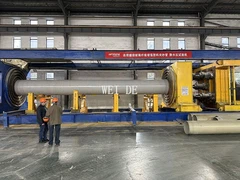
The production of epoxy pipes relies heavily on advanced equipment. One of the essential machines is the Epoxy Horizontal Winding Machine. This machine is used to wind the fiberglass rovings impregnated with epoxy resin around a mandrel in a controlled and precise manner. The winding pattern and tension can be adjusted according to the specific requirements of the pipe, such as its diameter, wall thickness, and pressure rating.
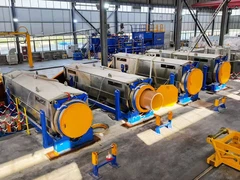
The Marine Fiberglass Pipeline Production Line is also a valuable asset in the production process. It integrates various production steps, including resin mixing, fiber impregnation, winding, and curing. This production line ensures high - efficiency and consistent quality of the epoxy pipes.
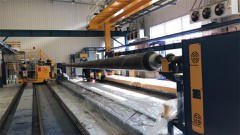
Another important piece of equipment is the Epoxy Pipe Winding Machine. It is designed specifically for the production of epoxy pipes, allowing for accurate control of the pipe's dimensions and properties. The machine can be programmed to produce pipes of different sizes and specifications, meeting the diverse needs of agricultural irrigation projects.
Manufacturing Process
The manufacturing process of epoxy pipes for agricultural irrigation involves several key steps.
Resin Preparation
The epoxy resin needs to be properly prepared before use. This includes mixing the resin with a hardener in the correct ratio. The mixing process should be carried out under controlled conditions, such as temperature and humidity, to ensure a homogeneous mixture. Any impurities or improper mixing can affect the curing process and the final properties of the pipe.
Fiber Impregnation
The fiberglass rovings are then impregnated with the prepared epoxy resin. This can be achieved through various methods, such as dip - coating or using a resin bath. The impregnation process should ensure that the fibers are fully coated with the resin, as this is crucial for the bonding between the fibers and the resin matrix.
Winding
The impregnated fiberglass rovings are wound around a mandrel using the winding machine. The winding speed, pattern, and tension are carefully controlled to achieve the desired wall thickness and mechanical properties of the pipe. Different winding patterns, such as helical and circumferential winding, can be used to enhance the pipe's strength and pressure resistance.
Curing
After winding, the pipe is cured to harden the epoxy resin. Curing can be carried out at room temperature or under elevated temperatures, depending on the type of resin and hardener used. The curing time and temperature need to be precisely controlled to ensure complete curing and optimal performance of the pipe.


Demolding
Once the pipe is fully cured, it is removed from the mandrel. The demolding process should be carried out carefully to avoid any damage to the pipe. After demolding, the pipe may undergo some post - processing steps, such as trimming and surface finishing, to meet the required specifications.
Quality Control
Quality control is an integral part of the production process for epoxy pipes used in agricultural irrigation.
Dimensional Inspection
The pipes should be inspected for their dimensions, including diameter, wall thickness, and length. Any deviations from the specified dimensions can affect the pipe's performance and installation. Precise measuring tools, such as calipers and micrometers, are used for dimensional inspection.
Mechanical Testing
Mechanical testing is carried out to evaluate the pipe's strength and durability. This includes tests such as tensile strength, flexural strength, and pressure resistance testing. The pipes should meet the relevant industry standards and specifications for agricultural irrigation applications.
Chemical Resistance Testing
Since the pipes are exposed to various chemicals in agricultural water, chemical resistance testing is essential. The pipes are tested for their resistance to fertilizers, pesticides, and other chemicals commonly used in agriculture. This ensures that the pipes can withstand the harsh chemical environment without degradation.
Performance Requirements
Epoxy pipes for agricultural irrigation need to meet certain performance requirements.
Pressure Resistance
The pipes should be able to withstand the pressure of the water in the irrigation system. The pressure rating of the pipe depends on the specific application, such as the height of the water source and the length of the pipeline. Pipes with higher pressure ratings are required for systems with greater pressure requirements.
Corrosion Resistance
As mentioned earlier, the pipes are exposed to chemicals and moisture in agricultural water. They should have excellent corrosion resistance to prevent rusting and degradation over time. This ensures a long service life of the pipes and reduces the need for frequent replacements.
Flexibility
Some agricultural irrigation systems may require pipes to be flexible to accommodate changes in terrain. Epoxy pipes can be designed to have a certain degree of flexibility while still maintaining their strength and durability. This allows for easier installation and adaptation to different field conditions.
Environmental Considerations
In addition to the above requirements, environmental considerations are also important in the production of epoxy pipes for agricultural irrigation.
Recyclability
The pipes should be designed to be recyclable at the end of their service life. This helps to reduce waste and environmental impact. Some epoxy resins and fiberglass materials can be recycled, and the production process should be optimized to facilitate recycling.
Low - Emission Production
The production process should aim to minimize emissions of harmful substances. This includes reducing the release of volatile organic compounds (VOCs) during the resin mixing and curing processes. Using low - VOC epoxy resins and proper ventilation systems can help to achieve this goal.
Conclusion
Producing high - quality epoxy pipes for agricultural irrigation requires careful consideration of material selection, production equipment, manufacturing process, quality control, performance requirements, and environmental factors. As an epoxy pipe production supplier, we are committed to meeting these requirements to provide reliable and durable pipes for agricultural irrigation projects.
If you are in need of epoxy pipes for your agricultural irrigation project, we would be delighted to discuss your specific requirements. Our team of experts can provide you with detailed information and customized solutions. Contact us to start a procurement negotiation and take advantage of our high - quality epoxy pipes.
References
- ASTM International. (20XX). Standard specifications for fiberglass pipes used in various applications.
- ISO Standards. (20XX). International standards for pipe manufacturing and performance evaluation.
- Agricultural Irrigation Handbook. (20XX). A comprehensive guide on irrigation systems and components.
Send Inquiry