



What are the quality control points in the production process of a marine fiberglass pipeline production line?
Nov 07, 2025
Leave a message
In the realm of marine engineering, fiberglass pipelines have emerged as a cornerstone due to their exceptional properties such as corrosion resistance, high strength - to - weight ratio, and long service life. As a leading supplier of Marine Fiberglass Pipeline Production Lines, I understand the critical importance of quality control throughout the production process. This blog will delve into the key quality control points in the production of marine fiberglass pipelines.
Raw Material Inspection
The quality of marine fiberglass pipelines starts with the raw materials. Fiberglass, resin, and additives are the primary components. Fiberglass rovings should be inspected for their physical properties, including diameter, tensile strength, and chemical composition. Deviations in these properties can lead to variations in the final product's strength and durability.
Resins, which act as the matrix binding the fiberglass together, need to be carefully evaluated. Their viscosity, gel time, and curing characteristics are crucial. For instance, if the viscosity is too high, it may lead to poor impregnation of the fiberglass, resulting in voids and weak spots in the pipeline. Additives, such as UV stabilizers and flame retardants, also play a significant role. Their proper dosage and dispersion are essential to ensure the pipeline can withstand the harsh marine environment.
Equipment Calibration
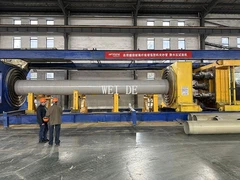
The machinery used in the production line is another critical aspect of quality control. For example, the Epoxy Pipe Winding Machine is a key piece of equipment. It needs to be calibrated regularly to ensure accurate winding angles, tension control, and layer thickness. Incorrect winding angles can compromise the structural integrity of the pipeline, while improper tension can lead to uneven distribution of the fiberglass, causing weak areas.


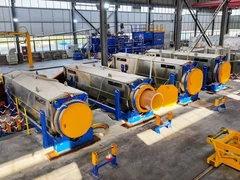
The High - pressure Petroleum Pipeline Production Line also requires precise calibration. The extrusion and molding equipment must be set to the correct parameters to produce pipelines with consistent wall thickness and diameter. Any deviation in these dimensions can affect the pipeline's performance, especially in high - pressure applications.
Winding Process Control
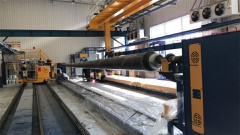
The winding process is at the heart of fiberglass pipeline production. During winding, the tension of the fiberglass rovings must be maintained at an optimal level. Too much tension can break the fibers, while too little can result in loose winding and poor compaction. The winding speed also needs to be carefully controlled. A consistent speed ensures uniform distribution of the fiberglass layers and proper impregnation with the resin.
In addition, the number of winding layers and their orientation are crucial. Different applications may require different layer configurations to achieve the desired strength and stiffness. For marine pipelines, which are often subjected to complex loads, a well - designed winding pattern can significantly enhance the pipeline's performance.
Resin Impregnation
Proper resin impregnation is essential for the quality of the fiberglass pipeline. The resin should completely coat the fiberglass rovings to form a strong bond. Inadequate impregnation can lead to dry spots, which are weak points in the pipeline. To ensure good impregnation, the resin temperature, viscosity, and the impregnation time need to be carefully controlled.
The Epoxy Filament Winding Machine is designed to optimize the resin impregnation process. It can precisely control the amount of resin applied to the fiberglass, ensuring a uniform and complete coating.
Curing Process
The curing process is where the resin hardens and the pipeline gains its final strength. Temperature and time are the two main factors in the curing process. If the temperature is too low, the resin may not cure completely, resulting in a soft and weak pipeline. On the other hand, if the temperature is too high, it can cause thermal stress and cracking in the pipeline.
The curing time also needs to be carefully determined based on the type of resin used. Some resins may require a long - term curing process at a relatively low temperature, while others can cure quickly at a higher temperature. Monitoring the curing process using sensors and following the manufacturer's recommendations is crucial for ensuring the quality of the pipeline.
Post - Production Inspection
After the pipeline is produced, a series of post - production inspections are necessary. Visual inspection is the first step. Any surface defects, such as cracks, bubbles, or unevenness, should be identified and addressed. Non - destructive testing methods, such as ultrasonic testing and X - ray inspection, can be used to detect internal defects, such as delamination or voids.
Dimensional inspection is also important. The pipeline's diameter, wall thickness, and length should be measured to ensure they meet the design specifications. Pressure testing is another critical step. The pipeline should be tested under the expected operating pressure to verify its integrity and performance.
Quality Management System
Establishing a comprehensive quality management system is essential for maintaining consistent quality in the production of marine fiberglass pipelines. This system should include procedures for raw material inspection, equipment maintenance, process control, and post - production inspection. Regular audits and continuous improvement initiatives are also necessary to ensure the system remains effective.
In conclusion, quality control in the production of marine fiberglass pipelines is a multi - step process that involves every aspect of the production line. From raw material selection to post - production inspection, each step plays a crucial role in ensuring the final product meets the high standards required for marine applications.
If you are interested in our Marine Fiberglass Pipeline Production Lines or have any questions about quality control in the production process, please feel free to contact us for further discussion and potential procurement negotiations. We are committed to providing you with high - quality production solutions and excellent customer service.
References
- ASTM International. (Year). Standard specifications for fiberglass pipelines in marine applications.
- Composites Industry Handbook. (Year). Best practices for fiberglass pipeline production.
- Manufacturer's manuals for Epoxy Pipe Winding Machine, High - pressure Petroleum Pipeline Production Line, and Epoxy Filament Winding Machine.
Send Inquiry