



What are the spacing requirements between Horizongtal winding turns?
Dec 09, 2025
Leave a message
Hey there! As a supplier of horizontal winding products, I often get asked about the spacing requirements between horizontal winding turns. It's a crucial aspect that can significantly impact the quality and performance of the final product. So, let's dive right into it and explore what you need to know.
First off, what exactly is horizontal winding? Well, it's a manufacturing process where fibers or filaments are wound around a rotating mandrel in a horizontal orientation. This technique is widely used in various industries, including aerospace, automotive, and marine, to create products like pipes, tubes, and pressure vessels. The spacing between the winding turns plays a vital role in determining the strength, durability, and overall integrity of these products.
Factors Affecting Spacing Requirements
There are several factors that influence the ideal spacing between horizontal winding turns. One of the primary factors is the type of material being used. Different materials have different properties, such as tensile strength, flexibility, and stiffness, which can affect how they behave during the winding process. For example, if you're using a high-strength carbon fiber, you might need to adjust the spacing to ensure that the fibers are properly aligned and bonded together.
Another important factor is the intended application of the final product. If the product is going to be used in a high-stress environment, such as a pressure vessel, you'll need to have a tighter spacing between the winding turns to provide additional strength and support. On the other hand, if the product is for a less demanding application, such as a decorative tube, you might be able to get away with a wider spacing.
The design of the mandrel also plays a role in determining the spacing requirements. The shape and size of the mandrel can affect how the fibers are laid down and how they interact with each other. For example, a mandrel with a complex shape might require a more precise spacing to ensure that the fibers follow the contours of the mandrel correctly.
Optimal Spacing Guidelines
While there's no one-size-fits-all answer to the question of what the ideal spacing between horizontal winding turns is, there are some general guidelines that you can follow. In most cases, the spacing should be consistent throughout the winding process to ensure uniform strength and performance. A common rule of thumb is to keep the spacing between 0.5 to 1.5 times the diameter of the fiber or filament being used.
However, it's important to note that these guidelines are just a starting point, and you may need to adjust the spacing based on the specific requirements of your project. For example, if you're using a thicker fiber, you might need to increase the spacing to prevent the fibers from overlapping or bunching up. Similarly, if you're using a thinner fiber, you might be able to decrease the spacing to achieve a more compact and stronger winding.
Testing and Quality Control
Once you've determined the optimal spacing for your horizontal winding project, it's crucial to conduct thorough testing and quality control to ensure that the final product meets your specifications. This can include non-destructive testing methods, such as ultrasonic testing or X-ray inspection, to check for any internal defects or inconsistencies in the winding.
You should also perform mechanical testing, such as tensile testing or pressure testing, to evaluate the strength and performance of the product under real-world conditions. By conducting these tests, you can identify any potential issues early on and make the necessary adjustments to improve the quality of the final product.
Our Horizontal Winding Solutions
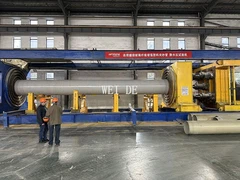
As a leading supplier of horizontal winding products, we offer a wide range of solutions to meet the diverse needs of our customers. Our Marine Fiberglass Pipeline Production Line is designed to produce high-quality fiberglass pipes for marine applications, with precise control over the winding spacing to ensure optimal performance.


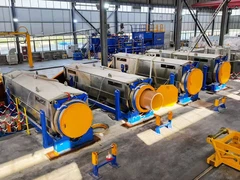
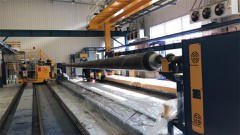
We also have an Epoxy Filament Winding Machine that is ideal for winding epoxy-coated fibers to create strong and durable products. And if you're looking for a solution specifically for epoxy pipe winding, our Epoxy Pipe Winding Machine is the perfect choice.
Our team of experts is always available to provide you with technical support and guidance to help you determine the best spacing requirements for your project. We can also work with you to customize our machines and equipment to meet your specific needs and requirements.
Contact Us for More Information
If you're interested in learning more about our horizontal winding products or have any questions about the spacing requirements between horizontal winding turns, we'd love to hear from you. Whether you're a small business looking for a cost-effective solution or a large corporation in need of a high-volume production line, we have the expertise and resources to help you achieve your goals.
Don't hesitate to reach out to us today to start a conversation about your project. We're committed to providing you with the best possible products and services, and we look forward to working with you to create high-quality horizontal winding products that meet your exact specifications.
References
- "Filament Winding Technology" by Lawrence T. Drzal and Richard M. Pipes
- "Composite Materials: Design and Applications" by David Hull and T. W. Clyne
Send Inquiry