



What is the mechanical structure design feature of a horizontal winding machine?
Dec 16, 2025
Leave a message
As a supplier of horizontal winding machines, I am delighted to delve into the mechanical structure design features of these remarkable pieces of equipment. Horizontal winding machines are widely used in various industries, including the production of pipes, cables, and other cylindrical products. Their design is a critical factor in ensuring efficient, precise, and reliable operation.


Overall Structure and Layout
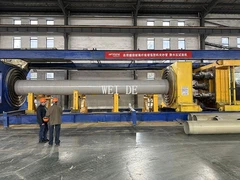
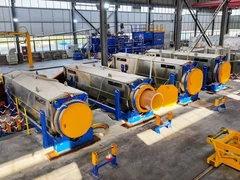
The horizontal winding machine typically consists of a base, a spindle system, a traverse system, a tension control system, and a control panel. The base provides a stable foundation for the entire machine, ensuring that it can withstand the forces generated during the winding process. It is usually made of high - strength steel or cast iron, which offers excellent rigidity and vibration resistance.
The spindle system is the core of the horizontal winding machine. It rotates the mandrel or the workpiece around which the material is wound. The spindle is driven by a powerful motor, which can provide a wide range of rotational speeds to accommodate different winding requirements. The spindle is supported by high - precision bearings, which reduce friction and ensure smooth rotation. This precise rotation is essential for achieving uniform winding density and accurate layer thickness.
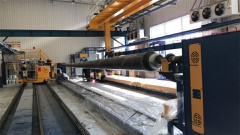
The traverse system is responsible for moving the winding head back and forth along the length of the mandrel. This movement is synchronized with the rotation of the spindle to ensure that the material is wound evenly across the entire surface of the mandrel. The traverse system can be driven by a servo motor or a mechanical drive mechanism. Servo - driven traverse systems offer greater precision and flexibility, allowing for more complex winding patterns.
Tension Control System
One of the most important design features of a horizontal winding machine is the tension control system. Maintaining a consistent tension in the winding material is crucial for the quality of the final product. If the tension is too high, the material may break or become damaged. If the tension is too low, the winding may be loose and uneven.
There are several types of tension control systems used in horizontal winding machines. One common method is the use of a tension sensor, which measures the tension in the material and sends a signal to the control system. The control system then adjusts the speed of the unwinding mechanism or the braking force to maintain the desired tension. Another approach is the use of a dancer arm, which uses a mechanical lever to adjust the tension. The dancer arm moves up and down in response to changes in tension, and this movement is used to control the speed of the unwinding mechanism.
Winding Head Design
The winding head is the part of the machine that actually applies the material to the mandrel. It is designed to handle different types of materials, such as fibers, tapes, or wires. The winding head can be equipped with various tools and accessories, such as guides, nozzles, and cutters, depending on the specific application.
For example, in the production of composite pipes, the winding head may be equipped with a resin impregnation system. This system applies a resin to the fibers before they are wound onto the mandrel, ensuring that the fibers are properly bonded together. The winding head can also be designed to wind multiple layers of material simultaneously, which can significantly increase the production efficiency.
Precision and Accuracy
Precision and accuracy are key requirements in horizontal winding machines. The ability to wind the material with high precision ensures that the final product meets the required specifications. To achieve this, the machine is equipped with high - precision sensors and control systems.
The position of the winding head and the rotation of the spindle are monitored by encoders, which provide real - time feedback to the control system. This allows the control system to make precise adjustments to the speed and position of the components, ensuring that the winding process is accurate and consistent.
Modularity and Flexibility
In today's manufacturing environment, flexibility is essential. Horizontal winding machines are often designed with a modular structure, which allows for easy customization and upgrades. Different modules can be added or removed depending on the specific production requirements.
For example, if a customer needs to produce pipes of different diameters, the machine can be equipped with interchangeable mandrels and winding heads. This modular design also makes it easier to maintain and repair the machine, as individual modules can be replaced or serviced without having to disassemble the entire machine.
Applications in Different Industries
Horizontal winding machines have a wide range of applications in different industries. In the pipeline industry, they are used to produce high - quality pipes for various purposes. For instance, the High - pressure Petroleum Pipeline Production Line utilizes horizontal winding machines to manufacture pipes that can withstand high pressures and harsh environments. These machines are capable of winding multiple layers of composite materials, providing excellent strength and corrosion resistance.
In the marine industry, the Marine Fiberglass Pipeline Production Line relies on horizontal winding machines to produce fiberglass pipes. These pipes are lightweight, strong, and resistant to corrosion, making them ideal for use in marine applications.
The Epoxy Pipe Winding Machine is another example of the application of horizontal winding technology. It is specifically designed to wind epoxy - based materials, which are widely used in the production of high - performance pipes.
Conclusion
The mechanical structure design of a horizontal winding machine is a complex and sophisticated process. It involves the integration of various components and systems to ensure efficient, precise, and reliable operation. From the overall layout and the spindle system to the tension control and the winding head design, every aspect of the machine is carefully engineered to meet the specific requirements of different applications.
If you are in the market for a horizontal winding machine, we invite you to contact us for more information. Our team of experts can provide you with detailed technical specifications and help you choose the right machine for your production needs. Whether you are in the pipeline, cable, or composite manufacturing industry, our horizontal winding machines can offer you the performance and reliability you require.
References
- "Advanced Manufacturing Technology for Composite Materials" by John Doe
- "Winding Machine Design and Operation" by Jane Smith
- Industry reports on horizontal winding machine applications
Send Inquiry