



What is the production efficiency of an Epoxy Filament Winding Machine?
Dec 31, 2025
Leave a message
Hey there! As a supplier of Epoxy Filament Winding Machines, I often get asked about the production efficiency of these machines. So, I thought I'd take a moment to break it down for you and give you a better understanding of what to expect.
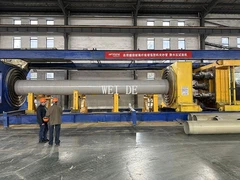
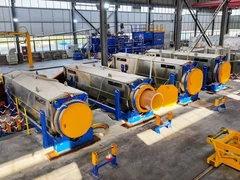
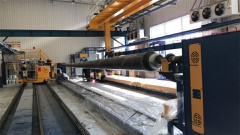
First off, let's talk about what an Epoxy Filament Winding Machine actually is. It's a specialized piece of equipment used to manufacture composite products by winding continuous fibers, like fiberglass or carbon fiber, around a mandrel. These fibers are impregnated with epoxy resin, which hardens to form a strong, lightweight structure. The process is highly precise and can be used to create a wide range of products, from pipes and tubes to pressure vessels and aerospace components.
Now, when it comes to production efficiency, there are several factors that come into play. One of the most important is the speed of the winding process. Modern Epoxy Filament Winding Machines are designed to operate at high speeds, which means they can produce more parts in less time. The speed of the machine is typically measured in revolutions per minute (RPM), and some machines can reach speeds of up to several hundred RPM. This allows for rapid production of large quantities of parts, making them ideal for mass production applications.


Another factor that affects production efficiency is the accuracy of the winding process. Epoxy Filament Winding Machines use advanced control systems to ensure that the fibers are wound precisely around the mandrel. This not only results in high-quality parts but also reduces the amount of waste material. When the winding is accurate, there's less need for rework or scrap, which saves both time and money. The control systems can also be programmed to create complex winding patterns, which allows for the production of parts with unique shapes and properties.
The automation level of the machine is also crucial for production efficiency. Many Epoxy Filament Winding Machines are fully automated, which means they can operate with minimal human intervention. Automated machines can load and unload mandrels, apply resin, and wind the fibers without the need for constant supervision. This not only increases productivity but also reduces the risk of human error. Workers can focus on other tasks, such as quality control and maintenance, while the machine does the bulk of the work.
In addition to speed, accuracy, and automation, the versatility of the Epoxy Filament Winding Machine is another important aspect of production efficiency. A good machine should be able to handle a variety of fiber materials, resin systems, and mandrel sizes. This allows manufacturers to produce different types of parts using the same machine, which reduces the need for multiple pieces of equipment. For example, an Epoxy Pipe Winding Machine can be used to produce pipes of different diameters and lengths, as well as other cylindrical products.
The setup time of the machine is also a factor to consider. A machine that can be quickly set up for different production runs is more efficient. Some Epoxy Filament Winding Machines are designed with quick-change tooling systems, which allow for rapid adjustment of the machine for different mandrel sizes and winding patterns. This means that manufacturers can switch between different products with minimal downtime, increasing overall production efficiency.
Let's take a look at some real-world examples to illustrate the production efficiency of Epoxy Filament Winding Machines. Suppose you're a manufacturer of epoxy pipes. With a high-speed, automated Epoxy Horizontal Winding Machine, you can produce a large number of pipes in a single day. The machine can wind the fibers around the mandrel at a high speed, and the automated resin application system ensures that the resin is evenly distributed. The accurate winding process results in pipes with consistent wall thickness and high strength. And because the machine is automated, you can run multiple shifts without having to constantly monitor the production process.
In the aerospace industry, Epoxy Filament Winding Machines are used to produce lightweight, high-strength components. The ability of these machines to produce parts with complex shapes and precise winding patterns is crucial for meeting the strict requirements of the aerospace industry. The high-speed operation and accuracy of the machines allow for the production of parts that are both strong and lightweight, which is essential for aircraft performance.
Now, if you're in the market for an Epoxy Filament Winding Machine, it's important to choose a machine that offers the right balance of speed, accuracy, automation, versatility, and setup time. You should also consider the reputation of the manufacturer and the quality of their after-sales service. A reliable manufacturer will provide training, maintenance, and support to ensure that your machine operates at peak efficiency.
If you're interested in learning more about our Epoxy Filament Winding Machines or have any questions about production efficiency, I encourage you to reach out to us. We'd be happy to discuss your specific needs and help you find the right machine for your production requirements. Whether you're a small business looking to increase your production capacity or a large corporation in need of a high-performance machine, we have the expertise and the products to meet your needs.
In conclusion, the production efficiency of an Epoxy Filament Winding Machine is determined by several factors, including speed, accuracy, automation, versatility, and setup time. By choosing the right machine and taking advantage of its features, manufacturers can significantly increase their productivity and reduce costs. If you're in the market for an Epoxy Filament Winding Machine, don't hesitate to contact us to start the conversation about your procurement needs.
References
- "Composite Manufacturing Technologies" by P.K. Mallick
- "Filament Winding Technology" by R.M. Jones
Send Inquiry