



What is the quality of products produced by a second - hand marine fiberglass pipeline production line?
Jan 12, 2026
Leave a message
In the dynamic world of marine engineering, the demand for high - quality fiberglass pipelines is on the rise. As a dedicated supplier of Marine Fiberglass Pipeline Production Line, I am often asked about the quality of products produced by a second - hand marine fiberglass pipeline production line. In this blog, I will delve into the various aspects that determine the quality of these products, shedding light on what potential buyers should consider.
Understanding the Basics of Marine Fiberglass Pipelines
Marine fiberglass pipelines are widely used in the marine industry due to their numerous advantages. They are corrosion - resistant, lightweight, and have excellent mechanical properties. These pipelines are commonly used for seawater intake and discharge systems, ballast water systems, and other marine applications. The production of these pipelines involves a complex process, typically using a combination of fiberglass reinforcement and resin matrix.


Factors Affecting the Quality of Products from a Second - Hand Production Line
1. Machine Condition
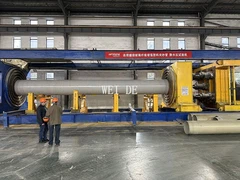
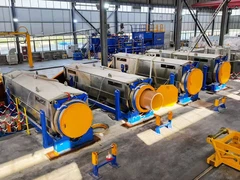
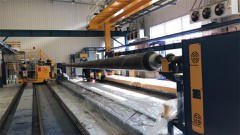
The first and most obvious factor is the condition of the second - hand production line. Over time, the mechanical components of the production line may experience wear and tear. For example, the winding mechanism in an Epoxy Pipe Winding Machine or Epoxy Filament Winding Machine may have misalignments or damaged parts. These issues can lead to uneven winding of the fiberglass, which in turn affects the structural integrity of the final product.
Before purchasing a second - hand production line, a thorough inspection should be carried out. This includes checking the motor performance, the precision of the winding head, and the overall stability of the machine. If possible, running a test production run can provide valuable insights into the machine's current capabilities.
2. Technology and Design
The technology and design of the production line also play a crucial role in product quality. Older production lines may use outdated technology, which can result in lower - quality products. For instance, modern production lines are equipped with advanced control systems that can precisely control the resin - to - fiberglass ratio, the winding speed, and the curing process. Second - hand production lines that lack these advanced features may produce pipelines with inconsistent wall thickness, poor resin distribution, or improper curing, all of which can compromise the pipeline's performance.
3. Maintenance History
The maintenance history of the second - hand production line is another important factor. A well - maintained production line is more likely to produce high - quality products. Regular maintenance, such as lubrication of moving parts, replacement of worn - out components, and calibration of sensors, can ensure the machine operates at its optimal level. On the other hand, a production line with a poor maintenance history may have hidden problems that can surface during production and affect the quality of the pipelines.
4. Operator Skill
Even with a high - quality production line, the skill of the operator is essential. An experienced operator can compensate for some of the limitations of a second - hand production line. They know how to adjust the settings to achieve the best results, how to troubleshoot minor issues, and how to ensure the quality control process is carried out effectively. Therefore, when using a second - hand production line, investing in operator training is crucial.
Assessing the Quality of Products
1. Visual Inspection
The first step in assessing the quality of the products produced by a second - hand production line is a visual inspection. Look for any visible defects such as cracks, bubbles, or uneven surfaces on the pipeline. These defects can indicate problems with the winding process, resin mixing, or curing. A smooth and uniform surface is generally a sign of a well - produced pipeline.
2. Mechanical Testing
Mechanical testing is also necessary to determine the quality of the pipelines. This includes testing the tensile strength, the flexural strength, and the impact resistance of the pipelines. These tests can provide quantitative data on the pipeline's ability to withstand different types of stresses in a marine environment.
3. Chemical Analysis
Chemical analysis can be used to determine the resin - to - fiberglass ratio and the quality of the resin used in the pipeline. A proper resin - to - fiberglass ratio is crucial for achieving the desired mechanical properties of the pipeline. Incorrect ratios can lead to a pipeline that is either too brittle or too flexible.
Advantages of Using a Second - Hand Production Line
Despite the potential challenges, there are also several advantages to using a second - hand marine fiberglass pipeline production line. Firstly, it is a cost - effective option. For small and medium - sized enterprises, purchasing a brand - new production line can be a significant financial burden. A second - hand production line allows these companies to enter the market with a lower initial investment.
Secondly, if the second - hand production line is in good condition and properly maintained, it can still produce high - quality products. With some upgrades and improvements, the performance of the production line can be enhanced to meet modern quality standards.
Conclusion
The quality of products produced by a second - hand marine fiberglass pipeline production line depends on multiple factors, including the machine condition, technology and design, maintenance history, and operator skill. While there are potential challenges, with careful assessment, proper maintenance, and operator training, a second - hand production line can be a viable option for producing high - quality marine fiberglass pipelines.
If you are considering purchasing a marine fiberglass pipeline production line, whether new or second - hand, we are here to assist you. Our team of experts can provide in - depth consultations, help you assess the quality of the production line, and offer solutions to optimize your production process. Feel free to contact us to start a discussion about your specific needs and requirements.
References
- "Fiberglass Reinforced Plastic Pipes: Design, Manufacture, and Applications" by various authors
- Industry reports on marine fiberglass pipeline production technology
Send Inquiry