



What is the role of a winding machine in the cable manufacturing process?
Dec 05, 2025
Leave a message
In the complex and highly specialized field of cable manufacturing, every piece of equipment plays a crucial role in ensuring the quality, efficiency, and reliability of the final product. Among these, the winding machine stands out as an indispensable tool. As a leading winding machine supplier, I've witnessed firsthand how these machines have revolutionized the cable manufacturing process. In this blog post, I'll delve into the various roles that a winding machine plays in cable production, exploring its functions, benefits, and the impact it has on the overall industry.
The Basics of Cable Manufacturing
Before we dive into the role of the winding machine, it's essential to understand the cable manufacturing process. Cables are typically made up of multiple components, including conductors, insulation, shielding, and a protective outer jacket. The process begins with the selection of high - quality raw materials, such as copper or aluminum for conductors and various polymers for insulation. These materials are then processed through a series of steps, including extrusion, stranding, and winding, to create the final cable product.
Primary Functions of a Winding Machine in Cable Manufacturing
Conductor Winding
One of the most fundamental roles of a winding machine in cable manufacturing is conductor winding. Conductors are the core of a cable, responsible for carrying electrical current. In many cases, multiple strands of wire are wound together to form a single conductor. This process, known as stranding, helps to improve the flexibility, strength, and conductivity of the conductor. A winding machine precisely controls the tension, pitch, and direction of the wire during the stranding process, ensuring that the conductor meets the required specifications.
For example, in the production of power cables, large - scale winding machines are used to strand multiple copper or aluminum wires together. The machine can handle different wire diameters and strand configurations, allowing for the production of cables with varying current - carrying capacities.
Insulation Winding
After the conductor is formed, it needs to be insulated to prevent electrical leakage and short circuits. Insulation materials, such as polyethylene or PVC, are often applied to the conductor in a thin layer. In some cases, a winding machine is used to wrap additional layers of insulation around the conductor. This can provide extra protection and improve the cable's performance in harsh environments.
For instance, in high - voltage cables, multiple layers of insulation may be wound around the conductor to increase the dielectric strength of the cable. The winding machine ensures that the insulation is evenly applied, with consistent thickness and tension, to maintain the electrical integrity of the cable.
Shielding Winding
Shielding is another important aspect of cable manufacturing, especially for cables used in sensitive electronic applications. Shielding helps to protect the cable from electromagnetic interference (EMI) and radio - frequency interference (RFI). A winding machine can be used to wrap a conductive shielding material, such as copper foil or braided wire, around the insulated conductor.
The winding machine ensures that the shielding is tightly and evenly wound, providing maximum protection against interference. This is crucial for cables used in telecommunications, data centers, and other applications where signal integrity is of utmost importance.


Benefits of Using a Winding Machine in Cable Manufacturing
Precision and Consistency
One of the key advantages of using a winding machine is its ability to provide precise and consistent winding. Manual winding processes are prone to human error, which can lead to variations in tension, pitch, and alignment. A winding machine, on the other hand, can be programmed to perform the winding process with a high degree of accuracy, ensuring that every cable produced meets the same quality standards.
This precision is essential for maintaining the electrical and mechanical properties of the cable. For example, inconsistent winding of the conductor can result in uneven current distribution, leading to overheating and reduced cable lifespan. By using a winding machine, manufacturers can minimize these risks and produce high - quality cables consistently.
Efficiency and Productivity
Winding machines are designed to operate at high speeds, significantly increasing the production efficiency of cable manufacturing. Compared to manual winding, which is a time - consuming and labor - intensive process, a winding machine can complete the winding process in a fraction of the time.
This increased efficiency allows manufacturers to produce more cables in a shorter period, meeting the growing demand for cables in various industries. Additionally, winding machines can be integrated into automated production lines, further streamlining the manufacturing process and reducing labor costs.
Customization
Modern winding machines offer a high degree of customization, allowing manufacturers to produce cables with specific specifications. The machine can be adjusted to accommodate different wire diameters, winding patterns, and tension levels, depending on the requirements of the cable.
This customization capability is particularly important for manufacturers who need to produce specialized cables for unique applications. For example, in the aerospace industry, cables need to meet strict weight, size, and performance requirements. A winding machine can be programmed to produce cables that meet these specific criteria, ensuring that they are suitable for use in aircraft and other aerospace equipment.
Types of Winding Machines for Cable Manufacturing
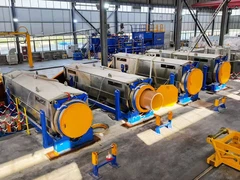
There are several types of winding machines available for cable manufacturing, each with its own unique features and applications.
Epoxy Filament Winding Machine
The Epoxy Filament Winding Machine is commonly used for winding epoxy - impregnated filaments around a mandrel to create composite structures. In cable manufacturing, this type of machine can be used to produce high - strength cables with excellent insulation properties. The machine precisely controls the winding angle and tension of the filaments, ensuring that the cable has the desired mechanical and electrical characteristics.
Epoxy Horizontal Winding Machine
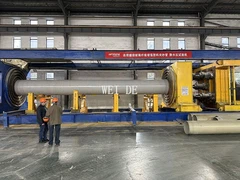
The Epoxy Horizontal Winding Machine is designed for horizontal winding applications. It is often used for winding large - diameter cables or cables with complex geometries. The horizontal design allows for easy loading and unloading of the cable, as well as better access for maintenance and inspection.
Epoxy Pipe Winding Machine
The Epoxy Pipe Winding Machine is specifically designed for winding epoxy - coated pipes. In cable manufacturing, this type of machine can be used to produce cables with a protective outer pipe, providing additional mechanical protection and environmental resistance. The machine ensures that the epoxy coating is evenly applied and cured, resulting in a durable and reliable cable.
Impact of Winding Machines on the Cable Manufacturing Industry
The introduction of winding machines has had a profound impact on the cable manufacturing industry. These machines have not only improved the quality and efficiency of cable production but also enabled the development of new cable technologies and applications.
With the ability to produce cables with higher precision and consistency, manufacturers can now meet the increasingly stringent requirements of various industries. For example, the demand for high - speed data cables in the telecommunications industry has led to the development of advanced winding machines that can produce cables with extremely low signal loss and high bandwidth.
In addition, the customization capabilities of winding machines have opened up new opportunities for innovation in cable design. Manufacturers can now create cables with unique features and performance characteristics, tailored to the specific needs of their customers. This has led to the development of specialized cables for applications such as renewable energy, electric vehicles, and smart grids.
Conclusion
In conclusion, the winding machine plays a vital role in the cable manufacturing process. From conductor winding to insulation and shielding, the winding machine ensures that every aspect of the cable is produced with precision, consistency, and efficiency. As a winding machine supplier, we are committed to providing our customers with high - quality machines that meet their specific needs.
If you are in the cable manufacturing industry and are looking for a reliable winding machine solution, we would be delighted to discuss your requirements. Our team of experts can help you select the right winding machine for your production process and provide you with comprehensive support and service. Contact us today to start a discussion about how our winding machines can enhance your cable manufacturing operations.
References
- Groover, M. P. (2010). Fundamentals of Modern Manufacturing: Materials, Processes, and Systems. John Wiley & Sons.
- Dorf, R. C., & Bishop, R. H. (2011). Electrical Engineering Handbook. CRC Press.
- Kutz, M. (2012). Mechanical Engineers' Handbook: Materials and Mechanical Design. John Wiley & Sons.
Send Inquiry