



What is the wear - resistance of China Type 4 cylinder?
Dec 04, 2025
Leave a message
In the realm of industrial and energy storage applications, China Type 4 cylinders have emerged as a crucial component, offering a combination of high performance and safety. As a dedicated supplier of China Type 4 cylinders, I am often asked about the wear - resistance of these remarkable products. In this blog, I will delve into the concept of wear - resistance in China Type 4 cylinders, exploring the factors that contribute to it, its importance, and how it impacts the overall performance and longevity of the cylinders.
Understanding Wear - Resistance in China Type 4 Cylinders
Wear - resistance refers to the ability of a material or a product to withstand the effects of wear, which can be caused by friction, abrasion, erosion, or impact. In the context of China Type 4 cylinders, wear - resistance is of utmost importance as these cylinders are often used in demanding environments where they may come into contact with various substances, experience mechanical stress, or be exposed to harsh conditions.
China Type 4 cylinders are composite cylinders that typically consist of a plastic liner wrapped with a fiber - reinforced composite material, usually carbon fiber. The wear - resistance of these cylinders is influenced by several factors, including the quality of the materials used, the manufacturing process, and the design of the cylinder.
Material Quality
The choice of materials plays a significant role in determining the wear - resistance of China Type 4 cylinders. The plastic liner is usually made of high - density polyethylene (HDPE) or other engineering plastics, which offer good chemical resistance and low friction coefficients. These materials help to protect the inner surface of the cylinder from corrosion and abrasion caused by the stored gas or liquid.
The fiber - reinforced composite layer, on the other hand, provides the structural strength and additional wear - resistance to the cylinder. High - quality carbon fibers are commonly used due to their excellent strength - to - weight ratio and resistance to fatigue. The resin matrix that binds the carbon fibers together also contributes to the wear - resistance by protecting the fibers from environmental factors and providing a smooth surface.
Manufacturing Process
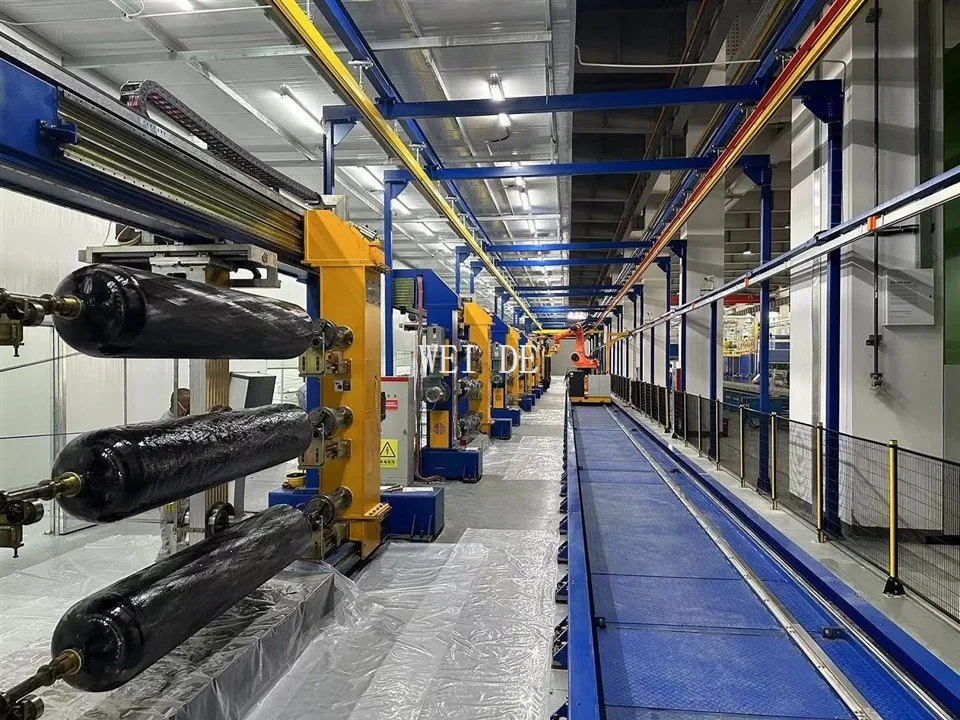
The manufacturing process of China Type 4 cylinders is a critical factor in ensuring their wear - resistance. Advanced manufacturing techniques, such as filament winding, are used to produce the composite layer. Filament winding involves wrapping continuous fibers around a rotating mandrel in a precise pattern, which helps to distribute the stress evenly across the cylinder and enhance its structural integrity.
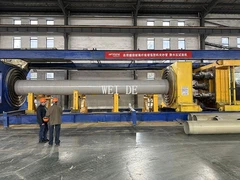
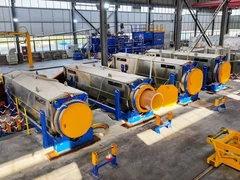
Type 4 Cylinder Winding Machine is a specialized equipment used in this process. It allows for accurate control of the fiber tension, winding angle, and layer thickness, resulting in a uniform and high - quality composite structure. A well - manufactured composite layer can better resist wear and damage, ensuring the long - term performance of the cylinder.
Design Considerations
The design of China Type 4 cylinders also affects their wear - resistance. The shape and dimensions of the cylinder are carefully engineered to minimize stress concentrations and optimize the flow of the stored medium. For example, rounded edges and smooth surfaces can reduce the likelihood of abrasion and wear.
In addition, the cylinder may be equipped with protective features, such as end caps and collars, which can further enhance its wear - resistance. These components can protect the vulnerable areas of the cylinder from impact and abrasion, especially during handling and installation.
Importance of Wear - Resistance in China Type 4 Cylinders
The wear - resistance of China Type 4 cylinders is crucial for several reasons. Firstly, it ensures the safety of the users. A cylinder with poor wear - resistance may develop cracks or leaks over time, which can lead to the release of the stored gas or liquid. This can pose a significant safety hazard, especially if the stored medium is flammable, toxic, or under high pressure.
Secondly, wear - resistance contributes to the reliability of the cylinders. In industrial applications, such as compressed natural gas (CNG) storage and hydrogen fuel storage, the cylinders need to operate continuously and consistently. A wear - resistant cylinder can maintain its performance over a long period, reducing the need for frequent replacements and minimizing downtime.
Thirdly, wear - resistance has economic benefits. By increasing the lifespan of the cylinders, companies can save on replacement costs. Moreover, a wear - resistant cylinder requires less maintenance, which can also result in cost savings in the long run.
Testing and Evaluation of Wear - Resistance
To ensure the wear - resistance of China Type 4 cylinders, rigorous testing and evaluation procedures are carried out. These tests simulate the real - world conditions that the cylinders may encounter during their service life.
One common test is the abrasion test, which measures the resistance of the cylinder's surface to abrasion. In this test, a standardized abrasive material is rubbed against the cylinder surface under a specified load and for a certain number of cycles. The amount of material loss is then measured to evaluate the wear - resistance.
Another important test is the impact test, which assesses the cylinder's ability to withstand impact without damage. A pendulum or a falling weight is used to strike the cylinder at a specific location and with a defined energy. The cylinder is then inspected for cracks or other signs of damage.
In addition to these physical tests, non - destructive testing methods, such as ultrasonic testing and X - ray inspection, are also used to detect any internal defects or damage that may affect the wear - resistance of the cylinder.
Comparison with Other Types of Cylinders
When comparing China Type 4 cylinders with other types of cylinders, such as Type 3 cylinders, the wear - resistance of Type 4 cylinders often has some advantages. Type 3 cylinders typically have a metal liner wrapped with a composite material. While the metal liner provides good strength, it may be more susceptible to corrosion and wear compared to the plastic liner in Type 4 cylinders.
Type 3 Cylinder Winding Machine is used in the manufacturing of Type 3 cylinders. Although the manufacturing process is similar in some aspects, the different liner materials result in different wear - resistance characteristics.
China Type 4 cylinders also have an edge over traditional pressure cylinders. Traditional pressure cylinders are usually made of metal, which can be heavy and prone to rust and wear. Pressure Cylinder Winding Machine is used for manufacturing some advanced pressure cylinders, but the composite structure of Type 4 cylinders offers better wear - resistance and a higher strength - to - weight ratio.
Applications and Wear - Resistance Requirements
China Type 4 cylinders are used in a wide range of applications, each with its own specific wear - resistance requirements.
In the automotive industry, Type 4 cylinders are used for CNG and hydrogen storage in vehicles. These cylinders need to withstand the vibrations and impacts associated with vehicle operation, as well as the potential abrasion from road debris. Therefore, high wear - resistance is essential to ensure the safety and reliability of the vehicle's fuel storage system.
In the aerospace industry, Type 4 cylinders are used for storing compressed gases and liquids. The cylinders need to be lightweight yet highly wear - resistant to withstand the harsh environmental conditions during flight, such as high - speed airflow and temperature variations.
In the industrial gas storage and transportation sector, Type 4 cylinders are used to store and transport various gases, including oxygen, nitrogen, and argon. These cylinders may be exposed to different chemicals and abrasive substances during loading and unloading operations, so wear - resistance is crucial to prevent corrosion and damage.
Conclusion
The wear - resistance of China Type 4 cylinders is a critical characteristic that determines their safety, reliability, and economic viability. Through the use of high - quality materials, advanced manufacturing processes, and optimized designs, these cylinders can offer excellent wear - resistance in various applications.

As a supplier of China Type 4 cylinders, I am committed to providing products that meet the highest standards of wear - resistance. Our cylinders are rigorously tested and evaluated to ensure their performance and safety. If you are interested in purchasing China Type 4 cylinders for your specific application, I encourage you to contact us for further discussion. We can provide you with detailed information about our products and help you choose the most suitable cylinders for your needs.
References
- "Composite Pressure Vessels: Design, Analysis, and Manufacturing" by John W. Gillespie Jr.
- "Handbook of Composites" edited by Luigi Nicolais and Giancarlo Carra.
- Industry standards and guidelines related to the manufacturing and testing of composite cylinders.
Send Inquiry