



What is the weight of a Type 4 cylinder?
Jan 06, 2026
Leave a message
When discussing the weight of a Type 4 cylinder, it's essential to understand its structure, application, and the factors that influence its weight. As a supplier of Type 4 cylinders, I've had the privilege of delving deep into these aspects and providing valuable insights to our clients.
Understanding Type 4 Cylinders
Type 4 cylinders are composite pressure vessels widely used in various industries, including automotive, aerospace, and energy storage. They are characterized by a full - composite design, typically consisting of a plastic liner wrapped with high - strength carbon fiber composites. This design offers several advantages over traditional metal cylinders, such as higher strength - to - weight ratio, corrosion resistance, and longer service life.
The plastic liner in a Type 4 cylinder serves as a gas barrier, preventing the stored gas from leaking. It is usually made of materials like high - density polyethylene (HDPE) or polyamide. The outer composite layer, on the other hand, provides the necessary structural strength to withstand high internal pressures. Carbon fiber is the most commonly used material for this layer due to its excellent mechanical properties, including high tensile strength and low weight.
Factors Affecting the Weight of Type 4 Cylinders
- Volume and Capacity
The volume of a Type 4 cylinder is one of the primary factors influencing its weight. Larger cylinders with higher gas storage capacities naturally require more material for both the liner and the composite wrapping. For example, a small Type 4 cylinder with a volume of 10 liters will weigh significantly less than a 50 - liter cylinder. The relationship between volume and weight is not strictly linear, as the thickness of the composite layer may also increase with larger volumes to maintain structural integrity at high pressures. - Operating Pressure
The operating pressure of the cylinder is another crucial factor. Cylinders designed to operate at higher pressures need a thicker and stronger composite layer to ensure safety. As a result, a Type 4 cylinder rated for 350 bar will generally weigh more than one rated for 200 bar, even if they have the same volume. This is because the higher the pressure, the greater the stress on the cylinder walls, and more carbon fiber is required to withstand this stress. - Liner Material and Thickness
The choice of liner material and its thickness can also impact the weight of the cylinder. Different plastics have different densities, and a thicker liner will add more weight. For instance, a cylinder with a thick - walled HDPE liner will be heavier than one with a thinner liner made of the same material. Additionally, some advanced liner materials may offer better gas barrier properties at a lower weight, which can help reduce the overall weight of the cylinder. - Composite Winding Pattern and Fiber Content
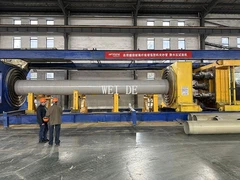
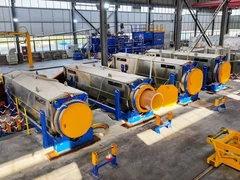
The way the carbon fiber is wound around the liner, known as the winding pattern, and the amount of fiber used (fiber content) play a significant role in determining the weight. A more complex winding pattern may provide better stress distribution and require less fiber, resulting in a lighter cylinder. On the other hand, a higher fiber content generally means more strength but also more weight. Our company uses advanced Pressure Vessal Winding Machine to optimize the winding pattern and fiber content, ensuring the best balance between weight and performance.
Typical Weight Ranges
The weight of Type 4 cylinders can vary widely depending on the factors mentioned above. Small - volume cylinders used in portable applications, such as for breathing apparatus, may weigh as little as 2 - 3 kilograms. These cylinders typically have a volume of around 2 - 5 liters and are designed for relatively low - pressure operation.
Medium - sized cylinders with volumes ranging from 10 - 30 liters, commonly used in automotive applications for compressed natural gas (CNG) or hydrogen storage, usually weigh between 10 - 30 kilograms. These cylinders are designed to operate at higher pressures, typically between 200 - 350 bar.


Large - scale Type 4 cylinders with volumes of 50 liters or more, used in industrial or energy storage applications, can weigh upwards of 50 kilograms. These cylinders are often designed for high - pressure operation and require a substantial amount of composite material to ensure safety and durability.
Comparison with Other Cylinder Types
When comparing Type 4 cylinders with other types, such as Type 3 cylinders, the weight advantage of Type 4 cylinders becomes evident. Type 3 cylinders have a metal liner (usually aluminum) wrapped with a composite layer. While the metal liner provides good mechanical properties, it is also relatively heavy. In contrast, the plastic liner in Type 4 cylinders is much lighter, resulting in a lower overall weight for the same volume and pressure rating.
We also offer Type 3 Cylinder Winding Machine for clients interested in producing Type 3 cylinders. However, for applications where weight is a critical factor, Type 4 cylinders are often the preferred choice.
Importance of Weight in Different Applications
- Automotive Industry
In the automotive industry, weight is a crucial factor as it directly affects fuel efficiency and vehicle performance. Lighter Type 4 cylinders for CNG or hydrogen storage can help reduce the overall weight of the vehicle, leading to better mileage and acceleration. This is particularly important for electric and hybrid vehicles, where every kilogram of weight reduction can extend the driving range. - Aerospace Industry
In aerospace applications, weight is even more critical. Every additional kilogram of weight requires more fuel to lift and maintain the aircraft in flight. Type 4 cylinders offer a significant weight advantage over traditional metal cylinders, making them an attractive option for on - board gas storage systems, such as for oxygen or nitrogen. - Portable Applications
For portable applications, such as in diving or emergency response, the weight of the cylinder is a major consideration. A lighter cylinder is easier to carry and handle, reducing the physical strain on the user. This can be especially important in situations where the user needs to move quickly or for extended periods.
Our Expertise as a Type 4 Cylinder Supplier
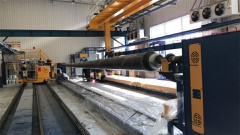
As a leading supplier of Type 4 cylinders, we have extensive experience in designing and manufacturing cylinders to meet the specific needs of our clients. We use state - of - the - art Pressure Cylinder Winding Machine to ensure the highest quality and precision in the manufacturing process.
Our team of engineers and technicians is constantly researching and developing new materials and manufacturing techniques to optimize the weight and performance of our Type 4 cylinders. We work closely with our clients to understand their requirements and provide customized solutions that meet their exact specifications.
Contact Us for Procurement
If you are interested in purchasing Type 4 cylinders for your application, we invite you to contact us for a detailed discussion. Our sales team is ready to answer all your questions and provide you with a competitive quote. Whether you need a small - volume cylinder for a portable device or a large - scale cylinder for industrial use, we have the expertise and resources to meet your needs.
References
- ASME Boiler and Pressure Vessel Code, Section VIII, Division 3 - Alternative Rules for Construction of High - Pressure Vessels
- ISO 11439:2013 - Gas cylinders - High - pressure cylinders for the on - board storage of natural gas as a fuel for automotive vehicles
- Composite Materials Handbook, Volume 1: Polymer Matrix Composites, published by the Department of Defense
Send Inquiry