



What is the working principle of a Pressure Cylinder Winding Machine?
Oct 06, 2025
Leave a message
In the realm of industrial manufacturing, pressure cylinders play a pivotal role in numerous applications, from aerospace to automotive and beyond. The production of these crucial components heavily relies on advanced machinery, among which the Pressure Cylinder Winding Machine stands out as a key player. As a leading supplier of Pressure Cylinder Winding Machines, I am excited to delve into the working principle of this remarkable equipment, shedding light on its functionality and significance in modern manufacturing processes.
1. Introduction to Pressure Cylinder Winding Machines
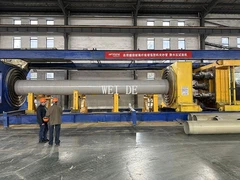
Pressure Cylinder Winding Machines are specialized pieces of equipment designed to wind composite materials, such as carbon fiber or fiberglass, around a cylindrical mandrel to create high - strength pressure cylinders. These machines are essential for producing lightweight yet robust pressure vessels that can withstand high internal pressures. Our Pressure Cylinder Winding Machine is engineered with precision and advanced technology to meet the diverse needs of our customers.
2. Basic Components of a Pressure Cylinder Winding Machine
Before we explore the working principle, it is important to understand the main components of a Pressure Cylinder Winding Machine:
- Mandrel: This is the core around which the composite fibers are wound. The mandrel is designed to have the exact shape and dimensions of the final pressure cylinder. It rotates during the winding process, allowing the fibers to be evenly distributed around its surface.
- Fiber Feeding System: This system is responsible for supplying the composite fibers to the winding area. It typically includes fiber spools, tensioning devices, and guides to ensure that the fibers are fed smoothly and under the correct tension.
- Traverse Mechanism: The traverse mechanism moves the fiber - feeding system back and forth along the length of the mandrel. This movement controls the pattern and pitch of the fiber winding, which is crucial for achieving the desired mechanical properties of the pressure cylinder.
- Resin Bath (Optional): In some cases, the fibers are passed through a resin bath before being wound onto the mandrel. The resin impregnates the fibers, providing them with stiffness and adhesion once cured.
- Control System: The control system is the brain of the winding machine. It regulates the speed of the mandrel rotation, the movement of the traverse mechanism, and the tension of the fibers. Advanced control systems can also store and execute pre - programmed winding patterns.
3. The Working Principle in Detail
The working principle of a Pressure Cylinder Winding Machine can be broken down into several key steps:
Step 1: Mandrel Preparation
The first step is to prepare the mandrel. It needs to be cleaned and coated with a release agent to ensure that the finished pressure cylinder can be easily removed from the mandrel after winding and curing. The mandrel is then mounted onto the winding machine and centered accurately.


Step 2: Fiber Loading
The composite fibers are loaded onto the fiber spools of the feeding system. The fibers are then threaded through the tensioning devices and guides, which adjust the tension to a pre - determined level. This tension is critical as it affects the density and strength of the fiber winding.
Step 3: Winding Process Initiation
Once the mandrel is prepared and the fibers are loaded, the winding process begins. The control system starts the rotation of the mandrel at a specific speed. At the same time, the traverse mechanism moves the fiber - feeding system along the length of the mandrel.
- Helical Winding: In helical winding, the fibers are wound around the mandrel in a helical pattern. The angle of the helix can be adjusted by controlling the speed of the mandrel rotation and the movement of the traverse mechanism. Helical winding provides circumferential strength to the pressure cylinder, helping it to withstand internal pressure.
- Hoop Winding: Hoop winding involves winding the fibers around the circumference of the mandrel at a near - 90 - degree angle. This type of winding is used to enhance the hoop strength of the pressure cylinder, which is important for preventing radial expansion under pressure.
Step 4: Resin Impregnation (if applicable)
If a resin bath is used, the fibers pass through the bath before being wound onto the mandrel. The resin impregnates the fibers, filling the gaps between them and providing adhesion. The amount of resin absorbed by the fibers can be controlled by adjusting the speed of the fiber movement through the bath and the viscosity of the resin.
Step 5: Pattern Control
The control system plays a vital role in controlling the winding pattern. Different applications may require different winding patterns to achieve optimal mechanical properties. For example, aerospace applications may demand more complex patterns to meet strict safety and performance requirements. The control system can store multiple patterns and switch between them during the winding process.
Step 6: Completion of Winding
Once the desired number of layers and winding patterns have been achieved, the winding process is stopped. The remaining fibers are cut, and the wound mandrel is then ready for the next step, which is usually curing.
4. Curing Process
After winding, the wound mandrel is removed from the winding machine and placed in a curing oven. The curing process involves heating the wound composite to a specific temperature for a set period of time. During curing, the resin hardens, transforming the wound fibers into a solid, high - strength pressure cylinder. The curing conditions, such as temperature and time, depend on the type of resin used.
5. Types of Pressure Cylinder Winding Machines
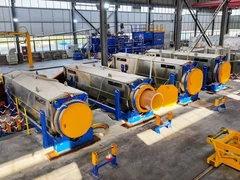
There are different types of Pressure Cylinder Winding Machines available to meet various production requirements. Our Type 3 Cylinder Winding Machine is specifically designed for producing Type 3 pressure cylinders, which are widely used in automotive and industrial applications. These machines are capable of high - precision winding, ensuring the quality and reliability of the final products.
Another type is the Pressure Vessal Winding Machine, which is suitable for manufacturing larger and more complex pressure vessels. These machines often feature advanced control systems and larger mandrel - handling capabilities.
6. Advantages of Using a Pressure Cylinder Winding Machine
- High Strength - to - Weight Ratio: The winding process allows for the precise placement of composite fibers, resulting in pressure cylinders with a high strength - to - weight ratio. This is particularly important in applications where weight reduction is crucial, such as aerospace and automotive industries.
- Customization: Pressure Cylinder Winding Machines can be programmed to create different winding patterns, allowing for the customization of pressure cylinders according to specific application requirements.
- Efficiency: These machines can automate the winding process, reducing labor costs and increasing production efficiency. They can also produce consistent and high - quality products, minimizing the risk of human error.
7. Conclusion and Call to Action
In conclusion, the working principle of a Pressure Cylinder Winding Machine is a complex yet fascinating process that combines mechanical engineering, materials science, and advanced control technology. By understanding how these machines work, manufacturers can make informed decisions when it comes to producing high - quality pressure cylinders.
As a leading supplier of Pressure Cylinder Winding Machines, we are committed to providing our customers with state - of - the - art equipment and excellent after - sales service. Our machines are designed to meet the highest standards of quality and performance, ensuring that your production processes run smoothly and efficiently.
If you are interested in learning more about our Pressure Cylinder Winding Machines or are looking to purchase one for your manufacturing facility, we encourage you to contact us for a detailed discussion. Our team of experts will be happy to assist you in finding the right solution for your specific needs.
References
- "Composite Materials in Engineering" by John M. Whitney
- "Filament Winding Technology" by Lawrence T. Drzal and Ronald F. Gibson
Send Inquiry