



What is the working principle of an Epoxy Pipe Winding Machine?
Sep 23, 2025
Leave a message
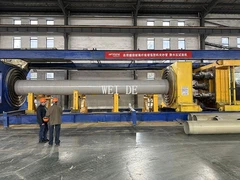
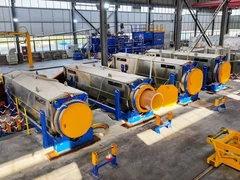
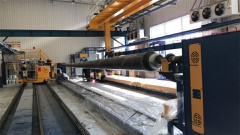
Epoxy pipe winding machines are at the forefront of modern pipe manufacturing, offering a highly efficient and precise method for producing high - quality epoxy pipes. As a leading supplier of Epoxy Pipe Winding Machines, I am excited to share with you the working principle of these remarkable machines.
1. Introduction to Epoxy Pipe Winding Machines
Epoxy pipe winding machines are designed to create pipes by winding fiberglass or other reinforcement materials around a rotating mandrel while applying epoxy resin. These pipes are widely used in various industries, including construction, chemical processing, and Marine Fiberglass Pipeline Production Line due to their excellent corrosion resistance, high strength - to - weight ratio, and long service life.
2. Main Components of an Epoxy Pipe Winding Machine
2.1 Mandrel
The mandrel is the core component around which the pipe is wound. It is typically made of steel or other durable materials and has the exact shape and dimensions of the inner diameter of the desired pipe. The mandrel rotates at a controlled speed during the winding process, which is crucial for ensuring uniform winding of the reinforcement materials.
2.2 Winding Head
The winding head is responsible for guiding the reinforcement materials, such as fiberglass rovings, onto the rotating mandrel. It can move along the length of the mandrel in a controlled manner, allowing for different winding patterns. The winding head can be adjusted to change the angle and pitch of the winding, which affects the mechanical properties of the final pipe.
2.3 Resin Bath
The resin bath contains the epoxy resin that will be impregnated into the reinforcement materials. The reinforcement materials pass through the resin bath before being wound onto the mandrel. The resin bath is equipped with a temperature control system to maintain the optimal viscosity of the epoxy resin, ensuring proper impregnation.
2.4 Control System
The control system is the brain of the epoxy pipe winding machine. It controls the speed of the mandrel rotation, the movement of the winding head, and the temperature of the resin bath. Advanced control systems can also monitor and adjust the tension of the reinforcement materials during the winding process, ensuring consistent quality of the pipes.
3. Working Principle of an Epoxy Pipe Winding Machine
3.1 Preparation
Before starting the winding process, the mandrel is cleaned and coated with a release agent to facilitate the removal of the finished pipe. The epoxy resin is prepared in the resin bath, and its viscosity is adjusted according to the requirements of the winding process. The reinforcement materials, such as fiberglass rovings, are loaded onto the creels and threaded through the guides to the winding head.
3.2 Reinforcement Material Feeding
The reinforcement materials are fed from the creels to the winding head. As they pass through the resin bath, they are impregnated with the epoxy resin. The amount of resin impregnated into the reinforcement materials is carefully controlled to ensure the proper resin - to - fiber ratio in the final pipe.
3.3 Winding Process
Once the reinforcement materials are impregnated with resin, the winding head starts to guide them onto the rotating mandrel. The mandrel rotates at a constant speed, and the winding head moves along the length of the mandrel. The winding pattern can be either helical or circumferential, depending on the design requirements of the pipe.
- Helical Winding: In helical winding, the winding head moves along the mandrel while the mandrel rotates. This creates a helical pattern of the reinforcement materials on the mandrel, which provides excellent hoop and axial strength to the pipe. The angle of the helix can be adjusted to optimize the mechanical properties of the pipe.
- Circumferential Winding: Circumferential winding involves winding the reinforcement materials around the mandrel in a circular pattern. This type of winding is often used to enhance the hoop strength of the pipe.
3.4 Curing
After the winding process is completed, the pipe needs to be cured to harden the epoxy resin. Curing can be achieved through either ambient curing or heat - assisted curing. Ambient curing is a slower process that occurs at room temperature, while heat - assisted curing uses an oven or other heating devices to accelerate the curing process. The curing time and temperature depend on the type of epoxy resin used.
3.5 Demolding
Once the pipe is fully cured, it is removed from the mandrel. The release agent applied to the mandrel earlier makes this process easier. After demolding, the pipe may undergo some post - processing steps, such as trimming the ends and surface finishing, to meet the final specifications.
4. Advantages of Using Epoxy Pipe Winding Machines
4.1 High Precision
Epoxy pipe winding machines can produce pipes with very high precision in terms of dimensions and winding patterns. The control system ensures that the winding process is consistent, resulting in pipes with uniform quality.
4.2 Customizability
These machines offer a high degree of customizability. The winding pattern, resin - to - fiber ratio, and other parameters can be adjusted according to the specific requirements of the application. This allows for the production of pipes with different mechanical properties and performance characteristics.
4.3 Efficiency
Epoxy pipe winding machines are highly efficient, capable of producing pipes at a relatively fast rate. The automation of the winding process reduces the need for manual labor, which not only increases productivity but also reduces the risk of human error.
5. Applications of Epoxy Pipes Produced by Winding Machines
5.1 Chemical Industry
Epoxy pipes are widely used in the chemical industry due to their excellent corrosion resistance. They can be used to transport various chemicals, including acids, alkalis, and solvents, without the risk of corrosion.
5.2 Construction Industry
In the construction industry, epoxy pipes are used for plumbing, drainage, and other applications. Their high strength - to - weight ratio makes them easy to install, and their long service life reduces the need for frequent replacements.
5.3 Marine Industry
The Marine Fiberglass Pipeline Production Line often utilizes epoxy pipes produced by winding machines. These pipes can withstand the harsh marine environment, including saltwater corrosion and high - pressure conditions.


6. Our Epoxy Pipe Winding Machines
As a supplier, we offer a range of Epoxy Horizontal Winding Machine and Epoxy Filament Winding Machine. Our machines are designed with the latest technology and high - quality components to ensure reliable performance and excellent product quality.
Our machines feature advanced control systems that allow for precise control of the winding process. The winding heads are designed to handle different types of reinforcement materials and can be easily adjusted to achieve various winding patterns. We also provide comprehensive after - sales service, including installation, training, and maintenance support.
7. Contact Us for Purchase and Negotiation
If you are interested in our Epoxy Pipe Winding Machines, we welcome you to contact us for purchase and negotiation. Our team of experts is ready to provide you with detailed information about our products, including specifications, pricing, and customization options. We are committed to providing you with the best solutions for your pipe manufacturing needs.
References
- "Fiber - Reinforced Polymer Composites in Civil Engineering" by A. H. Khalili
- "Handbook of Epoxy Resins" by Henry Lee and Kris Neville
Send Inquiry