



Can 3D printed GRP pipes be used in the furniture industry?
Jan 15, 2026
Leave a message
Hey there! As a supplier of 3D printed GRP (Glass Reinforced Plastic) pipes, I've been getting a lot of questions lately about whether these pipes can be used in the furniture industry. So, I thought I'd take a deep dive into this topic and share my thoughts.


First off, let's talk a bit about what 3D printed GRP pipes are. GRP is a composite material made of glass fibers and a polymer matrix. It's known for its high strength, corrosion resistance, and lightweight properties. The 3D printing technology allows us to create these pipes with complex geometries and customized designs that traditional manufacturing methods might struggle with.
Now, let's look at the potential of using 3D printed GRP pipes in the furniture industry. One of the biggest advantages is the design flexibility. Furniture designers are always looking for new and unique ways to make their pieces stand out. With 3D printed GRP pipes, they can create intricate shapes, curves, and patterns that would be difficult or impossible to achieve with other materials. For example, think of a modern chair with a flowing, organic frame made from these pipes. It could add a touch of elegance and innovation to any room.
Another benefit is the strength-to-weight ratio. GRP pipes are strong enough to support the weight of furniture, yet they are relatively light. This makes them easier to handle during the manufacturing process and also more convenient for transportation and installation. For large or bulky furniture pieces, such as sofas or cabinets, using lightweight GRP pipes can reduce the overall weight without sacrificing durability.
In terms of durability, GRP is highly resistant to corrosion, moisture, and chemicals. This means that furniture made with 3D printed GRP pipes can last longer, especially in environments where traditional materials might deteriorate. For instance, outdoor furniture is constantly exposed to the elements, and GRP pipes can withstand rain, sunlight, and temperature changes without rusting or warping.
Cost is also an important factor. While 3D printing technology might seem expensive at first glance, it can actually save costs in the long run. With the ability to create custom designs on-demand, there is less waste compared to traditional manufacturing methods. Plus, the reduced weight can lead to lower transportation costs. And since GRP pipes are durable, there is less need for frequent replacements, which can save money over time.
However, there are also some challenges to consider. One of the main issues is the perception of the material. Some consumers might be more familiar with traditional materials like wood, metal, or plastic, and might be hesitant to accept GRP as a furniture material. We need to do more to educate the market about the benefits and quality of 3D printed GRP pipes.
Another challenge is the initial investment in 3D printing equipment. For furniture manufacturers, setting up a 3D printing production line requires a significant upfront cost. But as the technology becomes more widespread and the costs come down, this might become less of a barrier.
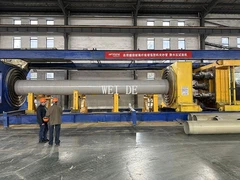
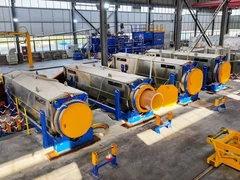
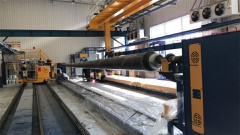
To produce high - quality 3D printed GRP pipes, we use advanced equipment. For example, the Continuous Fiberglass Pipe Winding Machine is a key tool in our production process. It allows us to wind the glass fibers around a mandrel in a precise and continuous manner, ensuring the strength and uniformity of the pipes. The Continue Filament Winding FRP Pipe Produciton Line further streamlines the production, from the resin impregnation to the final curing of the pipes. And the CFW Continuous Pipe Winding Machine offers even more flexibility and efficiency in creating different sizes and shapes of pipes.
In conclusion, I believe that 3D printed GRP pipes have great potential in the furniture industry. Despite the challenges, the benefits in terms of design flexibility, strength, durability, and cost - effectiveness make them a viable option for furniture manufacturers. As a supplier, I'm excited to work with furniture designers and manufacturers to explore the possibilities and bring innovative furniture pieces to the market.
If you're a furniture designer or manufacturer interested in using 3D printed GRP pipes for your projects, I'd love to have a chat with you. Let's discuss how we can collaborate to create unique and high - quality furniture. Whether you have a specific design in mind or just want to learn more about the material, feel free to reach out.
References
- Various industry reports on composite materials and 3D printing technology
- Research papers on the mechanical properties of GRP materials
Send Inquiry