



Can 3D printed GRP pipes be used in the renewable energy sector?
Nov 04, 2025
Leave a message
In recent years, the renewable energy sector has witnessed remarkable growth as the world shifts towards more sustainable and clean energy sources. This transition has created a demand for innovative materials and technologies that can support the efficient operation and development of renewable energy projects. One such innovation is 3D printed Glass Reinforced Plastic (GRP) pipes, which have the potential to revolutionize the way we approach infrastructure in the renewable energy industry. As a supplier of 3D printed GRP pipes, I am excited to explore the possibilities and applications of these pipes in the renewable energy sector.
Understanding 3D Printed GRP Pipes
GRP pipes are well - known for their excellent mechanical properties, corrosion resistance, and lightweight nature. They are composed of glass fibers embedded in a polymer matrix, which provides strength and durability. 3D printing technology takes GRP pipes to the next level by allowing for complex geometries and customized designs that were previously difficult or impossible to achieve through traditional manufacturing methods.


The process of 3D printing GRP pipes involves layer - by - layer deposition of the composite material, which can be precisely controlled to meet the specific requirements of a project. This results in pipes with consistent quality and performance, as well as reduced material waste compared to traditional manufacturing techniques.
Applications in the Renewable Energy Sector
Geothermal Energy
Geothermal energy is a reliable and sustainable source of power that harnesses the heat from the Earth's interior. In geothermal power plants, pipes are used to transport hot water and steam from the underground reservoirs to the surface. 3D printed GRP pipes are an ideal choice for this application due to their high temperature resistance and corrosion resistance. The ability to customize the pipe design allows for efficient installation in the complex underground environments often associated with geothermal projects. For example, the pipes can be printed with specific bends and connections to fit the unique layout of the geothermal well, reducing the need for additional fittings and joints that can be potential points of leakage.
Solar Thermal Energy
Solar thermal energy systems use sunlight to heat a fluid, which is then used for various applications such as heating buildings or generating electricity. Pipes are a critical component in these systems, as they transport the heated fluid from the solar collectors to the storage tanks or heat exchangers. 3D printed GRP pipes are lightweight and have excellent thermal insulation properties, which helps to minimize heat loss during the fluid transfer. The customizable nature of 3D printing also allows for the creation of pipes with integrated features such as internal fins or channels, which can enhance the heat transfer efficiency of the system.
Hydroelectric Power
In hydroelectric power plants, pipes are used to convey water from the reservoir to the turbines. These pipes need to withstand high pressure and have a long service life. 3D printed GRP pipes can be designed to meet these requirements, as the printing process allows for precise control of the pipe wall thickness and reinforcement. Additionally, the smooth inner surface of the 3D printed GRP pipes reduces friction, which can improve the efficiency of water flow and reduce energy losses. The corrosion resistance of GRP also ensures that the pipes can operate in the wet and harsh environments typically found in hydroelectric facilities without significant degradation.
Advantages of 3D Printed GRP Pipes in Renewable Energy Projects
Cost - Effectiveness
Although the initial investment in 3D printing technology may be relatively high, 3D printed GRP pipes can offer long - term cost savings. The reduced material waste and the ability to customize the pipes according to the project requirements can lead to lower overall project costs. For example, by eliminating the need for excessive fittings and joints, the installation time and labor costs can be significantly reduced.
Design Flexibility
The design flexibility of 3D printed GRP pipes is a major advantage in the renewable energy sector. Renewable energy projects often have unique site - specific requirements, and 3D printing allows for the creation of pipes that can be tailored to these needs. Whether it is a complex shape to fit a particular installation space or a pipe with integrated sensors for monitoring the fluid flow and temperature, 3D printing can make it possible.
Environmental Sustainability
As the renewable energy sector aims to minimize its environmental impact, 3D printed GRP pipes contribute to this goal. The reduced material waste during the manufacturing process, combined with the long service life of the pipes, makes them a more sustainable option compared to traditional materials. Additionally, the lightweight nature of GRP pipes reduces the energy required for transportation and installation, further reducing the carbon footprint of the project.
Our Equipment and Technology
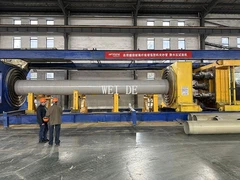
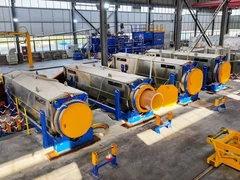
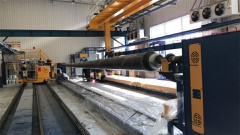
At our company, we utilize state - of - the - art equipment to produce high - quality 3D printed GRP pipes. Our CFW Continuous Pipe Winding Machine is a key component in our manufacturing process. This machine allows for continuous and efficient production of GRP pipes, ensuring consistent quality and performance. The Continue Filament Winding FRP Pipe Produciton Line further enhances our production capabilities, enabling us to meet the large - scale demands of renewable energy projects. Our Composite Material Winding Equipment is designed to handle the complex composite materials used in 3D printed GRP pipes, providing precise control over the winding process.
Challenges and Future Outlook
While 3D printed GRP pipes offer many advantages in the renewable energy sector, there are still some challenges that need to be addressed. One of the main challenges is the relatively high initial cost of 3D printing equipment and the need for skilled operators. However, as the technology continues to develop and become more widespread, the cost is expected to decrease, making it more accessible to a wider range of projects.
Another challenge is the limited awareness of 3D printed GRP pipes in the renewable energy industry. Many project developers and engineers are still more familiar with traditional pipe materials and manufacturing methods. To overcome this, we need to increase education and awareness about the benefits of 3D printed GRP pipes through industry events, case studies, and technical demonstrations.
Looking to the future, the potential for 3D printed GRP pipes in the renewable energy sector is vast. As the demand for renewable energy continues to grow, there will be an increasing need for innovative and sustainable infrastructure solutions. 3D printed GRP pipes have the potential to become a standard choice for many renewable energy applications, offering improved performance, cost - effectiveness, and environmental sustainability.
Contact Us for Procurement
If you are involved in a renewable energy project and are interested in exploring the use of 3D printed GRP pipes, we would be delighted to discuss your requirements. Our team of experts can provide you with detailed information about our products, including their technical specifications, performance data, and pricing. We can also work with you to develop customized solutions that meet the specific needs of your project. Contact us today to start the procurement process and take advantage of the benefits that 3D printed GRP pipes can offer in your renewable energy project.
References
- "Advanced Composite Materials for Renewable Energy Applications" - Journal of Renewable Energy Research
- "3D Printing Technology in the Manufacturing of Composite Structures" - International Journal of Manufacturing Technology
- "Geothermal Energy Systems: Design and Operation" - Geothermal Energy Association Publications
Send Inquiry