






Can a four axis filament winding machine be integrated into an automated production line?
Nov 24, 2025
Leave a message
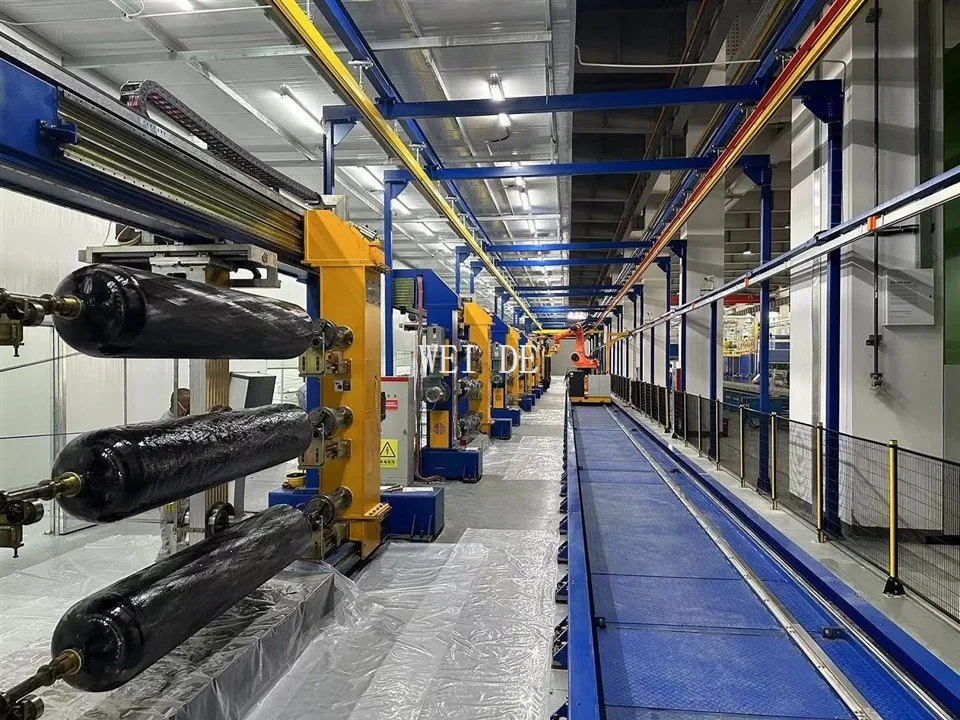
Hey there! As a supplier of four-axis filament winding machines, I often get asked if these machines can be integrated into an automated production line. Well, the short answer is yes, and in this blog, I'll dive into the details of how and why it's a great idea.
Why Consider Integration?
First off, let's talk about why you'd even want to integrate a four-axis filament winding machine into an automated production line. Automation has become a game-changer in the manufacturing industry, and for good reason. It can significantly boost productivity, improve quality control, and reduce labor costs.
When it comes to filament winding, which is used to make products like composite cylinders, pressure vessels, and more, automation can take things to the next level. A four-axis filament winding machine offers precise control over the winding process, allowing for consistent and high-quality results. By integrating it into an automated production line, you can streamline the entire manufacturing process, from raw material handling to the finished product.
How It Works
Integrating a four-axis filament winding machine into an automated production line involves a few key steps. First, you need to ensure that the machine is compatible with the existing automation systems in your production line. This may require some customization or the use of specialized interfaces.
Once compatibility is established, the next step is to set up the material handling system. In an automated production line, raw materials such as fibers and resins need to be fed into the winding machine in a controlled manner. This can be achieved using conveyors, robotic arms, or other automated feeding systems.
The winding process itself is then controlled by the machine's software, which is programmed to follow specific winding patterns and parameters. The four axes of the machine allow for precise control over the movement of the fiber spool and the mandrel, ensuring that the fibers are wound evenly and tightly around the mandrel.
After the winding process is complete, the finished product needs to be removed from the machine and transferred to the next stage of the production line, such as curing or finishing. This can also be automated using robotic arms or other handling equipment.
Benefits of Integration
There are several benefits to integrating a four-axis filament winding machine into an automated production line. One of the biggest advantages is increased productivity. With automation, the winding process can be carried out continuously, without the need for manual intervention. This means that you can produce more products in less time, which can lead to significant cost savings.
Another benefit is improved quality control. The precise control offered by the four-axis winding machine ensures that each product is wound to the same high standard. This reduces the risk of defects and inconsistencies, which can improve customer satisfaction and reduce the number of returns.
Automation also reduces labor costs. By eliminating the need for manual labor in the winding process, you can save on wages and training costs. Additionally, automated systems are generally more reliable and require less maintenance than manual systems, which can further reduce costs.
Types of Four-Axis Filament Winding Machines
At our company, we offer a range of four-axis filament winding machines to suit different applications. For example, our Type 3 Cylinder Winding Machine is specifically designed for winding Type 3 composite cylinders, which are commonly used in applications such as automotive fuel tanks and aerospace components.
Our Type 4 Cylinder Winding Machine is ideal for winding Type 4 composite cylinders, which are known for their high strength and lightweight properties. These cylinders are often used in applications such as hydrogen storage and compressed natural gas (CNG) storage.
We also offer a Pressure Vessal Winding Machine for winding pressure vessels, which are used in a variety of industries, including oil and gas, chemical, and power generation.

Challenges and Considerations
While integrating a four-axis filament winding machine into an automated production line offers many benefits, there are also some challenges and considerations to keep in mind. One of the main challenges is the initial investment required. Automation systems can be expensive to purchase and install, and there may also be ongoing maintenance and operating costs.
Another challenge is the need for specialized skills and knowledge. Operating and maintaining an automated production line requires a high level of technical expertise, and it may be necessary to provide training for your employees.
It's also important to consider the compatibility of the winding machine with the existing automation systems in your production line. This may require some customization or the use of specialized interfaces, which can add to the cost and complexity of the integration process.
Conclusion
In conclusion, a four-axis filament winding machine can definitely be integrated into an automated production line, and it offers many benefits in terms of productivity, quality control, and cost savings. However, it's important to carefully consider the challenges and considerations before making the investment.
If you're interested in learning more about our four-axis filament winding machines or how they can be integrated into your automated production line, please don't hesitate to contact us. We'd be happy to discuss your specific needs and provide you with a customized solution.
References
- Smith, J. (2020). Automation in the Manufacturing Industry: Trends and Challenges. Journal of Manufacturing Technology, 15(2), 45-52.
- Johnson, A. (2019). Filament Winding Technology: Principles and Applications. New York: Wiley.
- Brown, C. (2018). The Benefits of Integrating Automation into the Production Process. Manufacturing Today, 22(3), 67-73.
Send Inquiry