

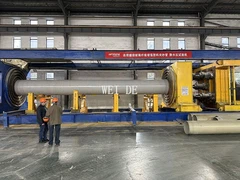


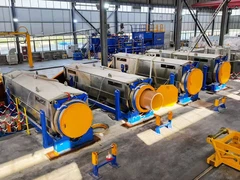
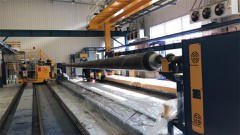
Can a Pressure Vessal Winding Machine be automated?
Sep 16, 2025
Leave a message
In the modern manufacturing landscape, automation has become a buzzword, revolutionizing industries and enhancing efficiency across the board. As a supplier of Pressure Vessal Winding Machine, I often encounter the question: Can a pressure vessel winding machine be automated? In this blog post, I will delve into this topic, exploring the possibilities, challenges, and benefits of automating pressure vessel winding machines.
Understanding Pressure Vessel Winding Machines
Before we discuss automation, it's essential to understand what pressure vessel winding machines do. These machines are used to manufacture pressure vessels, which are containers designed to hold gases or liquids at a pressure substantially different from the ambient pressure. Pressure vessels are widely used in various industries, including aerospace, automotive, energy, and manufacturing.
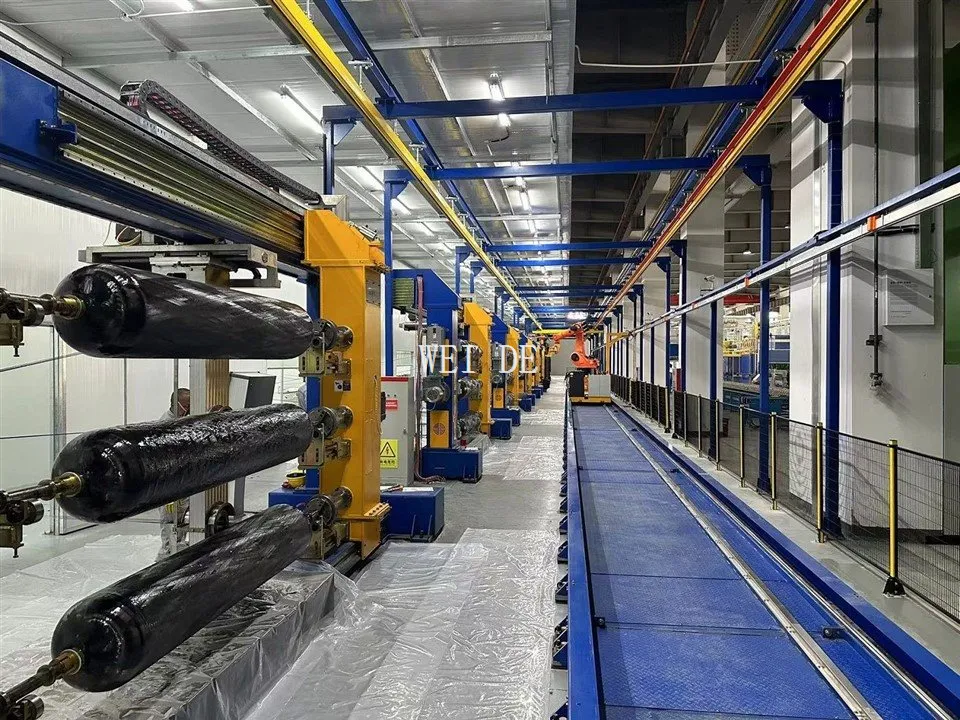

The winding process involves wrapping continuous fibers, such as carbon fiber or glass fiber, around a mandrel in a precise pattern to create a strong and lightweight structure. This process requires high precision and consistency to ensure the quality and integrity of the pressure vessel.
The Case for Automation
Automation in pressure vessel winding machines offers several significant advantages. Firstly, it improves efficiency. Automated machines can operate continuously without breaks, reducing production time and increasing output. They can also perform tasks at a much faster pace than manual labor, leading to higher productivity.
Secondly, automation enhances precision. Automated systems are programmed to follow precise patterns and measurements, ensuring consistent quality in every pressure vessel produced. This reduces the risk of human error, which can lead to defects and safety issues.
Thirdly, automation improves safety. Winding pressure vessels can be a hazardous task, especially when dealing with high-strength fibers and high-pressure environments. Automated machines can perform these tasks without exposing workers to potential dangers, reducing the risk of accidents and injuries.
Challenges of Automating Pressure Vessel Winding Machines
While the benefits of automation are clear, there are also several challenges that need to be addressed. One of the main challenges is the complexity of the winding process. Pressure vessels come in various shapes and sizes, and each requires a specific winding pattern. Developing an automated system that can handle this complexity requires advanced programming and control technology.
Another challenge is the cost of automation. Implementing an automated pressure vessel winding machine can be expensive, requiring significant investment in equipment, software, and training. Small and medium-sized manufacturers may find it difficult to justify the cost, especially if they have limited production volumes.
In addition, there is a shortage of skilled workers who can operate and maintain automated machines. As the manufacturing industry becomes more automated, there is a growing need for workers with expertise in robotics, programming, and automation technology.
Overcoming the Challenges
Despite these challenges, there are several ways to overcome them. One approach is to start small and gradually implement automation. Manufacturers can begin by automating specific tasks or processes, such as fiber feeding or mandrel rotation, and then expand the automation as they gain more experience and confidence.
Another approach is to collaborate with technology partners and suppliers. Many companies specialize in developing automation solutions for the manufacturing industry and can provide expertise and support in implementing automated pressure vessel winding machines.
Training is also crucial. Manufacturers should invest in training programs to ensure that their workers have the skills and knowledge to operate and maintain automated machines. This can help to bridge the skills gap and ensure the successful implementation of automation.
Examples of Automated Pressure Vessel Winding Machines
There are already several examples of automated pressure vessel winding machines on the market. For instance, some machines use robotic arms to perform the winding process, while others use advanced control systems to ensure precise and consistent winding patterns.
Pressure Cylinder Winding Machine is one such example. These machines are designed to automate the winding process for pressure cylinders, offering high efficiency and precision. They can handle a wide range of cylinder sizes and shapes, making them suitable for various applications.
Type 3 Cylinder Winding Machine is another example. These machines are specifically designed for manufacturing Type 3 cylinders, which are widely used in the automotive and aerospace industries. They offer advanced features such as automatic fiber tension control and real-time monitoring, ensuring high-quality and reliable production.
Conclusion
In conclusion, the answer to the question "Can a pressure vessel winding machine be automated?" is a resounding yes. While there are challenges to overcome, the benefits of automation in terms of efficiency, precision, and safety make it a worthwhile investment. As technology continues to advance, we can expect to see more automated pressure vessel winding machines on the market, offering even greater capabilities and performance.
If you are interested in learning more about our Pressure Vessal Winding Machine or discussing the possibilities of automation for your manufacturing needs, please do not hesitate to contact us. We are a leading supplier of pressure vessel winding machines and have extensive experience in developing and implementing automation solutions. Our team of experts is ready to work with you to find the best solution for your specific requirements.
References
- "Automation in Manufacturing: Trends and Challenges." Journal of Manufacturing Technology Management.
- "Advanced Composite Pressure Vessels: Design, Analysis, and Manufacturing." CRC Press.
- "Robotics and Automation in the Industrial Sector." IEEE Transactions on Industrial Electronics.
Send Inquiry