



Can a Pressure Vessal Winding Machine wind pressure vessels made of composite materials?
Nov 17, 2025
Leave a message
Hey there! As a supplier of Pressure Vessal Winding Machines, I often get asked if our machines can wind pressure vessels made of composite materials. Well, the short answer is yes, and in this blog, I'll dive deep into how and why.
Understanding Composite Materials in Pressure Vessels
Composite materials have become a game - changer in the world of pressure vessels. They're made by combining two or more different materials, usually a fiber (like carbon or glass) and a matrix (like epoxy resin). The result is a material that's lightweight, strong, and corrosion - resistant. These properties make composite pressure vessels ideal for a wide range of applications, from aerospace to automotive and even in the energy sector.
How Our Pressure Vessal Winding Machine Works
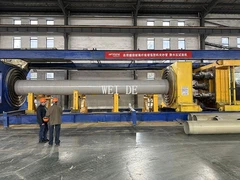
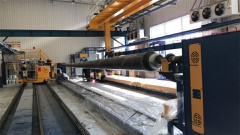
Our Pressure Vessal Winding Machine is designed to handle the winding process of composite materials onto pressure vessels with precision. The machine uses a filament - winding technique. Filament winding is a process where continuous fibers are impregnated with resin and then wound onto a rotating mandrel in a specific pattern.
The mandrel is the shape around which the fibers are wound, and it determines the final shape of the pressure vessel. Our machine can be programmed to wind the fibers in different patterns, such as helical or hoop winding. Helical winding provides strength in the longitudinal direction of the vessel, while hoop winding gives strength in the circumferential direction.
Winding Composite Pressure Vessels
When it comes to winding pressure vessels made of composite materials, our machine has several advantages. First off, it can handle different types of fibers. Whether you're using carbon fiber, which offers high strength - to - weight ratio, or glass fiber, which is more cost - effective, our machine can work with them.
The resin impregnation system in our machine ensures that the fibers are evenly coated with resin. This is crucial because proper resin distribution affects the mechanical properties of the final pressure vessel. Uneven resin distribution can lead to weak spots in the vessel, which is a big no - no when dealing with high - pressure applications.
Another great thing about our machine is its precision. The winding process is highly automated, and the machine can control the tension of the fibers during winding. This means that we can achieve consistent fiber placement and thickness across the entire pressure vessel. Consistent quality is key when producing pressure vessels, as they need to meet strict safety and performance standards.
Types of Composite Pressure Vessels We Can Wind
We have different models of our Pressure Vessal Winding Machine to cater to various types of composite pressure vessels.
Type 3 Cylinder Winding Machine
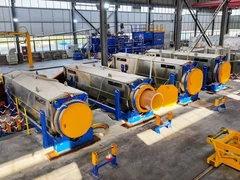
The Type 3 Cylinder Winding Machine is specifically designed for Type 3 composite cylinders. These cylinders have a metal liner (usually aluminum) that is over - wrapped with composite fibers. The metal liner provides a gas - tight seal, while the composite over - wrap adds strength. Our Type 3 Cylinder Winding Machine can precisely wind the composite fibers around the metal liner, ensuring a strong and reliable bond between the liner and the composite layer.
Type 4 Cylinder Winding Machine
If you're looking to produce Type 4 composite cylinders, our Type 4 Cylinder Winding Machine is the way to go. Type 4 cylinders have a non - metallic liner, typically made of plastic. These cylinders are even lighter than Type 3 cylinders, making them ideal for applications where weight is a critical factor, such as in hydrogen storage for fuel - cell vehicles. Our machine can wind the composite fibers around the plastic liner with high precision, creating a durable and efficient pressure vessel.
Quality Control and Safety
We understand that safety is of utmost importance when it comes to pressure vessels. That's why our Pressure Vessal Winding Machine is equipped with quality - control features. During the winding process, the machine can monitor the fiber tension, resin flow, and winding speed. Any deviations from the set parameters can be detected immediately, and the machine can make adjustments to ensure that the final pressure vessel meets the required quality standards.
In addition, our machines are designed with safety in mind. They have safety guards and emergency stop buttons to prevent accidents during operation. We also provide training to our customers on how to operate the machines safely and maintain them properly.
Cost - Effectiveness
Investing in our Pressure Vessal Winding Machine is a cost - effective solution for producing composite pressure vessels. The automation of the winding process reduces labor costs. Since the machine can work continuously and with high precision, it also reduces the amount of waste material. This means that you can produce more pressure vessels with less material, which ultimately saves you money in the long run.
Why Choose Our Pressure Vessal Winding Machine
There are many reasons to choose our Pressure Vessal Winding Machine. We have years of experience in the industry, and our machines are built with the latest technology. We offer excellent customer support, and we can customize the machine according to your specific requirements.


Whether you're a small - scale manufacturer looking to start producing composite pressure vessels or a large - scale company looking to upgrade your production line, our machine can meet your needs.
Let's Talk Business
If you're interested in our Pressure Vessal Winding Machine or have any questions about winding composite pressure vessels, don't hesitate to reach out. We're always happy to have a chat about your project and see how we can help you. Whether it's about the technical details of the machine, the production process, or the cost, we're here to provide you with all the information you need. Let's start a conversation and see how we can work together to take your composite pressure vessel production to the next level.
References
- "Filament Winding Technology" by D. Hull and T. W. Clyne
- "Composite Materials for Pressure Vessels" published by the American Society of Mechanical Engineers (ASME)
Send Inquiry