



What are the application requirements of GRP/Frp pipe widening in areas with high groundwater levels?
Nov 17, 2025
Leave a message
Hey there! I'm a supplier of GRP/FRP pipe widening, and today I wanna chat about the application requirements of GRP/FRP pipe widening in areas with high groundwater levels.
First off, let's understand what GRP/FRP pipes are. GRP stands for Glass Reinforced Plastic, and FRP is Fiber Reinforced Plastic. These pipes are super popular 'cause they're lightweight, corrosion - resistant, and have a long service life. But when it comes to using them in areas with high groundwater levels, there are some special things we need to consider.
Material Selection
One of the most important aspects is the material selection. In high - groundwater areas, the pipes are constantly exposed to water. So, the resin used in the GRP/FRP pipes has to be highly resistant to water absorption. A low water - absorption resin will prevent the pipes from getting weakened over time due to water penetration. For example, epoxy - based resins are often a great choice as they offer excellent water - resistance properties.
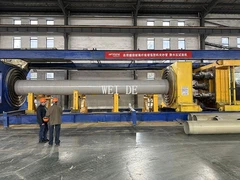
We also need to pay attention to the quality of the fiberglass. High - strength fiberglass can enhance the structural integrity of the pipes. The continuous fiberglass used in our pipes is sourced from top - notch suppliers. If you're interested in the equipment used to make these pipes, check out our Continuous Fiberglass Pipe Winding Machine. It's state - of - the - art and ensures the production of high - quality pipes.
Structural Design
The structural design of the GRP/FRP pipes is crucial in high - groundwater areas. The pipes need to be able to withstand the external hydrostatic pressure exerted by the groundwater. This means that the wall thickness of the pipes has to be carefully calculated. A thicker wall can provide more resistance to the pressure, but it also adds to the cost. So, we need to find a balance.
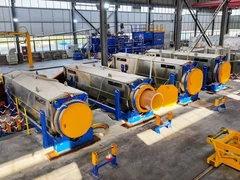
We usually use advanced design software to analyze the pressure conditions and determine the optimal wall thickness. Additionally, the pipe joints need to be designed in a way that they are watertight. Leaky joints can lead to water seepage into the pipes, which can cause problems in the long run. Our Continue Filament Winding FRP Pipe Produciton Line allows us to produce pipes with well - designed joints that meet the high - quality standards required for high - groundwater areas.
Installation Considerations
When it comes to installing GRP/FRP pipes in high - groundwater areas, proper foundation is key. The pipes should be laid on a stable and well - compacted base. This helps to distribute the load evenly and prevent the pipes from shifting due to the buoyancy force caused by the groundwater.
We also need to make sure that the pipes are properly supported along their length. Using pipe supports at regular intervals can prevent the pipes from sagging or getting damaged. During the installation process, it's important to keep the pipes dry as much as possible. If the pipes get wet before installation, it can affect the bonding of the resin and fiberglass, reducing the overall strength of the pipes.
Corrosion Protection
Even though GRP/FRP pipes are known for their corrosion - resistance, in high - groundwater areas, additional corrosion protection measures may be necessary. The groundwater may contain various chemicals and minerals that can potentially corrode the pipes over time.
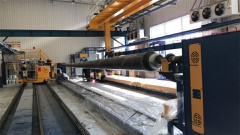
We can apply a special protective coating on the outer surface of the pipes. This coating acts as a barrier between the pipes and the groundwater, preventing any chemical reactions. Our Composite Material Winding Equipment can be used to apply these coatings in a precise and uniform manner.


Maintenance Requirements
Regular maintenance is essential for GRP/FRP pipes in high - groundwater areas. We need to inspect the pipes periodically for any signs of damage, such as cracks or leaks. If any issues are detected, they should be repaired immediately to prevent further damage.
Monitoring the groundwater level and the pressure around the pipes is also important. Changes in the groundwater conditions can put additional stress on the pipes, and we need to be aware of these changes to take appropriate actions.
Cost - Benefit Analysis
Of course, all these requirements come with a cost. But when we look at the long - term benefits, using GRP/FRP pipes in high - groundwater areas is definitely worth it. These pipes have a much longer service life compared to traditional pipes, which means less frequent replacements. They also require less maintenance, which saves on labor and material costs.
In the short term, the initial investment in high - quality GRP/FRP pipes and the necessary installation and protection measures may seem high. But in the long run, it pays off in terms of reduced downtime and lower overall costs.
Conclusion
In conclusion, the application of GRP/FRP pipe widening in areas with high groundwater levels requires careful consideration of material selection, structural design, installation, corrosion protection, and maintenance. As a supplier, we have the expertise and the right equipment to meet these requirements.
If you're in the market for GRP/FRP pipes for high - groundwater areas, don't hesitate to get in touch with us. We can provide you with detailed information, customized solutions, and high - quality products. Let's have a chat and see how we can work together to meet your project needs.
References
- "Fiber - Reinforced Polymer Composites in Civil Engineering" by V. C. Li
- "Design and Construction of Underground Structures" by J. P. O'Reilly
Send Inquiry