



Can Horizongtal winding work in high - temperature environments?
Sep 17, 2025
Leave a message
As a supplier of Horizontal winding technology, I've been frequently asked whether Horizontal winding can function effectively in high - temperature environments. This is a crucial question, especially considering the diverse industrial applications where high temperatures are a common challenge. In this blog, I'll delve into the science behind Horizontal winding and its performance under high - temperature conditions.
Understanding Horizontal Winding
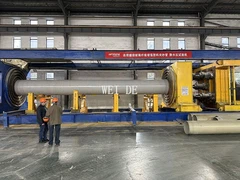
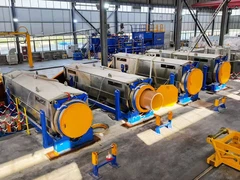
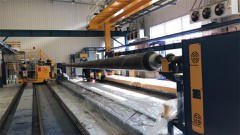
Horizontal winding is a manufacturing process used to create various products, such as pipes, pressure vessels, and composite structures. In this process, continuous fibers, typically made of materials like fiberglass, carbon fiber, or aramid, are wound around a rotating mandrel in a horizontal orientation. These fibers are often impregnated with a resin matrix, which cures to form a strong and durable composite material.
The advantages of Horizontal winding are numerous. It allows for precise control over the fiber placement, resulting in products with high strength - to - weight ratios. Additionally, it can be automated, leading to consistent quality and high production rates. However, the performance of Horizontal winding in high - temperature environments depends on several factors, including the type of fibers, resin, and the winding process itself.
Factors Affecting Horizontal Winding in High - Temperature Environments
1. Fiber Properties
The fibers used in Horizontal winding play a significant role in determining the product's performance at high temperatures. Different types of fibers have different thermal properties. For example, carbon fibers have excellent thermal stability and can withstand very high temperatures without significant degradation. They have a high melting point and low coefficient of thermal expansion, which means they maintain their shape and strength even under extreme heat.
On the other hand, fiberglass fibers are also commonly used in Horizontal winding. While they are relatively inexpensive and have good mechanical properties, their thermal resistance is lower compared to carbon fibers. At high temperatures, fiberglass may start to lose its strength and stiffness, which can affect the overall performance of the wound product.
2. Resin Selection
The resin matrix is another critical factor. The resin holds the fibers together and transfers the load between them. In high - temperature applications, the resin must have good thermal stability. Epoxy resins are widely used in Horizontal winding due to their excellent adhesion to fibers, high mechanical properties, and good chemical resistance.
However, traditional epoxy resins have limitations in high - temperature environments. They can start to degrade at temperatures above their glass transition temperature (Tg). When the temperature exceeds the Tg, the resin becomes softer, and the mechanical properties of the composite material can deteriorate significantly. To address this issue, high - temperature epoxy resins have been developed. These resins have a higher Tg and can maintain their properties at elevated temperatures.
For more information about epoxy - related winding machines, you can visit our Epoxy Filament Winding Machine and Epoxy Pipe Winding Machine pages.
3. Winding Process
The winding process itself can also influence the performance of Horizontal winding in high - temperature environments. The tension applied during winding affects the fiber alignment and the density of the composite material. If the tension is too high, it can cause fiber breakage, which may reduce the strength of the product. On the other hand, if the tension is too low, the fibers may not be properly compacted, leading to voids in the composite, which can also degrade the performance at high temperatures.
The curing process of the resin is also crucial. In high - temperature applications, the curing cycle needs to be carefully controlled to ensure that the resin fully cures and develops its optimal properties. If the curing temperature is too high or the curing time is too short, the resin may not cure properly, resulting in a weaker composite.
Applications in High - Temperature Environments
Despite the challenges, Horizontal winding is used in several high - temperature applications. One such application is in the production of high - pressure petroleum pipelines. These pipelines are often exposed to high temperatures due to the hot fluids flowing through them. The Horizontal winding process can be used to manufacture pipelines with high strength and corrosion resistance.
Our High - pressure Petroleum Pipeline Production Line utilizes advanced Horizontal winding technology to produce pipelines that can withstand high temperatures and pressures. The combination of high - strength fibers and high - temperature - resistant resins ensures the long - term performance of these pipelines in harsh environments.
Another application is in the aerospace industry. Composite components produced by Horizontal winding are used in aircraft engines and other high - temperature areas. The ability to precisely control the fiber orientation and the use of high - performance materials make Horizontal winding an ideal choice for these demanding applications.
Testing and Validation
To ensure that Horizontal winding products can perform in high - temperature environments, rigorous testing and validation are required. Thermal cycling tests are commonly used to simulate the repeated heating and cooling that the product may experience in real - world applications. These tests can help identify any potential issues, such as delamination, cracking, or loss of strength.


Mechanical testing, such as tensile, compressive, and flexural tests, is also conducted at elevated temperatures to determine the mechanical properties of the composite material. Non - destructive testing methods, such as ultrasonic testing and X - ray inspection, can be used to detect any internal defects in the wound product.
Conclusion
In conclusion, Horizontal winding can work in high - temperature environments, but it requires careful consideration of the fiber type, resin selection, and winding process. With the right combination of materials and processes, Horizontal winding can produce high - performance products that can withstand the challenges of high - temperature applications.
If you're interested in exploring Horizontal winding solutions for your high - temperature applications, we're here to help. Our team of experts can provide you with customized solutions based on your specific requirements. Contact us to start a discussion about your procurement needs and how our Horizontal winding technology can meet your challenges.
References
- Mallick, P. K. (2007). Fiber - Reinforced Composites: Materials, Manufacturing, and Design. CRC Press.
- Strong, A. B. (2008). Plastics Materials and Processing. Pearson Prentice Hall.
- Gibson, R. F. (2012). Principles of Composite Material Mechanics. CRC Press.
Send Inquiry