



What is the precision of the winding layer of a China winding machine?
Sep 17, 2025
Leave a message
Hey there! As a supplier of China winding machines, I often get asked about the precision of the winding layer in our machines. It's a crucial aspect that can make or break the quality of the final product, so let's dive right into it.
First off, what do we mean by the precision of the winding layer? Well, it refers to how accurately the winding machine can place the material, like fiber or wire, on the mandrel or core. Precision in this context means getting the right spacing, tension, and alignment every single time. A high - precision winding layer results in a product with consistent properties, better mechanical strength, and improved overall performance.
In our China winding machines, we've put a lot of effort into achieving top - notch precision. One of the key factors that contribute to this is the advanced control systems we use. These systems are like the brains of the machine. They can precisely control the speed of the mandrel rotation, the movement of the delivery head, and the tension of the winding material. For example, if we're winding a carbon fiber composite, the control system ensures that each fiber is laid down at the exact angle and distance from the previous one. This level of control is essential for creating products with the desired strength and stiffness characteristics.
Another aspect that affects precision is the mechanical design of the machine. Our winding machines are built with high - quality components and are engineered to minimize vibrations and errors. The guides and pulleys are carefully calibrated to ensure smooth and accurate movement of the winding material. Even the smallest misalignment in these components can lead to uneven winding layers, so we pay close attention to every detail during the manufacturing process.
Let's talk about some of the specific types of winding machines we offer and how precision plays a role in each of them.


Epoxy Horizontal Winding Machine
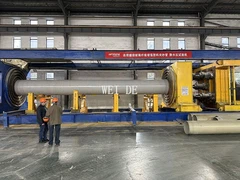
The Epoxy Horizontal Winding Machine is designed for winding products in a horizontal orientation. This type of machine is often used for manufacturing large - scale components like pressure vessels and pipes. Precision is extremely important here because any deviation in the winding layer can lead to weak spots in the final product. For instance, if the epoxy resin and fiber are not wound evenly, the pressure vessel may not be able to withstand the intended pressure, which can be a safety hazard. Our epoxy horizontal winding machines use advanced sensors and feedback mechanisms to constantly monitor and adjust the winding process, ensuring a high - precision winding layer.
Epoxy Pipe Winding Machine
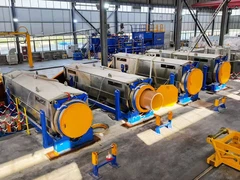
The Epoxy Pipe Winding Machine is specialized for making pipes. Pipes need to have a uniform wall thickness and a consistent winding pattern to ensure proper flow and structural integrity. Our machines are capable of achieving very high precision in pipe winding. The control system can adjust the winding speed and tension based on the diameter and length of the pipe being produced. This means that whether you're making a small - diameter pipe for a plumbing system or a large - diameter pipe for industrial applications, our machine can produce a high - quality product with a precise winding layer.
Epoxy Filament Winding Machine
The Epoxy Filament Winding Machine is used for winding filaments, which are often used in the aerospace and automotive industries. In these industries, the precision requirements are extremely high. A single flaw in the winding layer can compromise the performance of the entire component. Our epoxy filament winding machines are equipped with state - of - the - art technology to ensure that each filament is wound with the utmost precision. The machines can handle different types of filaments, such as glass fiber, aramid fiber, and carbon fiber, and can adjust the winding parameters accordingly.
Now, you might be wondering how we measure the precision of the winding layer. We use a combination of in - process and post - process inspection methods. During the winding process, sensors can detect any changes in tension, speed, or position. If a deviation is detected, the control system can make immediate adjustments. After the winding is complete, we use non - destructive testing methods, such as ultrasonic testing and X - ray inspection, to check the quality of the winding layer. These methods can detect any internal defects or irregularities that may not be visible to the naked eye.
In addition to the technical aspects, we also have a team of experienced engineers and technicians who are dedicated to ensuring the precision of our winding machines. They are constantly working on improving the design and performance of the machines. They conduct regular maintenance and calibration to keep the machines in optimal condition. And they're always available to provide support and advice to our customers.
If you're in the market for a high - precision winding machine, we're here to help. Whether you're a small - scale manufacturer looking for a reliable machine for your production line or a large - scale industrial company with specific requirements, we have the expertise and the products to meet your needs. Our winding machines are not only precise but also durable and easy to operate. We offer a range of customization options, so you can get a machine that's tailored to your exact specifications.
If you're interested in learning more about our China winding machines or want to discuss your specific requirements, don't hesitate to get in touch. We're eager to have a chat with you and see how we can help you take your production to the next level.
References
- "Advanced Composites Manufacturing Technology" by John Summerscales
- "Filament Winding Technology" by S. T. Peters
Send Inquiry