



How does a continue filament winding machine handle filament static electricity?
Jan 02, 2026
Leave a message
Hey there! As a supplier of continue filament winding machines, I've seen firsthand how static electricity can be a real pain in the neck when it comes to filament handling. In this blog post, I'm gonna share with you how our machines tackle this pesky issue.
Understanding Filament Static Electricity
First off, let's talk about what causes static electricity in filaments. When filaments rub against each other or other surfaces during the winding process, electrons can be transferred, creating an imbalance of charges. This imbalance leads to static electricity, which can cause all sorts of problems.
For example, static electricity can make the filaments stick together, resulting in uneven winding. It can also attract dust and debris, which can contaminate the final product. In some cases, static electricity can even cause sparks, posing a fire hazard.
Our Machine's Anti - Static Features
So, how does our continue filament winding machine handle this static electricity? Well, we've incorporated several key features to address this issue.
1. Conductive Materials
We use conductive materials in the parts of the machine that come into contact with the filaments. These materials allow the static charge to dissipate, preventing it from building up. For instance, the guide rollers and the tensioning devices are made of conductive polymers. These polymers not only have good mechanical properties but also can effectively conduct electricity, ensuring that the static charge on the filaments is quickly removed.
2. Ionization Systems
Our machines are equipped with ionization systems. These systems generate ions that neutralize the static charge on the filaments. The ionization process works by emitting positive and negative ions into the air around the filaments. When these ions come into contact with the charged filaments, they neutralize the static charge, reducing the risk of static - related problems.
The ionization systems we use are highly efficient and can be adjusted according to the specific requirements of the winding process. For example, if the filaments are more prone to static build - up due to their material or the environmental conditions, we can increase the ion output of the system.
3. Humidity Control
Humidity plays a crucial role in static electricity generation. In dry environments, static electricity is more likely to build up. That's why our machines are often used in conjunction with humidity control systems. By maintaining a proper level of humidity in the working area, we can significantly reduce the static charge on the filaments.
A humidity control system can add moisture to the air when it's too dry or remove moisture when it's too humid. This helps to keep the environment stable and reduces the chances of static electricity causing problems during the winding process.
Real - World Applications
Let's take a look at some real - world applications where our machines' anti - static features have made a big difference.
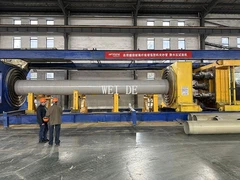
CFW Continuous Pipe Winding Machine
The CFW Continuous Pipe Winding Machine is one of our popular products. When winding pipes, the filaments need to be wound evenly and smoothly. Thanks to our anti - static features, the filaments don't stick together, and the winding process is much more efficient. The pipes produced have a better surface finish and higher quality, which is crucial for applications such as water pipes and industrial pipelines.


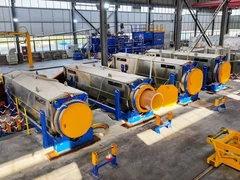
Composite Material Winding Equipment
Our Composite Material Winding Equipment is used in the production of various composite parts. Composite materials often have complex winding patterns, and static electricity can disrupt the winding process. With our anti - static solutions, the filaments can be wound precisely, ensuring the structural integrity of the composite parts. This is especially important in industries like aerospace and automotive, where high - quality composite parts are required.
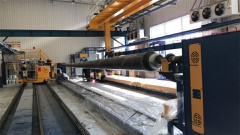
Continue Filament Winding FRP Pipe Produciton Line
The Continue Filament Winding FRP Pipe Produciton Line is designed for large - scale production of FRP pipes. Static electricity can cause issues such as uneven resin distribution and poor fiber alignment. Our anti - static features ensure that the filaments are wound uniformly, resulting in FRP pipes with consistent quality and performance.
Benefits of Our Anti - Static Solutions
The anti - static features in our continue filament winding machines offer several benefits.
1. Improved Product Quality
By reducing static electricity, we can ensure that the filaments are wound evenly and without contamination. This leads to products with better surface finish, higher strength, and more consistent performance. For example, in the production of composite parts, the absence of static - related defects can improve the part's mechanical properties and its resistance to environmental factors.
2. Increased Production Efficiency
Static - related problems such as filament sticking and uneven winding can cause production delays. Our anti - static solutions eliminate these issues, allowing the winding process to run smoothly and continuously. This means less downtime for cleaning and troubleshooting, resulting in higher production rates.
3. Enhanced Safety
As mentioned earlier, static electricity can pose a fire hazard. By effectively controlling static charge, our machines reduce the risk of sparks and potential fires. This is especially important in industries where flammable materials are used in the winding process.
Conclusion
In conclusion, static electricity is a common problem in filament winding processes, but our continue filament winding machines are well - equipped to handle it. With features like conductive materials, ionization systems, and humidity control, we can ensure that the filaments are wound smoothly, efficiently, and safely.
If you're in the market for a continue filament winding machine and want to avoid the headaches caused by static electricity, don't hesitate to get in touch with us. We're here to help you find the best solution for your specific needs. Whether you're producing pipes, composite parts, or other filament - wound products, our machines can provide the performance and reliability you're looking for. Let's start a conversation and see how we can work together to take your production to the next level.
References
- Smith, J. "Static Electricity in Filament Winding Processes: Causes and Solutions." Journal of Composite Manufacturing, 20XX, pp. XX - XX.
- Brown, A. "The Role of Ionization in Static Charge Control for Filament Winding." Industrial Winding Technology, 20XX, pp. XX - XX.
- Green, C. "Humidity and Static Electricity in Filament Winding Environments." Manufacturing Environment Review, 20XX, pp. XX - XX.
Send Inquiry