



How does the cost of Type 4 cylinders compare to other types?
Dec 26, 2025
Leave a message
Yo, what's up everyone! I'm a supplier of Type 4 cylinders, and today I wanna chat about how the cost of Type 4 cylinders stacks up against other types.
Let's start by getting a bit of background on these different types of cylinders. There are mainly Type 1, Type 2, Type 3, and of course, Type 4 cylinders. Each type has its own unique construction and features, which ultimately affect their costs.
Type 1 Cylinders
Type 1 cylinders are the most basic ones. They're made entirely of metal, usually steel or aluminum. These cylinders have been around for ages and are pretty simple in design. The manufacturing process is relatively straightforward, and the materials used are commonly available. This simplicity means that the cost of producing Type 1 cylinders is generally on the lower side. You don't need any fancy equipment or complex techniques to make them. They're great for applications where weight isn't a huge concern and you're looking for a cost - effective solution. For example, in some industrial settings where cylinders are used for storing common gases like nitrogen or oxygen in large quantities, Type 1 cylinders can be a go - to option. However, they do have their drawbacks. They're heavy, which can be a problem if you need to move them around a lot. And they're also more prone to corrosion over time, especially if they're exposed to harsh environments.
Type 2 Cylinders
Type 2 cylinders are an upgrade from Type 1. They have a metal liner, just like Type 1, but they also have a composite overwrap. This composite overwrap provides additional strength and helps to reduce the weight of the cylinder compared to a Type 1. The manufacturing process for Type 2 cylinders is a bit more complex than that of Type 1. You need to add the step of applying the composite overwrap, which requires some specialized equipment and skills. As a result, the cost of Type 2 cylinders is higher than Type 1. But the benefits are worth it in many cases. The reduced weight makes them more portable, and the composite overwrap can offer better protection against corrosion. They're often used in applications where weight is a bit more of a factor, like in some smaller - scale industrial operations or in some transportation - related uses.
Type 3 Cylinders
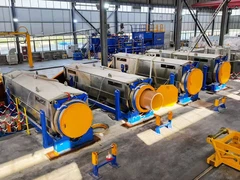
Now, let's talk about Type 3 cylinders. These cylinders have a metallic liner, but the composite overwrap covers a larger portion of the cylinder compared to Type 2. This gives them even better strength - to - weight ratio. The manufacturing of Type 3 cylinders involves more precise winding of the composite material around the metal liner. You can check out the Type 3 Cylinder Winding Machine to get an idea of the kind of equipment used in their production. The cost of Type 3 cylinders is significantly higher than Type 1 and Type 2. The materials used for the composite overwrap are often high - performance fibers, which are more expensive. And the manufacturing process requires a high level of precision and quality control. Type 3 cylinders are commonly used in applications where high pressure and low weight are crucial, such as in some aerospace or high - end automotive applications.
Type 4 Cylinders
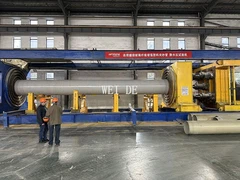
Okay, here comes my specialty - Type 4 cylinders. Type 4 cylinders have a non - metallic liner, usually made of plastic, and a full composite overwrap. This design results in a cylinder that is extremely lightweight. In fact, they can be up to 50% lighter than Type 1 cylinders. The manufacturing process for Type 4 cylinders is the most complex among these types. You need to ensure the proper bonding between the non - metallic liner and the composite overwrap. The Type 4 Cylinder Winding Machine is a key piece of equipment in their production. It allows for the precise winding of the composite fibers around the liner to create a strong and reliable structure.
The cost of Type 4 cylinders is higher than Type 1, Type 2, and even Type 3 in many cases. The non - metallic liner material can be relatively expensive, especially if it needs to meet certain standards for chemical resistance and gas permeability. And the composite materials used for the overwrap are also high - end. However, the benefits are huge. Their lightweight nature makes them ideal for applications where weight is of the utmost importance. For example, in the automotive industry, especially in electric and hydrogen - powered vehicles, Type 4 cylinders are used to store hydrogen. The reduced weight helps to improve the vehicle's fuel efficiency and range. In the aerospace industry, they can be used for storing various gases on aircraft, again because of their low weight.


Cost Comparison in Detail
When it comes to the actual cost comparison, let's break it down in terms of raw materials, manufacturing, and maintenance.
Raw Materials
As I mentioned earlier, Type 1 cylinders use common metals like steel or aluminum, which are relatively inexpensive. Type 2 and Type 3 cylinders use more expensive composite materials in addition to the metal liner. Type 4 cylinders take it a step further with the non - metallic liner and high - performance composite overwrap. The cost of these materials can vary depending on market conditions, but generally, Type 4 cylinder materials are the most costly.
Manufacturing
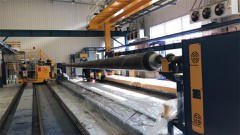
The manufacturing process for Type 1 cylinders is the simplest, so the labor and equipment costs are relatively low. Type 2 and Type 3 cylinders require more complex processes and specialized equipment, increasing the manufacturing cost. Type 4 cylinders need the most advanced manufacturing techniques and equipment, like the Pressure Cylinder Winding Machine. The precision required in winding the composite overwrap around the non - metallic liner is extremely high, which drives up the manufacturing cost.
Maintenance
Type 1 cylinders may require more maintenance over time due to corrosion. You might need to regularly inspect and treat them to prevent rust. Type 2 and Type 3 cylinders have better corrosion resistance thanks to the composite overwrap, so their maintenance costs are lower. Type 4 cylinders, with their advanced design and materials, also have relatively low maintenance requirements. However, if there is any damage to the non - metallic liner or the composite overwrap, the repair can be expensive because of the specialized materials and skills needed.
Why Choose Type 4 Cylinders Despite the Cost
Even though Type 4 cylinders are more expensive, there are many reasons why customers choose them. The weight savings can lead to significant cost savings in the long run. For example, in the transportation industry, less weight means less fuel consumption, which translates to lower operating costs. And in applications where space is limited, the smaller and lighter Type 4 cylinders can be a better fit. Also, the high - performance materials used in Type 4 cylinders offer better safety features. They're less likely to rupture under high pressure compared to some other types of cylinders.
If you're in the market for high - quality Type 4 cylinders, I'd love to have a chat with you. Whether you're from the automotive, aerospace, or any other industry that could benefit from our cylinders, we can discuss your specific needs and how our Type 4 cylinders can be the right solution for you. Don't hesitate to reach out and start a conversation about your procurement requirements.
References
- Industry reports on gas cylinder manufacturing and usage
- Technical specifications of different types of gas cylinders from leading manufacturers
So, that's a comprehensive look at how the cost of Type 4 cylinders compares to other types. I hope this blog has given you a better understanding of the factors involved and why Type 4 cylinders, despite their higher cost, can be a great investment in many applications.
Send Inquiry