



How does the turn spacing affect the performance of Horizongtal winding?
Nov 27, 2025
Leave a message
Hey there! I'm a supplier of Horizontal winding products, and today I wanna chat about how turn spacing affects the performance of Horizontal winding. It's a topic that might not sound super exciting at first, but trust me, it's crucial for getting the best results in our industry.
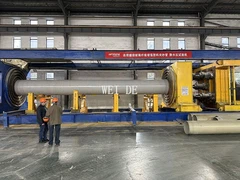
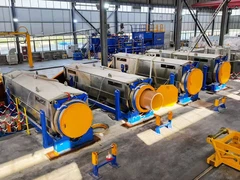
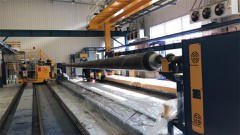
First off, let's quickly go over what Horizontal winding is. It's a process where we wind materials like fiberglass or other fibers around a core in a horizontal direction. This technique is widely used in making all sorts of products, from Marine Fiberglass Pipeline Production Line to High-pressure Petroleum Pipeline Production Line. And of course, our Epoxy Horizontal Winding Machine plays a key role in this whole process.
Now, let's dive into the turn spacing. Turn spacing refers to the distance between each turn of the winding material on the core. It might seem like a small detail, but it can have a huge impact on the performance of the final product.
Strength and Durability
One of the most important aspects affected by turn spacing is the strength of the wound product. When the turn spacing is too wide, there are larger gaps between the winding layers. This can lead to a weaker structure because there's less material holding everything together. For example, in a fiberglass pipeline, wide turn spacing might make the pipe more prone to cracking or breaking under pressure.
On the other hand, if the turn spacing is too narrow, the winding material can bunch up. This can cause uneven stress distribution within the product. Some areas might end up being too thick and over - stressed, while others could be weaker due to improper winding. A well - balanced turn spacing ensures that the stress is evenly distributed across the entire product, making it stronger and more durable.
Resin Penetration
Resin penetration is another critical factor. In many Horizontal winding processes, resin is used to bond the winding material together and give the product its final shape and properties. When the turn spacing is appropriate, the resin can flow easily between the turns and fully penetrate the winding material.


If the turn spacing is too wide, the resin might not be able to fill the gaps properly. This can result in voids or air pockets within the product, which weaken its structure and can also affect its chemical resistance. Conversely, if the turn spacing is too narrow, the resin might have difficulty flowing through, leading to incomplete saturation of the winding material. This can cause delamination or other structural issues over time.
Dimensional Accuracy
Turn spacing also has an impact on the dimensional accuracy of the wound product. In applications where precise dimensions are crucial, such as in the manufacturing of pipes for specific industrial uses, the turn spacing needs to be carefully controlled.
Wide turn spacing can cause the product to be larger than intended because there's more space between the turns. This can lead to fitting problems when the product is installed. Narrow turn spacing, on the other hand, can make the product smaller than the desired size. This can also cause issues during installation and may not meet the required specifications.
Production Efficiency
Believe it or not, turn spacing can even affect production efficiency. When the turn spacing is optimized, the winding process can run more smoothly. The machine doesn't have to work as hard to wind the material, and there are fewer chances of jams or other mechanical issues.
If the turn spacing is too wide, the machine might have to make more passes to cover the core, which increases the production time. Too narrow turn spacing can also slow down the process because the machine has to move more precisely and carefully to avoid bunching up the material.
Finding the Right Turn Spacing
So, how do we find the right turn spacing? Well, it depends on several factors. The type of winding material is a major consideration. Different materials have different properties, such as flexibility, thickness, and stiffness. For example, a thicker and stiffer material might require a wider turn spacing compared to a thinner and more flexible one.
The size and shape of the core also matter. A larger core might be able to accommodate a wider turn spacing without sacrificing strength, while a smaller core might need a narrower spacing for better winding.
The intended application of the product is another crucial factor. If the product is going to be used in a high - stress environment, like a high - pressure pipeline, a more precise and narrow turn spacing might be needed to ensure maximum strength.
Real - World Examples
Let's take a look at some real - world examples to see how turn spacing affects performance. In the production of marine fiberglass pipelines using a Marine Fiberglass Pipeline Production Line, the turn spacing needs to be carefully adjusted. These pipelines are exposed to harsh marine environments, including saltwater corrosion and high - pressure waves. A proper turn spacing ensures that the pipeline is strong enough to withstand these conditions and has good resin penetration to resist corrosion.
In the case of high - pressure petroleum pipelines made with a High - pressure Petroleum Pipeline Production Line, the turn spacing is critical for maintaining the integrity of the pipeline under high internal pressure. Any weakness due to improper turn spacing could lead to leaks or even explosions, which are extremely dangerous in the petroleum industry.
Our Epoxy Horizontal Winding Machine is designed to allow for precise control of the turn spacing. This gives our customers the flexibility to adjust the winding process according to their specific needs.
Conclusion
In conclusion, turn spacing is a crucial factor in the performance of Horizontal winding. It affects the strength, durability, resin penetration, dimensional accuracy, and production efficiency of the final product. By carefully considering the type of material, core size, and intended application, we can find the optimal turn spacing for each project.
As a Horizontal winding supplier, we're always looking for ways to improve our products and processes. We understand the importance of turn spacing and are committed to providing our customers with the best solutions. If you're in the market for Horizontal winding products or want to learn more about how turn spacing can benefit your specific application, don't hesitate to get in touch. We'd love to have a chat and help you find the perfect solution for your needs.
References
- "Composite Materials Handbook" - A comprehensive guide on composite manufacturing processes, including Horizontal winding.
- Industry research papers on the effects of winding parameters on product performance.
So, if you're interested in discussing your Horizontal winding requirements, feel free to reach out and let's start a conversation about how we can work together to get the best results.
Send Inquiry