



Can 'Countinue winding' be used in the industrial automation industry?
Nov 27, 2025
Leave a message
Hey there! I'm a supplier of Countinue winding products, and today I wanna chat about whether "Countinue winding" can be used in the industrial automation industry.
First off, let's get a basic understanding of what Countinue winding is. Countinue winding is a process where materials are wound continuously around a core or a mandrel. This technique has been around for a while, and it's got some pretty cool applications.


In the industrial automation industry, efficiency and precision are key. That's where Countinue winding really shines. One of the big advantages of using Countinue winding in this industry is its ability to produce consistent and high - quality products. When you're winding materials continuously, you can maintain a steady tension and speed, which results in a more uniform end - product.
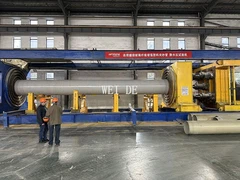
Let's take a look at some of the specific applications. For example, in the production of pipes. We have some great machines for this, like the CFW Continuous Pipe Winding Machine. This machine uses Countinue winding technology to create pipes with excellent structural integrity. The continuous winding process ensures that the fibers or other materials are evenly distributed around the pipe, making it stronger and more durable.
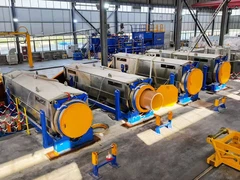
Another application is in the manufacturing of fiberglass pipes. The Continuous Fiberglass Pipe Winding Machine is a prime example. Fiberglass pipes are widely used in various industries, such as chemical processing, water treatment, and oil and gas. With Countinue winding, we can produce these pipes with high precision and at a relatively high speed. The continuous nature of the winding process also reduces the chances of defects, which is a huge plus in industrial applications.
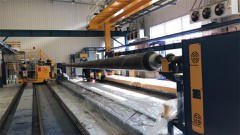
We also have a Continue Filament Winding FRP Pipe Produciton Line. This production line is designed to streamline the manufacturing process of FRP (Fiber - Reinforced Plastic) pipes. It combines the benefits of Countinue winding with automation, allowing for mass production with minimal human intervention. This not only saves time and labor costs but also improves the overall quality of the pipes.
Now, let's talk about the technical aspects. In an automated industrial setting, Countinue winding can be easily integrated with other manufacturing processes. For instance, it can be connected to a control system that monitors and adjusts the winding parameters in real - time. This means that if there's any deviation in tension, speed, or other factors, the system can make immediate corrections. This level of control is crucial in ensuring the quality and consistency of the final product.
Moreover, Countinue winding can be used with a variety of materials. Whether it's carbon fiber, fiberglass, or other composite materials, the process can be adjusted to suit the specific properties of the material. This flexibility makes it a valuable tool in the industrial automation industry, where different materials are often required for different applications.
However, like any technology, Countinue winding also has its challenges. One of the main challenges is the initial setup cost. Setting up a Countinue winding system requires a significant investment in machinery, software, and training. But in the long run, the benefits of increased efficiency, higher quality, and reduced waste often outweigh the initial costs.
Another challenge is the need for skilled operators. Although the process is automated to a large extent, there's still a need for trained personnel to monitor and maintain the equipment. This means that companies need to invest in training their employees to ensure that they can operate the Countinue winding systems effectively.
Despite these challenges, the potential of Countinue winding in the industrial automation industry is huge. As technology continues to advance, we can expect to see even more improvements in Countinue winding systems. For example, the use of artificial intelligence and machine learning could further optimize the winding process, making it even more efficient and precise.
In conclusion, "Countinue winding" definitely has a place in the industrial automation industry. Its ability to produce high - quality, consistent products, combined with its flexibility and potential for integration with other processes, makes it a valuable asset. If you're in the industrial automation business and looking for ways to improve your manufacturing processes, Countinue winding could be the solution you've been searching for.
If you're interested in learning more about our Countinue winding products or have any questions about how they can fit into your industrial automation setup, don't hesitate to reach out. We're here to help you make the most of this exciting technology.
References
- General knowledge of industrial automation and winding processes
- Product specifications of CFW Continuous Pipe Winding Machine, Continuous Fiberglass Pipe Winding Machine, and Continue Filament Winding FRP Pipe Produciton Line
Send Inquiry