



How long does it take to 3D print a GRP pipe?
Sep 30, 2025
Leave a message
When it comes to the manufacturing of GRP (Glass Reinforced Plastic) pipes, 3D printing technology has emerged as a revolutionary approach. As a leading 3D print GRP pipe supplier, I often get asked about the time it takes to 3D print a GRP pipe. In this blog post, I'll delve into the various factors that influence the 3D printing time of GRP pipes and provide a comprehensive analysis.
Understanding the Basics of 3D Printing GRP Pipes
Before we discuss the printing time, it's essential to understand how 3D printing of GRP pipes works. 3D printing, also known as additive manufacturing, involves creating objects layer by layer. In the case of GRP pipes, the process typically uses continuous filament winding techniques. This method involves winding glass fibers impregnated with resin around a rotating mandrel to build up the pipe wall.
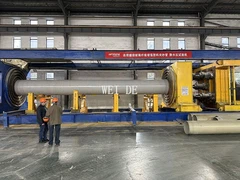
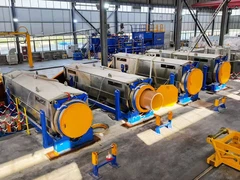
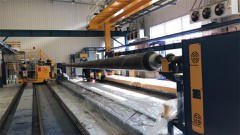
The CFW Continuous Pipe Winding Machine is a prime example of the equipment used in this process. It allows for precise control over the winding pattern and speed, ensuring high - quality GRP pipes. The Continue Filament Winding FRP Pipe Produciton Line further streamlines the production process, integrating multiple steps from fiber impregnation to final curing.
Factors Affecting the 3D Printing Time of GRP Pipes
Pipe Dimensions
One of the most significant factors influencing the printing time is the dimensions of the GRP pipe. Larger diameter and longer pipes naturally take more time to print. For instance, a small - diameter pipe with a length of a few meters can be printed relatively quickly compared to a large - diameter pipe that may be tens of meters long. The volume of material that needs to be deposited and the number of layers required increase with the size of the pipe.
If we consider a simple geometric model, the surface area of the pipe wall is directly proportional to its diameter and length. More surface area means more glass fibers and resin need to be applied, which in turn increases the printing time. For example, a pipe with a diameter of 100 mm and a length of 5 meters will take less time to print than a pipe with a diameter of 500 mm and a length of 20 meters.
Wall Thickness
The wall thickness of the GRP pipe also plays a crucial role. Thicker walls require more layers of glass fibers and resin to be wound around the mandrel. Each additional layer adds to the overall printing time. A pipe with a thin wall, say 5 mm, can be printed faster than a pipe with a wall thickness of 20 mm. The Continuous Fiberglass Pipe Winding Machine can be adjusted to control the number of layers and the thickness of each layer, but the overall time will still increase with greater wall thickness.
Winding Speed
The speed at which the glass fibers are wound around the mandrel is another important factor. Modern winding machines, like the ones mentioned above, offer adjustable winding speeds. However, there are limits to how fast the winding can be done. If the winding speed is too high, it may lead to uneven distribution of the fibers or improper impregnation with the resin, resulting in a lower - quality pipe.
Typically, the winding speed is determined based on the properties of the glass fibers and the resin used. For high - strength glass fibers, a slower winding speed may be required to ensure proper alignment and bonding. On average, the winding speed can range from a few meters per minute to tens of meters per minute, depending on the specific requirements of the pipe.


Resin Curing Time
After the glass fibers are wound around the mandrel, the resin needs to cure. The curing time is affected by several factors, including the type of resin, temperature, and humidity. Some resins cure faster at higher temperatures, while others may require a specific curing environment.
For example, a fast - curing resin may take only a few hours to fully cure, while a slow - curing resin may take up to a day or more. The curing process is an essential step in ensuring the structural integrity of the GRP pipe. If the resin is not fully cured, the pipe may not have the required strength and durability.
Estimating the 3D Printing Time
Based on the factors discussed above, it's difficult to provide a one - size - fits - all answer to how long it takes to 3D print a GRP pipe. However, we can provide some general estimates.
For a small - diameter (less than 200 mm), thin - walled (less than 10 mm) GRP pipe with a length of up to 10 meters, the total 3D printing time, including winding and curing, can be around 8 - 12 hours. This estimate assumes a moderate winding speed and a fast - curing resin.
For a medium - sized (200 - 500 mm diameter), medium - walled (10 - 20 mm) GRP pipe with a length of 10 - 20 meters, the printing time can range from 12 - 24 hours. The larger size and greater wall thickness require more time for winding, and the curing time may also be longer.
For large - diameter (greater than 500 mm), thick - walled (greater than 20 mm) GRP pipes with lengths of over 20 meters, the printing time can exceed 24 hours and may even take several days, depending on the specific requirements and the curing conditions.
Quality Control and Post - Processing
In addition to the actual 3D printing and curing time, there are also quality control and post - processing steps that need to be considered. After the pipe is printed and cured, it undergoes a series of tests to ensure it meets the required standards. These tests may include pressure testing, dimensional inspection, and material analysis.
Post - processing steps may include cutting the pipe to the desired length, smoothing the edges, and applying a protective coating. These steps can add additional time to the overall production process, but they are essential for delivering a high - quality GRP pipe.
Conclusion
As a 3D print GRP pipe supplier, we understand that the time it takes to 3D print a GRP pipe is influenced by multiple factors. By carefully considering the pipe dimensions, wall thickness, winding speed, and resin curing time, we can provide our customers with accurate estimates of the production time.
If you are in the market for high - quality 3D printed GRP pipes, we encourage you to contact us for a detailed consultation. Our team of experts can help you determine the best specifications for your application and provide you with a customized production plan. Whether you need small - scale or large - scale production, we have the expertise and equipment to meet your needs.
References
- “Handbook of Filament Winding Technology” by Robert T. Tucker
- “Advanced Composites Manufacturing” by Paul K. Mallick
- Industry reports on GRP pipe manufacturing and 3D printing technology
Send Inquiry