



How to adjust the production speed of a centrifigua casting grp pipe machine according to different requirements?
Oct 30, 2025
Leave a message
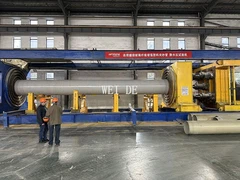
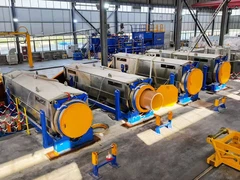
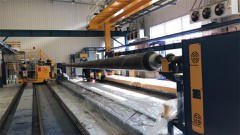
Hey there! I'm a supplier of centrifigua casting GRP pipe machines. One of the most common questions I get from customers is how to adjust the production speed of these machines according to different requirements. Well, I'm here to share some tips and insights on this topic.
First off, let's understand why adjusting the production speed is so important. Different projects have different needs. Sometimes, you might be working on a large - scale project with a tight deadline, and you'll need to crank up the production speed. On the other hand, for projects that require high - precision pipes, you might want to slow down the process to ensure quality.
Factors Affecting Production Speed
There are several factors that can influence the production speed of a centrifigua casting GRP pipe machine.
Pipe Specifications
The diameter, wall thickness, and length of the pipes you're producing play a huge role. For instance, pipes with larger diameters or thicker walls generally take longer to produce. This is because more material needs to be distributed evenly during the centrifugal casting process. If you're making a small - diameter pipe with a thin wall, you can usually increase the speed.
Material Properties
The type of resin and glass fiber used in the GRP pipes also matters. Some resins have a faster curing time than others. If you're using a resin with a quick curing time, you can potentially increase the production speed. However, you need to make sure that the glass fiber is properly impregnated with the resin at the higher speed. Otherwise, it can lead to quality issues like delamination or uneven fiber distribution.
Machine Condition
The overall condition of the centrifigua casting GRP pipe machine is crucial. A well - maintained machine will run more smoothly and allow for higher production speeds. Regular maintenance, such as checking the bearings, belts, and motors, is essential. If there are any worn - out parts, they should be replaced immediately. A machine that is in poor condition might break down during high - speed production, causing costly delays.
Adjusting the Production Speed
Now that we know the factors, let's talk about how to actually adjust the speed.
Step 1: Analyze the Project Requirements
Before you start adjusting the speed, sit down and understand the project requirements. Look at the pipe specifications, the quantity of pipes needed, and the delivery deadline. If it's a project where quality is the top priority, you might want to keep the speed on the lower side. But if you're under pressure to meet a tight deadline and the quality requirements are not extremely strict, you can consider increasing the speed.
Step 2: Check the Machine Settings
Most modern centrifigua casting GRP pipe machines come with adjustable speed settings. You can usually find these settings on the control panel. Start by referring to the machine's manual to understand how to access and adjust the speed. Some machines allow you to set the speed in different stages of the production process. For example, you can set a slower speed for the initial resin and fiber loading and then increase it during the centrifugal rotation.
Step 3: Conduct Test Runs
Once you've adjusted the speed settings, it's a good idea to conduct a few test runs. Produce a small batch of pipes and carefully inspect them for quality. Check for any signs of defects such as cracks, uneven surfaces, or improper resin - fiber distribution. If you notice any issues, you might need to readjust the speed or other machine settings.
Step 4: Monitor the Process
During full - scale production, constantly monitor the process. Keep an eye on the machine's performance, the quality of the pipes being produced, and the production output. If you notice any changes in the quality or if the machine starts to show signs of stress, you may need to adjust the speed accordingly.
Case Studies
Let me share a couple of real - life examples to illustrate how speed adjustment works.
Case 1: High - Volume Project
We had a customer who was working on a large - scale infrastructure project. They needed to produce a huge quantity of standard - sized GRP pipes within a short period. After analyzing the project requirements, we recommended increasing the production speed of their centrifigua casting GRP pipe machine. We made some adjustments to the machine settings and conducted test runs. The initial test runs showed some minor quality issues, but after some fine - tuning, we were able to increase the speed significantly without compromising too much on quality. The customer was able to meet their deadline and complete the project successfully.
Case 2: High - Precision Project
Another customer was involved in a project where the pipes needed to have extremely precise dimensions and high - quality finishes. In this case, we advised them to slow down the production speed. By reducing the speed, we were able to ensure better resin impregnation and more accurate fiber distribution. The pipes produced met the strict quality standards, even though the production volume was lower compared to a high - speed operation.


Related Products
If you're interested in other related products, we also offer the Jacking Pipe Production Line and the Centrifugal Casting Fiberglass Pipeline Production Line. These production lines are designed to work in harmony with our centrifigua casting GRP pipe machines and can help you expand your production capabilities.
Conclusion
Adjusting the production speed of a centrifigua casting GRP pipe machine according to different requirements is a skill that requires a good understanding of the project needs, the machine's capabilities, and the material properties. By following the steps I've outlined above and learning from real - life case studies, you can optimize your production process and achieve the best results.
If you're in the market for a centrifigua casting GRP pipe machine or have any questions about adjusting the production speed, feel free to reach out to us. We're here to help you make the most of your investment and ensure a successful production process.
References
- "Handbook of Fiberglass - Reinforced Plastic Pipes"
- Industry reports on GRP pipe production technology
Send Inquiry