



What types of composite materials can composite material winding equipment process?
Oct 30, 2025
Leave a message
Composite materials have emerged as a cornerstone in modern manufacturing, offering a unique blend of strength, durability, and lightweight properties. As a leading supplier of Composite Material Winding Equipment, we are at the forefront of enabling industries to harness the full potential of these remarkable materials. In this blog, we will explore the diverse types of composite materials that our state-of-the-art winding equipment can process, highlighting their applications and benefits.
Fiberglass Composites
Fiberglass composites are among the most widely used composite materials due to their excellent balance of cost, performance, and versatility. Our winding equipment is highly efficient in processing fiberglass composites, which consist of fine glass fibers embedded in a polymer matrix.
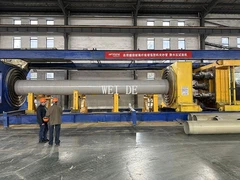
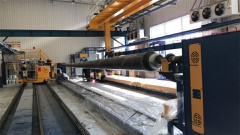
The glass fibers provide high tensile strength, while the polymer matrix binds the fibers together and transfers loads between them. Fiberglass composites are commonly used in the production of pipes, tanks, and automotive components. For instance, our CFW Continuous Pipe Winding Machine can precisely wind fiberglass composites to create continuous pipes with uniform wall thickness and high strength. These pipes are resistant to corrosion, making them ideal for applications in chemical processing plants, water treatment facilities, and oil and gas pipelines.
In the automotive industry, fiberglass composites are used to manufacture body panels, bumpers, and interior components. Our winding equipment can produce complex-shaped parts with tight tolerances, ensuring a perfect fit and finish. The lightweight nature of fiberglass composites also contributes to improved fuel efficiency and reduced emissions, making them an environmentally friendly choice.
Carbon Fiber Composites
Carbon fiber composites are renowned for their exceptional strength-to-weight ratio, stiffness, and fatigue resistance. These properties make them a preferred material for high-performance applications in aerospace, sports equipment, and automotive racing. Our composite material winding equipment is capable of handling carbon fiber composites with precision and efficiency.
In the aerospace industry, carbon fiber composites are used to construct aircraft wings, fuselages, and tail sections. The high strength and low weight of these composites allow for significant weight savings, which in turn improves fuel efficiency and increases payload capacity. Our winding technology can produce carbon fiber composite parts with complex geometries, such as curved panels and intricate structural components, meeting the strict quality and performance requirements of the aerospace sector.
Sports equipment manufacturers also benefit from the use of carbon fiber composites. Tennis rackets, golf clubs, and bicycle frames made from carbon fiber composites offer enhanced performance and durability. Our winding equipment can precisely control the orientation and placement of carbon fibers, optimizing the strength and stiffness of these products.
Aramid Fiber Composites
Aramid fibers, such as Kevlar, are known for their high strength, heat resistance, and cut resistance. Aramid fiber composites are commonly used in applications where protection against ballistic impacts, abrasion, and heat is required. Our composite material winding equipment can process aramid fiber composites to create products with superior performance characteristics.
In the defense industry, aramid fiber composites are used to manufacture body armor, helmets, and vehicle armor. The high strength and energy absorption capabilities of these composites provide effective protection for military personnel and equipment. Our winding technology can produce aramid fiber composite parts with consistent quality and performance, ensuring reliable protection in high-stress environments.


Aramid fiber composites are also used in the aerospace and automotive industries for applications such as engine components, brake pads, and drive shafts. The heat resistance and wear resistance of these composites make them suitable for use in high-temperature and high-friction environments.
Hybrid Composites
Hybrid composites combine two or more different types of fibers to achieve a synergistic effect, offering a combination of properties that are superior to those of individual fibers. Our composite material winding equipment can process hybrid composites, allowing manufacturers to customize the performance of their products according to specific requirements.
For example, a hybrid composite consisting of carbon fiber and fiberglass can combine the high strength and stiffness of carbon fiber with the cost-effectiveness and corrosion resistance of fiberglass. This type of hybrid composite can be used in applications where a balance of performance and cost is required, such as in the construction of wind turbine blades and marine vessels.
Our winding equipment can precisely control the ratio and distribution of different fibers in a hybrid composite, ensuring optimal performance and consistency. By using hybrid composites, manufacturers can take advantage of the unique properties of each fiber type, creating products that are tailored to their specific needs.
Natural Fiber Composites
In recent years, there has been a growing interest in the use of natural fiber composites as a sustainable alternative to traditional synthetic composites. Natural fibers, such as flax, hemp, and jute, are renewable, biodegradable, and have a lower environmental impact compared to synthetic fibers. Our composite material winding equipment can process natural fiber composites, enabling the production of eco-friendly products.
Natural fiber composites are commonly used in the automotive, construction, and packaging industries. In the automotive industry, natural fiber composites can be used to manufacture interior components, such as door panels and seat backs, reducing the weight of the vehicle and improving its environmental footprint. Our winding technology can produce natural fiber composite parts with good mechanical properties and a smooth surface finish, meeting the aesthetic and functional requirements of the automotive sector.
In the construction industry, natural fiber composites can be used to create insulation materials, roofing tiles, and structural components. The thermal insulation and acoustic properties of natural fiber composites make them suitable for use in energy-efficient buildings. Our winding equipment can produce natural fiber composite products with consistent quality and performance, contributing to the development of sustainable construction solutions.
Conclusion
As a leading supplier of Composite Material Winding Equipment, we are committed to providing our customers with the latest technology and solutions for processing a wide range of composite materials. Our equipment can handle fiberglass, carbon fiber, aramid fiber, hybrid, and natural fiber composites, enabling manufacturers to produce high-quality products with superior performance and sustainability.
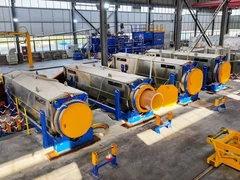
Whether you are in the aerospace, automotive, defense, sports equipment, or construction industry, our composite material winding equipment can help you achieve your manufacturing goals. We offer a comprehensive range of winding machines, including the CFW Continuous Pipe Winding Machine and the Continuous Fiberglass Pipe Winding Machine, which are designed to meet the specific needs of different applications.
If you are interested in learning more about our composite material winding equipment and how it can benefit your business, we invite you to contact us for a consultation. Our team of experts will be happy to discuss your requirements and provide you with a customized solution. Let's work together to unlock the full potential of composite materials and drive innovation in your industry.
References
- "Composite Materials: Science and Applications" by P. K. Mallick
- "Handbook of Composites" edited by G. Lubin
- "Advanced Composites for Aerospace Engineering" by S. T. Peters
Send Inquiry