



How to ensure the dimensional accuracy of epoxy pipes in production?
Nov 12, 2025
Leave a message
Hey there! As a supplier of epoxy pipe production, I know how crucial it is to ensure the dimensional accuracy of epoxy pipes during the manufacturing process. Dimensional accuracy not only affects the performance and functionality of the pipes but also plays a significant role in meeting customer requirements and industry standards. In this blog post, I'll share some practical tips and strategies on how to achieve and maintain the dimensional accuracy of epoxy pipes in production.
1. Precise Mold Design and Manufacturing
The first step in ensuring dimensional accuracy is to have a well - designed and precisely manufactured mold. The mold is the blueprint for the epoxy pipe, and any inaccuracies in the mold will be transferred to the final product.
When designing the mold, we need to consider factors such as the pipe's diameter, wall thickness, length, and any special features. Use advanced CAD (Computer - Aided Design) software to create a detailed 3D model of the mold. This allows us to visualize the design and make necessary adjustments before manufacturing.
For the manufacturing of the mold, high - precision machining techniques should be employed. CNC (Computer Numerical Control) machining is a great option as it can achieve very tight tolerances. The material of the mold also matters. High - quality steel or aluminum alloys are commonly used because they have good dimensional stability and can withstand the pressure and temperature during the epoxy pipe production process.
2. Quality Control of Raw Materials
The quality of raw materials directly impacts the dimensional accuracy of epoxy pipes. Epoxy resin and fiberglass are the main materials used in epoxy pipe production.
For epoxy resin, we need to ensure its viscosity, curing time, and chemical properties are consistent. A change in viscosity can affect the flow of the resin during the winding process, which may lead to uneven wall thickness in the pipe. Regularly test the resin to make sure it meets the required specifications.


Fiberglass also needs to be of high quality. Check the diameter, strength, and surface finish of the fiberglass strands. Any variation in these properties can cause problems in the winding process and result in dimensional deviations.
3. Advanced Winding Technology
The winding process is a critical stage in epoxy pipe production. Using advanced winding machines can greatly improve dimensional accuracy.
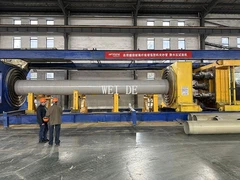
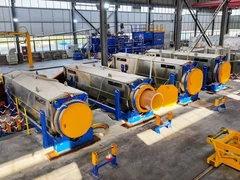
The Epoxy Filament Winding Machine is a great tool for this purpose. It can precisely control the winding angle, tension, and speed of the fiberglass strands. By adjusting these parameters, we can ensure that the fiberglass is evenly distributed around the mold, which helps to maintain a uniform wall thickness and diameter of the pipe.
The winding speed should be carefully controlled. If the speed is too fast, the resin may not have enough time to fully wet the fiberglass, resulting in dry spots and weak areas in the pipe. On the other hand, if the speed is too slow, it may increase the production time and cost.
Tension control is also crucial. Proper tension ensures that the fiberglass strands are tightly wound around the mold, preventing any slack or looseness that could lead to dimensional inaccuracies.
4. Temperature and Curing Management
Temperature plays a vital role in the curing process of epoxy pipes. The curing process is when the epoxy resin hardens and takes on its final shape.
Maintain a stable temperature environment during the curing process. Fluctuations in temperature can cause the epoxy to cure unevenly, which may lead to warping or shrinkage of the pipe. Use temperature - controlled ovens or curing chambers to ensure a consistent temperature throughout the curing period.
The curing time also needs to be accurately controlled. Different epoxy resins have different recommended curing times. If the curing time is too short, the pipe may not reach its full strength and dimensional stability. If it's too long, it may cause over - curing and damage the pipe.
5. In - Process Inspection
Regular in - process inspection is essential to catch any dimensional issues early in the production process.
Use measuring tools such as calipers, micrometers, and laser measuring devices to check the diameter, wall thickness, and length of the pipes at different stages of production. For example, after the winding process, measure the wall thickness at multiple points along the pipe to ensure uniformity.
If any dimensional deviations are detected, take immediate corrective actions. This may involve adjusting the winding machine parameters, checking the raw materials, or modifying the curing process.
6. Post - Production Testing
After the pipes are fully cured, conduct comprehensive post - production testing.
Hydrostatic testing is a common method to check the integrity and dimensional stability of the pipes under pressure. Fill the pipe with water and apply a specified pressure for a certain period. Observe if there are any leaks or deformations.
Non - destructive testing methods such as ultrasonic testing can also be used to detect internal defects and ensure the dimensional accuracy of the pipe.
7. Staff Training and Skill Development
Well - trained staff are the key to ensuring dimensional accuracy in epoxy pipe production.
Provide regular training to the production staff on the operation of the equipment, quality control procedures, and the importance of dimensional accuracy. Make sure they understand how to use the measuring tools correctly and how to interpret the test results.
Encourage staff to share their experiences and suggestions for improving the production process. A skilled and motivated workforce can significantly reduce the occurrence of dimensional errors.
8. Use of Automation and Robotics
Automation and robotics can bring greater precision and consistency to the epoxy pipe production process.
Automated winding machines can perform repetitive tasks with high accuracy, reducing the potential for human error. Robotic arms can be used for tasks such as handling the pipes during the production process, ensuring that they are placed and moved in a precise manner.
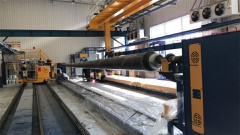
The Marine Fiberglass Pipeline Production Line and Epoxy Pipe Winding Machine often come with advanced automation features that can help improve dimensional accuracy.
In conclusion, ensuring the dimensional accuracy of epoxy pipes in production requires a comprehensive approach that covers every aspect of the manufacturing process, from mold design to post - production testing. By following these tips and strategies, we can produce high - quality epoxy pipes that meet the strictest dimensional requirements.
If you're in the market for high - quality epoxy pipes with excellent dimensional accuracy, we'd love to have a chat with you about your specific needs. Whether you're working on a small - scale project or a large - scale industrial application, our team of experts is ready to assist you. Reach out to us for a detailed discussion and let's see how we can collaborate to meet your requirements.
References
- "Handbook of Epoxy Pipe Manufacturing"
- "Advanced Composite Materials in Pipe Production"
- Industry standards and guidelines related to epoxy pipe production
Send Inquiry