



How to ensure the anti - crack performance of epoxy pipes in production?
Nov 12, 2025
Leave a message
Hey there! As a supplier in the epoxy pipe production game, I know firsthand how crucial it is to ensure the anti-crack performance of our pipes. Cracks in epoxy pipes can lead to all sorts of problems, from leaks to structural failures, which can be a real headache for our customers. So, in this blog post, I'm gonna share some tips on how we can make sure our epoxy pipes are crack-resistant during production.
1. Material Selection
The first step in ensuring anti-crack performance is choosing the right materials. Epoxy resin is the heart of our pipes, and we need to pick a high-quality one that has good mechanical properties and chemical resistance. Look for resins that have a high tensile strength and elongation at break. These properties will help the pipe withstand stress and deformation without cracking.
We also need to pay attention to the reinforcement materials. Fiberglass is a popular choice for epoxy pipes because it provides excellent strength and stiffness. But not all fiberglass is created equal. We should select fiberglass with the right fiber diameter, length, and orientation. For example, using continuous fiberglass filaments can significantly improve the pipe's strength and anti-crack performance.
When it comes to sourcing these materials, it's important to work with reliable suppliers. We've had great experiences with some of the suppliers in the market, and they always provide us with consistent quality materials. This consistency is key to producing pipes with reliable anti-crack performance.
2. Production Process Control
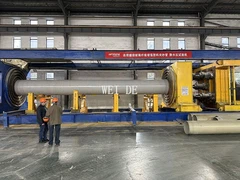
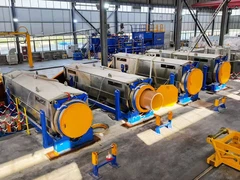
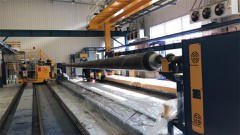
The production process is where the magic happens, and it's also where we can really make a difference in the anti-crack performance of our pipes. One of the most important processes is filament winding. This is where we wrap the fiberglass filaments around a mandrel using an Epoxy Filament Winding Machine.
During filament winding, we need to control several parameters carefully. The tension of the fiberglass filaments is crucial. If the tension is too high, it can cause the filaments to break or damage the epoxy resin. On the other hand, if the tension is too low, the filaments may not be tightly packed, which can weaken the pipe. We use advanced sensors and control systems on our Epoxy Horizontal Winding Machine to ensure the tension is just right.


The winding pattern also plays a significant role. Different winding patterns can distribute stress differently in the pipe. For example, a helical winding pattern can provide better circumferential strength, while a hoop winding pattern can enhance the radial strength. We usually use a combination of these patterns to optimize the pipe's overall performance.
Another important aspect of the production process is curing. Curing is the process of hardening the epoxy resin. We need to control the curing temperature and time precisely. If the curing temperature is too high, it can cause the resin to cure too quickly, leading to internal stresses and cracks. If the temperature is too low, the resin may not cure completely, which can also affect the pipe's strength and anti-crack performance.
3. Quality Testing
Quality testing is an essential part of ensuring the anti-crack performance of our epoxy pipes. We have a comprehensive testing program in place to check the pipes at different stages of production.
First, we perform raw material testing. We test the epoxy resin and fiberglass for their physical and chemical properties. This helps us ensure that the materials meet our quality standards before we start production.
During the production process, we conduct in-process inspections. For example, we use non-destructive testing methods like ultrasonic testing to check for any internal defects in the pipes. This allows us to detect any potential problems early on and take corrective actions.
Once the pipes are finished, we perform final testing. We subject the pipes to various mechanical tests, such as pressure testing and bending testing. These tests simulate real-world conditions and help us evaluate the pipe's anti-crack performance. Only the pipes that pass all these tests are released to the market.
4. Design Optimization
The design of the epoxy pipe also has a big impact on its anti-crack performance. We need to consider factors like the pipe's diameter, wall thickness, and end connections.
A larger diameter pipe may require a thicker wall to maintain its strength and anti-crack performance. We use advanced engineering software to calculate the optimal wall thickness based on the pipe's intended application and operating conditions.
The end connections of the pipe are also critical. Poorly designed end connections can create stress concentrations, which can lead to cracks. We design our end connections to distribute stress evenly and ensure a tight seal.
In some cases, we may also add additional reinforcement features to the pipe design. For example, we can use internal or external ribs to increase the pipe's stiffness and resistance to cracking.
5. Environmental Considerations
The environment in which the epoxy pipes will be used can also affect their anti-crack performance. For example, pipes used in marine applications need to be resistant to saltwater corrosion. We use special epoxy resins and coatings that are designed to withstand the harsh marine environment.
In addition, temperature and humidity can also have an impact on the pipes. Extreme temperatures can cause the epoxy resin to expand or contract, which can lead to cracks. We take these environmental factors into account during the design and production process. For example, we may use thermal insulation materials or design the pipes to have some flexibility to accommodate temperature changes.
Conclusion
Ensuring the anti-crack performance of epoxy pipes in production is a complex but achievable goal. By carefully selecting materials, controlling the production process, conducting thorough quality testing, optimizing the design, and considering environmental factors, we can produce high-quality epoxy pipes that are resistant to cracking.
If you're in the market for epoxy pipes and want to ensure you're getting the best anti-crack performance, we'd love to have a chat with you. We have years of experience in epoxy pipe production and can provide you with customized solutions to meet your specific needs. Just reach out to us, and let's start the conversation about your project.
References
- ASTM International. (Year). Standard test methods for fiberglass (glass-fiber-reinforced thermosetting-resin) pipe and fittings.
- Composites World. (Year). Best practices for filament winding of composite pipes.
- Pipe & Tube magazine. (Year). Improving the performance of epoxy pipes in harsh environments.
Send Inquiry