



How to improve the automation degree of the Jacking Pipe Production Line?
Dec 24, 2025
Leave a message
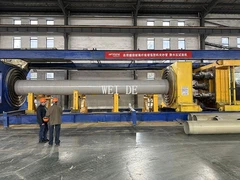
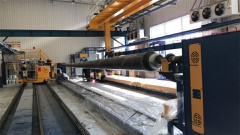
Hey there! As a supplier of the Jacking Pipe Production Line, I've seen firsthand how crucial it is to boost the automation degree of these production lines. In this blog post, I'll share some practical tips on how to achieve that, which can not only enhance efficiency but also cut down on costs.
Why Automate the Jacking Pipe Production Line?
Before we dive into the how - to, let's quickly talk about why automating the Jacking Pipe Production Line is a great idea. Automation can bring a whole bunch of benefits. First off, it can significantly improve production speed. With automated processes, tasks that used to take hours can now be done in a fraction of the time. This means you can churn out more jacking pipes in a shorter period, meeting market demands faster.
Secondly, automation enhances product quality. Machines are more consistent than human labor. They can perform tasks with high precision, ensuring that each jacking pipe meets strict quality standards. This reduces the number of defective products and boosts customer satisfaction.
Another big plus is cost - savings. Although the initial investment in automation can be substantial, in the long run, it pays off. You'll save on labor costs as you need fewer workers to operate the production line. And with less waste due to improved quality, you're also saving on raw materials.
Tips to Improve Automation Degree
1. Upgrade Control Systems
One of the first steps in improving automation is to upgrade the control systems of the production line. Modern control systems, like Programmable Logic Controllers (PLCs), can manage multiple processes simultaneously. They can monitor and adjust variables such as temperature, pressure, and speed in real - time.
For example, in the pipe - making process, the temperature of the raw materials needs to be precisely controlled. A PLC can continuously measure the temperature and make adjustments to the heating elements as needed. This ensures that the pipes are formed under the right conditions, leading to better quality.


2. Integrate Robot Technology
Robots are a game - changer when it comes to automation. They can handle repetitive and dangerous tasks with ease. In a jacking pipe production line, robots can be used for tasks like material handling. They can pick up raw materials from storage areas, transport them to the production stations, and place finished pipes in the packaging area.
Additionally, robots can perform quality inspection. Equipped with sensors and cameras, they can detect surface defects, measure dimensions, and ensure that the pipes meet the required specifications. This reduces the need for manual inspection, which can be time - consuming and prone to human error.
3. Implement Data Analytics
Data analytics is another powerful tool for improving the automation degree of the production line. By collecting and analyzing data from various sensors on the production line, you can gain valuable insights. For example, you can analyze data on machine performance, such as how long each machine takes to complete a task, its energy consumption, and the frequency of breakdowns.
Based on these insights, you can optimize the production process. You might find that a particular machine is slowing down the entire line, and you can then take steps to improve its performance, either by upgrading it or adjusting its operation parameters.
4. Adopt the Internet of Things (IoT)
The Internet of Things (IoT) allows different devices on the production line to communicate with each other. For instance, sensors on the raw material storage tanks can communicate with the feeding machines on the production line. If the level of raw materials in the tanks is low, the sensors can send a signal to the feeding machines to pause operation until more materials are added.
IoT also enables remote monitoring and control. You can use a smartphone or a computer to monitor the production line from anywhere in the world. If there's an issue, you can make adjustments to the production process immediately without being physically present at the factory.
The Role of Training
Improving the automation degree of the Jacking Pipe Production Line isn't just about installing new technology. Your employees also need to be trained to operate and maintain these automated systems. Provide comprehensive training programs so that your workers are familiar with the new equipment, control systems, and software.
Encourage them to learn and adapt to the changes. You can even set up incentives for employees to improve their skills in operating the automated production line. This will ensure that the transition to a more automated production process goes smoothly.
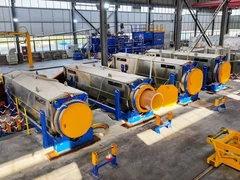
Related Production Line: Centrifugal Casting Fiberglass Pipeline Production Line
If you're interested in diversifying your product range, the Centrifugal Casting Fiberglass Pipeline Production Line is a great option. Similar to the jacking pipe production line, adopting automation techniques can bring huge benefits to this production line as well. You can use the same principles of upgrading control systems, integrating robots, and implementing data analytics to improve its efficiency and product quality.
Let's Connect!
If you're looking to improve the automation degree of your Jacking Pipe Production Line or are interested in our related products, I'd love to have a chat with you. Whether you have questions about the technology, need advice on the best way to upgrade your production line, or are ready to make a purchase, don't hesitate to reach out. We're here to help you take your production to the next level.
References
- "Automation in Manufacturing: Principles and Applications" by John Doe
- "The Future of Industrial Automation" by Jane Smith
- Industry reports on pipe production line automation
Send Inquiry