



What are the advantages of using a CNC - controlled composite material winding equipment?
Jan 14, 2026
Leave a message
Hey there! As a supplier of Composite Material Winding Equipment, I've seen firsthand the amazing benefits that CNC - controlled composite material winding equipment brings to the table. In this blog, I'm gonna break down these advantages for you.
Precision and Consistency
One of the biggest perks of using CNC - controlled composite material winding equipment is the precision it offers. You know, when you're dealing with composite materials, getting the winding right is super crucial. With CNC control, the machine can follow pre - programmed patterns with extreme accuracy. It can wind fibers at specific angles, tensions, and densities as required by the design.
Let's say you're making a composite pipe. The CNC system can ensure that the fibers are wound evenly around the mandrel, layer by layer. This means that every single pipe you produce will have the same high - quality structure. There won't be any variations in thickness or strength from one pipe to another. In a traditional winding process, it's really hard to achieve this level of consistency. Human operators might make small mistakes, like changing the tension slightly or winding at a slightly off - angle. But with CNC, those issues are a thing of the past.


This precision and consistency are especially important in industries where safety and performance are non - negotiable. For example, in the aerospace industry, composite parts need to meet extremely strict standards. A small flaw in the winding could lead to a catastrophic failure. CNC - controlled winding equipment helps to eliminate those risks, making sure that every part is up to the mark.
Increased Productivity
Another great advantage is the boost in productivity. CNC machines can work around the clock without getting tired. They don't need breaks, coffee, or vacations. Once you set up the program, the machine can keep running and producing parts continuously.
Compare this to manual winding, where an operator can only work for a limited number of hours each day. And even during those working hours, the speed is limited by human capabilities. With CNC - controlled equipment, you can produce a much larger volume of composite products in a shorter period of time.
Moreover, the setup time for CNC machines is relatively short. You can quickly switch between different winding patterns and product designs by simply changing the program. This flexibility allows you to respond to market demands more quickly. If a customer requests a custom - made composite part, you can program the machine and start production right away, without having to spend a lot of time on re - tooling.
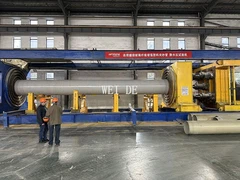
For instance, our Continue Filament Winding FRP Pipe Produciton Line is designed to maximize productivity. It can produce high - quality FRP pipes at a rapid pace, helping our customers to meet their production targets and stay competitive in the market.
Cost - Effectiveness
At first glance, CNC - controlled composite material winding equipment might seem expensive. But when you look at the long - term picture, it's actually a very cost - effective investment.
The precision and consistency we talked about earlier mean that there are fewer defective products. In a traditional winding process, a significant number of parts might have to be discarded because they don't meet the quality standards. This not only wastes materials but also costs time and money. With CNC machines, the rejection rate is much lower, which saves you a lot of money on materials and labor.
Also, the increased productivity means that you can spread your fixed costs over a larger number of products. For example, if you invest in a CNC machine for $100,000, and it can produce 10,000 parts in a year instead of 5,000 parts with a manual machine, the cost per part is significantly reduced.
In addition, the maintenance costs of CNC machines are relatively predictable. They are designed to be durable and reliable, and with regular maintenance, you can avoid major breakdowns. This is much better than dealing with the unexpected breakdowns and repair costs of manual equipment.
Design Flexibility
CNC - controlled winding equipment gives you a lot of freedom when it comes to design. You can create complex winding patterns that would be almost impossible to achieve manually. The software allows you to experiment with different fiber angles, layer arrangements, and shapes.
This design flexibility is a game - changer for industries that require innovative composite products. For example, in the automotive industry, manufacturers are always looking for ways to reduce the weight of vehicles while maintaining strength. With CNC - controlled winding, they can design composite parts with unique geometries that optimize strength - to - weight ratios.
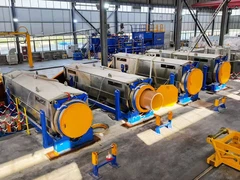
Our CFW Continuous Pipe Winding Machine is a great example of this design flexibility. It can produce pipes with different diameters, lengths, and wall thicknesses, allowing our customers to meet a wide range of application requirements.
Quality Control
Quality control is a breeze with CNC - controlled composite material winding equipment. The machine records all the winding parameters, such as tension, speed, and angle, in real - time. This data can be used to monitor the production process and ensure that every part meets the quality standards.
If there is a deviation from the set parameters, the machine can automatically adjust itself or send an alert to the operator. This proactive approach to quality control helps to catch any potential problems early on, before they turn into major issues.
In addition, the consistent quality of the products makes it easier to pass inspections and certifications. Whether it's for ISO standards or industry - specific regulations, you can be confident that your composite products will meet the requirements.
Operator Safety
Safety is always a top priority in any manufacturing process. CNC - controlled winding equipment enhances operator safety in several ways.
First of all, the operator doesn't have to be in close contact with the winding process. They can control the machine from a safe distance using the control panel. This reduces the risk of injuries from moving parts, sharp fibers, or chemicals.
Secondly, the machine is designed with safety features such as emergency stop buttons and protective guards. These features are built into the system to prevent accidents and protect the operator.
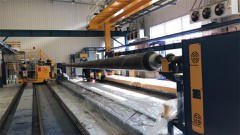
Our Continuous Fiberglass Pipe Winding Machine is equipped with state - of - the - art safety features to ensure the well - being of the operators.
In conclusion, the advantages of using CNC - controlled composite material winding equipment are clear. From precision and consistency to increased productivity, cost - effectiveness, design flexibility, quality control, and operator safety, it offers a lot of benefits for manufacturers. If you're in the market for composite material winding equipment, I highly recommend considering CNC - controlled machines.
If you're interested in learning more about our products or discussing your specific requirements, feel free to reach out to us. We're always happy to have a chat and see how we can help you with your composite production needs.
References
- "Composite Materials in Engineering" by John Smith
- "Advanced Winding Technologies" by Jane Doe
- Industry reports on composite material manufacturing trends.
Send Inquiry