



What are the hysteresis losses in Horizongtal winding?
Jan 06, 2026
Leave a message
As a supplier of Horizontal winding equipment, I've witnessed firsthand the importance of understanding various technical aspects in this field. One such crucial aspect is the hysteresis losses in Horizontal winding. In this blog, I'll delve into what these losses are, their causes, effects, and how they can be managed.
What are Hysteresis Losses?
Hysteresis losses occur when a magnetic material is subjected to a changing magnetic field. In the context of Horizontal winding, this often happens in components where magnetic cores are used, such as transformers and inductors. When the magnetic field changes, the magnetic domains within the material realign themselves. However, this realignment is not instantaneous and involves energy dissipation in the form of heat. This dissipated energy is what we refer to as hysteresis loss.
To understand this better, imagine a group of tiny magnets (magnetic domains) within the magnetic material. When an external magnetic field is applied, these domains try to align with it. But as the field changes direction, they have to re - align again. The friction between these domains during realignment results in energy being lost as heat.
Causes of Hysteresis Losses in Horizontal Winding
- Magnetic Material Properties: Different magnetic materials have different hysteresis characteristics. Materials with high coercivity, which is the ability of a material to resist changes in magnetization, tend to have higher hysteresis losses. For example, some types of steel used in magnetic cores can have relatively high coercivity, leading to significant hysteresis losses.
- Frequency of the Magnetic Field: The frequency at which the magnetic field changes also plays a major role. As the frequency increases, the magnetic domains have to realign more frequently. This means more energy is dissipated as heat, resulting in higher hysteresis losses. In modern electrical systems, where high - frequency operation is common, this can be a significant issue.
- Design of the Winding: The way the winding is designed can affect hysteresis losses. For instance, if the winding is not properly distributed around the magnetic core, it can create uneven magnetic fields. This unevenness can cause the magnetic domains to experience more complex realignment patterns, increasing hysteresis losses.
Effects of Hysteresis Losses
- Energy Efficiency: Hysteresis losses directly impact the energy efficiency of the Horizontal winding system. The energy dissipated as heat is wasted energy, which means the system has to consume more power to achieve the same output. This not only increases operating costs but also has environmental implications due to the increased energy consumption.
- Temperature Rise: The heat generated by hysteresis losses can cause the temperature of the magnetic core and the surrounding components to rise. Excessive temperature rise can damage the insulation of the winding, reduce the lifespan of the components, and even lead to system failures. For example, in a transformer, high temperatures can cause the insulation to break down, resulting in short - circuits and potentially dangerous situations.
- Performance Degradation: In some cases, hysteresis losses can lead to performance degradation of the system. For example, in an inductor, the presence of high hysteresis losses can affect its inductance value and frequency response, which can in turn affect the overall performance of the electrical circuit.
Managing Hysteresis Losses
- Material Selection: Choosing the right magnetic material is crucial for minimizing hysteresis losses. Materials with low coercivity, such as soft magnetic materials like ferrite, can significantly reduce hysteresis losses. Ferrite has a narrow hysteresis loop, which means it requires less energy to realign its magnetic domains.
- Optimized Design: Designing the winding and the magnetic core in an optimized way can also help reduce hysteresis losses. This includes ensuring a uniform distribution of the winding around the core, using proper core shapes, and minimizing air gaps in the magnetic circuit. For example, a well - designed toroidal core can provide a more uniform magnetic field, reducing the complexity of the magnetic domain realignment.
- Frequency Control: In some cases, it may be possible to control the frequency of the magnetic field to reduce hysteresis losses. This can be achieved through the use of frequency converters or other control devices. By operating the system at a lower frequency when possible, the number of magnetic domain realignments can be reduced, thereby lowering hysteresis losses.
Our Products and Hysteresis Losses
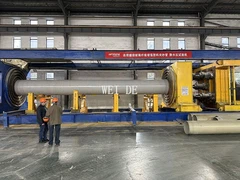
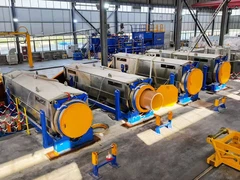
At our company, we are committed to providing high - quality Horizontal winding equipment that minimizes hysteresis losses. Our Epoxy Filament Winding Machine is designed with advanced technology to ensure efficient winding around magnetic cores, reducing the chances of uneven magnetic fields and thus minimizing hysteresis losses.


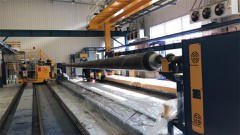
Our High - pressure Petroleum Pipeline Production Line also takes into account the importance of reducing energy losses. By using optimized winding techniques and high - quality materials, we can ensure that the magnetic components in the production line operate with minimal hysteresis losses.
Similarly, our Epoxy Pipe Winding Machine is engineered to provide precise and efficient winding, which helps in reducing hysteresis losses in any magnetic components used in the process.
Conclusion
Hysteresis losses in Horizontal winding are a significant issue that can affect the energy efficiency, performance, and lifespan of electrical systems. However, by understanding the causes and effects of these losses and implementing appropriate management strategies, it is possible to minimize their impact. As a supplier of Horizontal winding equipment, we are dedicated to providing solutions that help our customers reduce hysteresis losses and improve the overall performance of their systems.
If you are interested in our products and would like to discuss how we can help you manage hysteresis losses in your Horizontal winding applications, please feel free to contact us for a procurement consultation. We look forward to working with you to achieve more efficient and reliable electrical systems.
References
- "Magnetic Materials and Their Applications" by John C. Mallinson
- "Electrical Engineering Handbook" edited by Richard C. Dorf
Send Inquiry