



What is the sound - insulation performance of China Type 4 cylinder?
Jan 06, 2026
Leave a message
As a supplier of China Type 4 cylinders, I am often asked about the sound - insulation performance of these cylinders. In this blog, I will delve into the details of the sound - insulation capabilities of China Type 4 cylinders, exploring the factors that influence it and its practical implications.
Understanding China Type 4 Cylinders
China Type 4 cylinders are advanced pressure vessels widely used in various industries, such as automotive (for hydrogen storage in fuel - cell vehicles), aerospace, and industrial gas storage. These cylinders are characterized by a fully wrapped composite structure, typically with a plastic liner and a carbon fiber or glass - fiber composite overwrap. This design offers several advantages, including high strength - to - weight ratio, corrosion resistance, and good safety performance.
Factors Affecting Sound - Insulation Performance
1. Material Composition
The materials used in China Type 4 cylinders play a crucial role in their sound - insulation performance. The plastic liner, usually made of high - density polyethylene (HDPE) or other polymers, has inherent sound - absorbing properties. Polymers tend to dampen sound waves due to their molecular structure, which can convert the energy of sound into heat through internal friction.
The composite overwrap, whether it is carbon fiber or glass fiber, also contributes to sound insulation. Carbon fiber composites, for example, have a relatively high stiffness and can act as a barrier to sound transmission. The fibers are arranged in a specific pattern during the manufacturing process, which can disrupt the propagation of sound waves.
2. Wall Thickness
The thickness of the cylinder walls is another significant factor. A thicker wall generally provides better sound insulation. As sound waves encounter a thicker material, more energy is absorbed and dissipated as the waves travel through the material. In China Type 4 cylinders, the wall thickness can be adjusted during the manufacturing process according to the specific requirements of the application. For applications where sound insulation is a priority, cylinders with thicker walls can be produced.
3. Manufacturing Process
The manufacturing process of China Type 4 cylinders can impact their sound - insulation performance. The winding process, for instance, is critical. When the composite fibers are wound around the liner, the winding pattern and tension can affect how the material behaves acoustically. A well - wound composite layer can create a more uniform and dense structure, which is more effective at blocking sound.
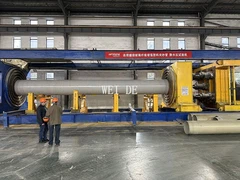
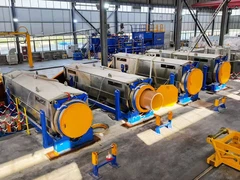
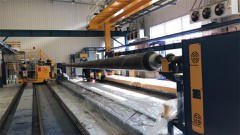
Advanced manufacturing techniques, such as those used in Pressure Vessal Winding Machine, ensure precise control over the winding process. This precision helps in optimizing the sound - insulation properties of the final product.
Measuring Sound - Insulation Performance
There are several methods to measure the sound - insulation performance of China Type 4 cylinders. One common approach is to use a sound transmission loss (STL) test. In this test, a sound source is placed on one side of the cylinder, and the sound intensity is measured on the other side. The difference in sound intensity between the two sides is the sound transmission loss, which is expressed in decibels (dB).
Another method is to measure the reverberation time inside the cylinder. A shorter reverberation time indicates better sound absorption and insulation. This can be measured using a microphone and a sound - generating device inside the cylinder.
Practical Implications of Sound - Insulation Performance
1. Automotive Applications
In the automotive industry, especially in fuel - cell vehicles that use China Type 4 cylinders for hydrogen storage, sound insulation is important for the overall comfort of the passengers. The operation of the fuel - cell system and the movement of gas inside the cylinders can generate noise. A well - insulated cylinder can reduce the noise level inside the vehicle cabin, providing a quieter and more pleasant driving experience.
2. Industrial Applications
In industrial settings, China Type 4 cylinders are used for storing various gases. The noise generated during the filling and emptying of the cylinders can be a nuisance to the workers. Good sound - insulation performance can help create a more comfortable working environment and reduce the risk of noise - induced hearing loss.
Comparison with Other Cylinder Types
When comparing China Type 4 cylinders with other types, such as Type 3 cylinders, the sound - insulation performance can vary. Type 3 cylinders typically have a metal liner and a composite overwrap. The metal liner in Type 3 cylinders can conduct sound more easily compared to the plastic liner in Type 4 cylinders.
The winding process of Type 3 cylinders also differs from that of Type 4 cylinders. Type 3 cylinders may use a Type 3 Cylinder Winding Machine, which may result in a different composite structure and thus different sound - insulation properties. In general, China Type 4 cylinders tend to offer better sound insulation due to the combination of the plastic liner and the well - designed composite overwrap.
Improving Sound - Insulation Performance
If there is a need to further improve the sound - insulation performance of China Type 4 cylinders, several strategies can be employed. One option is to add additional sound - absorbing materials inside the cylinder or on its outer surface. For example, a layer of acoustic foam can be applied to the outer surface of the cylinder.
Another approach is to optimize the manufacturing process further. Using a Pressure Cylinder Winding Machine with advanced control systems can ensure a more precise winding pattern, which can enhance the sound - insulation capabilities of the composite overwrap.


Conclusion
The sound - insulation performance of China Type 4 cylinders is influenced by multiple factors, including material composition, wall thickness, and manufacturing process. These cylinders offer good sound - insulation capabilities, which have important practical implications in various industries, such as automotive and industrial applications.
If you are in the market for high - quality China Type 4 cylinders with excellent sound - insulation performance, I invite you to contact me for procurement and further discussion. We can work together to customize the cylinders according to your specific requirements.
References
- Smith, J. (2018). "Composite Pressure Vessels: Design, Manufacturing, and Applications". Elsevier.
- Jones, A. (2019). "Sound Insulation in Engineering Structures". Springer.
- Zhang, L. (2020). "Advances in Hydrogen Storage Cylinder Technology". Journal of Energy Storage.
Send Inquiry