



What are the potential uses of Horizongtal winding in wind power systems?
Nov 06, 2025
Leave a message
Hey there! I'm a supplier of Horizontal winding products, and today I wanna chat about the potential uses of Horizontal winding in wind power systems.


1. Introduction to Horizontal Winding
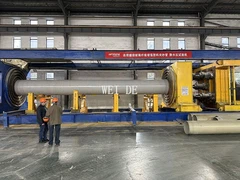
First off, let's get a basic understanding of what Horizontal winding is. It's a manufacturing process where materials like fibers are wound around a core in a horizontal orientation. This process allows for precise control over the winding pattern, tension, and layer thickness. It's been used in various industries for a long time, but its application in wind power systems is really starting to shine.
2. Blade Manufacturing
One of the most significant applications of Horizontal winding in wind power is in the production of wind turbine blades. Wind turbine blades need to be strong, lightweight, and aerodynamically efficient. Horizontal winding helps achieve these goals.
When we use Horizontal winding to make blades, we can wind high - strength fibers, such as carbon fibers or fiberglass, around a mold. The precise winding pattern ensures that the blade has the right structural integrity. For example, we can wind the fibers in a way that they can better withstand the bending and torsional forces that the blade experiences during operation.
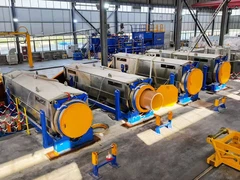
The ability to control the layer thickness is also crucial. We can adjust the number of fiber layers in different parts of the blade. The root of the blade, which bears the most stress, can have more layers of fibers compared to the tip. This way, we can optimize the weight and strength of the blade, making it more efficient. You can check out our Epoxy Horizontal Winding Machine which is great for blade manufacturing. It offers high - precision winding, ensuring that each blade we produce meets the strict quality standards of the wind power industry.
3. Tower Construction
Horizontal winding also plays an important role in wind turbine tower construction. Wind turbine towers need to be tall and stable to support the heavy nacelle and blades.
We can use Horizontal winding to create composite towers. By winding fibers around a tubular core, we can build towers that are not only strong but also corrosion - resistant. Composite towers made through Horizontal winding are often lighter than traditional steel towers. This means that they are easier to transport and install, especially in remote or difficult - to - access locations.
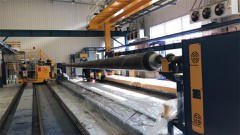
Moreover, the winding process allows us to customize the tower's properties. We can adjust the winding angle and fiber density to enhance the tower's resistance to wind loads and seismic activity. Our High - pressure Petroleum Pipeline Production Line has some of the technologies that can be adapted for tower construction. The precision winding capabilities of this production line can be used to create high - quality composite towers for wind turbines.
4. Generator Components
In the wind turbine generator, Horizontal winding can be used to manufacture some key components. For example, the stator windings in the generator can be produced using Horizontal winding technology.
Precise winding of the stator coils is essential for the efficient operation of the generator. Horizontal winding ensures that the coils are evenly spaced and have the right number of turns. This helps to improve the generator's electrical performance, such as its power output and efficiency.
By using Horizontal winding, we can also reduce the manufacturing time and cost of the stator coils. The automated winding process is faster and more consistent than manual winding methods. This means that we can produce more high - quality generator components in a shorter period, which is beneficial for the overall production of wind turbines.
5. Energy Storage in Wind Power Systems
Another potential use of Horizontal winding is in energy storage systems related to wind power. As wind energy is intermittent, energy storage is crucial to ensure a stable power supply.
We can use Horizontal winding to manufacture composite containers for energy storage devices, such as batteries or flywheels. These containers need to be strong and lightweight to protect the energy storage components. Horizontal winding allows us to create containers with the right mechanical properties.
For example, we can wind fibers around a battery container to enhance its impact resistance and thermal insulation. This helps to protect the battery from external damage and maintain a stable operating temperature, which is important for the battery's performance and lifespan. Our Marine Fiberglass Pipeline Production Line has the capabilities to produce such composite containers. The production line can wind different types of fibers to create containers with various specifications, meeting the diverse needs of energy storage in wind power systems.
6. Advantages of Using Horizontal Winding in Wind Power
There are several advantages of using Horizontal winding in wind power systems. Firstly, it improves the quality and performance of wind turbine components. As mentioned earlier, the precise winding pattern and control over layer thickness result in stronger, lighter, and more efficient blades, towers, and generator components.
Secondly, it reduces manufacturing costs. The automated nature of Horizontal winding means that we can produce components more quickly and with less waste. This leads to cost savings in the long run.
Thirdly, it offers more design flexibility. We can customize the winding pattern and fiber arrangement according to the specific requirements of different wind power projects. This allows us to optimize the performance of wind turbines in various environments.
7. Conclusion and Call to Action
In conclusion, Horizontal winding has a wide range of potential uses in wind power systems, from blade manufacturing to energy storage. It offers many benefits in terms of quality, cost, and design flexibility.
If you're in the wind power industry and are looking for high - quality Horizontal winding solutions, we'd love to have a chat with you. Whether you need equipment for blade production, tower construction, or energy storage container manufacturing, we've got the expertise and products to meet your needs. Contact us for a detailed discussion about your project requirements and let's work together to make your wind power projects more successful.
References
- "Wind Energy Handbook" by Tony Burton, David Sharpe, Nick Jenkins, and Ervin Bossanyi
- "Composite Materials in Wind Energy Applications" - Research papers from industry conferences on wind power and composite materials.
Send Inquiry