



What is the creep resistance of Type 4 cylinders?
Sep 10, 2025
Leave a message
Creep resistance is a crucial property when it comes to Type 4 cylinders. As a dedicated supplier of Type 4 cylinders, I've witnessed firsthand the importance of this characteristic in ensuring the long - term safety and performance of these high - pressure storage vessels.
Understanding Creep in Type 4 Cylinders
Type 4 cylinders are composite high - pressure vessels consisting of a plastic liner fully wrapped with a carbon fiber composite. Creep, in the context of materials science, refers to the time - dependent deformation that occurs under a constant load. In the case of Type 4 cylinders, they are constantly under high internal pressure, which makes creep a significant concern.


The carbon fiber composite used in the wrapping of Type 4 cylinders is known for its high strength - to - weight ratio. However, even this advanced material is not immune to creep. Over time, the continuous pressure inside the cylinder can cause the carbon fiber layers to gradually deform. This deformation might seem negligible at first, but if left unchecked, it can lead to a reduction in the cylinder's structural integrity, potentially resulting in leaks or even catastrophic failure.
Factors Affecting Creep Resistance
Several factors influence the creep resistance of Type 4 cylinders. One of the most significant factors is the quality of the carbon fiber used. High - modulus carbon fibers generally offer better creep resistance. These fibers have a more ordered molecular structure, which allows them to withstand the applied stress over a longer period without significant deformation.
The resin system used to bond the carbon fibers also plays a vital role. A high - performance resin with excellent mechanical properties and chemical stability can enhance the overall creep resistance of the composite. Resins with high glass transition temperatures are often preferred as they can maintain their mechanical properties at elevated temperatures, which is crucial since high - pressure applications can generate heat.
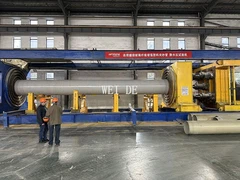
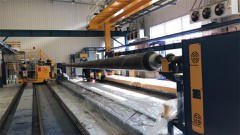
Another factor is the winding pattern of the carbon fibers. The way the fibers are wound around the plastic liner can distribute the stress more evenly. A well - designed winding pattern can minimize stress concentrations, reducing the likelihood of creep. For example, a helical winding pattern can provide better circumferential strength, which is essential for withstanding the internal pressure of the cylinder. You can learn more about the winding process using our Type 4 Cylinder Winding Machine.
Testing Creep Resistance
To ensure the creep resistance of our Type 4 cylinders, we conduct rigorous testing. One of the most common tests is the constant - load creep test. In this test, a sample of the cylinder is subjected to a constant load for an extended period, typically under controlled temperature and humidity conditions. The deformation of the sample is measured at regular intervals, and the data is used to calculate the creep rate.
Another important test is the accelerated creep test. This test is conducted at higher temperatures and pressures than the normal operating conditions to simulate long - term use in a shorter period. By analyzing the results of these accelerated tests, we can predict the long - term creep behavior of the cylinders under normal operating conditions.
Importance of Creep Resistance in Different Applications
Type 4 cylinders are used in a wide range of applications, including automotive, aerospace, and industrial gas storage. In the automotive industry, for example, Type 4 cylinders are used to store compressed natural gas (CNG) or hydrogen. These cylinders need to have excellent creep resistance to ensure the safety of the vehicle and its passengers over the vehicle's lifespan. A cylinder with poor creep resistance could develop leaks over time, leading to a loss of fuel and potentially dangerous situations.
In the aerospace industry, weight is a critical factor. Type 4 cylinders are favored due to their high strength - to - weight ratio. However, the extreme conditions in aerospace applications, such as high - altitude temperature variations and rapid pressure changes, make creep resistance even more crucial. A cylinder that fails due to creep could have catastrophic consequences for the aircraft.
Comparison with Other Cylinder Types
When comparing Type 4 cylinders with other types, such as Type 3 cylinders, creep resistance is one of the differentiating factors. Type 3 cylinders have a metal liner wrapped with a composite. While the metal liner provides some inherent strength, it also has different creep characteristics compared to the plastic liner in Type 4 cylinders.
The metal liner in Type 3 cylinders may be more prone to corrosion, which can affect its long - term creep resistance. On the other hand, the plastic liner in Type 4 cylinders is generally more resistant to corrosion but may be more sensitive to temperature changes. Our Type 3 Cylinder Winding Machine is designed to produce high - quality Type 3 cylinders, and understanding the differences in creep resistance between Type 3 and Type 4 cylinders is essential for choosing the right cylinder for specific applications.
Improving Creep Resistance
As a supplier, we are constantly looking for ways to improve the creep resistance of our Type 4 cylinders. One approach is to invest in research and development to find new and improved carbon fiber and resin materials. We also work on optimizing the winding process to ensure the most efficient stress distribution.
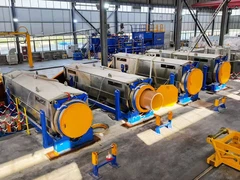
Advanced manufacturing techniques, such as using Pressure Vessal Winding Machine, allow us to produce cylinders with more precise winding patterns and better control over the composite structure. This results in cylinders with enhanced creep resistance and overall performance.
Conclusion
Creep resistance is a fundamental property of Type 4 cylinders that directly impacts their safety and performance. As a supplier, we are committed to providing high - quality Type 4 cylinders with excellent creep resistance. Our in - depth understanding of the factors affecting creep resistance, combined with advanced manufacturing techniques and rigorous testing, allows us to meet the diverse needs of our customers in various industries.
If you are in the market for Type 4 cylinders and are concerned about creep resistance, we invite you to contact us for a detailed discussion. Our team of experts can provide you with all the information you need and help you choose the right cylinders for your specific application. We look forward to the opportunity to work with you and contribute to the success of your projects.
References
- Callister, W. D., & Rethwisch, D. G. (2018). Materials Science and Engineering: An Introduction. Wiley.
- Gibson, R. F. (2012). Principles of Composite Material Mechanics. CRC Press.
Send Inquiry