



What is the resin - to - fiber ratio control in an Epoxy Pipe Winding Machine?
Sep 10, 2025
Leave a message
In the manufacturing process of epoxy pipes, the resin - to - fiber ratio control in an Epoxy Pipe Winding Machine is a critical factor that significantly impacts the quality, performance, and cost - effectiveness of the final product. As a supplier of Epoxy Pipe Winding Machines, I have witnessed firsthand the importance of this ratio and the challenges that manufacturers face in achieving optimal control.
Understanding the Resin - to - Fiber Ratio
The resin - to - fiber ratio refers to the proportion of resin to fiber used in the composite material during the pipe winding process. This ratio is typically expressed as a weight or volume percentage. For example, a resin - to - fiber ratio of 30:70 means that for every 100 parts of the composite material, 30 parts are resin and 70 parts are fiber.


The choice of resin - to - fiber ratio depends on several factors, including the intended application of the pipe, the mechanical properties required, and the manufacturing process. Different applications demand different ratios to achieve the desired performance. For instance, pipes used in high - pressure applications may require a higher fiber content to enhance strength and stiffness, while pipes used in corrosive environments may need a higher resin content to provide better chemical resistance.
Importance of Resin - to - Fiber Ratio Control
Mechanical Properties
The resin - to - fiber ratio directly affects the mechanical properties of the epoxy pipe. Fibers, such as glass or carbon fibers, provide the strength and stiffness of the composite, while the resin acts as a matrix that binds the fibers together and transfers loads between them. An optimal ratio ensures that the fibers are properly embedded in the resin, allowing the composite to achieve its maximum strength and stiffness. If the resin content is too low, the fibers may not be fully wetted, leading to poor adhesion and reduced mechanical performance. On the other hand, if the resin content is too high, the pipe may become more brittle and less resistant to impact.
Chemical Resistance
Resin plays a crucial role in protecting the fibers from chemical attack. A higher resin content can provide better chemical resistance, especially in pipes used in harsh chemical environments. By controlling the resin - to - fiber ratio, manufacturers can ensure that the pipe has the appropriate level of chemical resistance for its intended application.
Cost - Effectiveness
The cost of resin and fiber materials can vary significantly. By optimizing the resin - to - fiber ratio, manufacturers can reduce material costs without sacrificing the quality of the pipe. A well - controlled ratio ensures that the minimum amount of resin is used while still achieving the desired performance, resulting in cost savings.
Challenges in Resin - to - Fiber Ratio Control
Material Variability
The properties of resin and fiber materials can vary from batch to batch. Factors such as viscosity, density, and fiber diameter can affect the resin - to - fiber ratio during the winding process. Manufacturers need to carefully monitor and adjust the ratio to account for these variations.
Process Conditions
The winding process itself can also influence the resin - to - fiber ratio. Factors such as winding speed, temperature, and pressure can affect the distribution of resin and fiber in the composite. For example, a higher winding speed may cause the resin to be displaced, resulting in an uneven ratio. Manufacturers need to optimize the process conditions to ensure a consistent and accurate ratio.
Equipment Accuracy
The Epoxy Pipe Winding Machine must be capable of accurately metering and dispensing the resin and fiber materials. Any inaccuracies in the equipment can lead to variations in the resin - to - fiber ratio. Regular maintenance and calibration of the machine are essential to ensure its accuracy.
Solutions for Resin - to - Fiber Ratio Control
Advanced Metering Systems
Modern Epoxy Pipe Winding Machines are equipped with advanced metering systems that can accurately measure and control the flow of resin and fiber materials. These systems use sensors and controllers to ensure that the desired resin - to - fiber ratio is maintained throughout the winding process.
Process Monitoring and Control
Real - time monitoring of the winding process can help manufacturers detect and correct any variations in the resin - to - fiber ratio. By using sensors to measure parameters such as resin flow rate, fiber tension, and temperature, manufacturers can make adjustments to the process in real - time to ensure a consistent ratio.
Quality Assurance
Implementing a comprehensive quality assurance program is essential for ensuring the accuracy of the resin - to - fiber ratio. This program should include regular testing of the finished pipes to verify their mechanical and chemical properties. Any deviations from the desired ratio can be addressed through process optimization and equipment maintenance.
Applications of Epoxy Pipes with Well - Controlled Resin - to - Fiber Ratio
Marine Fiberglass Pipeline Production Line
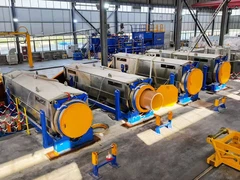
In the marine industry, epoxy pipes with a well - controlled resin - to - fiber ratio are used for various applications, such as seawater intake and discharge systems, ballast water pipes, and fire - fighting systems. These pipes need to have high strength, corrosion resistance, and durability to withstand the harsh marine environment.
High - pressure Petroleum Pipeline Production Line
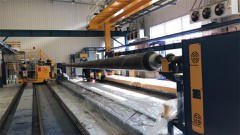
For high - pressure petroleum pipelines, a higher fiber content is often required to withstand the high internal pressures. By controlling the resin - to - fiber ratio, manufacturers can produce pipes that meet the strict safety and performance requirements of the petroleum industry.
Epoxy Horizontal Winding Machine
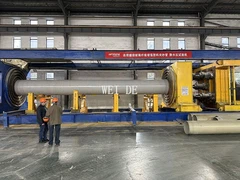
Our Epoxy Horizontal Winding Machine is designed to provide precise control over the resin - to - fiber ratio, allowing manufacturers to produce high - quality epoxy pipes for a wide range of applications. The machine's advanced features, such as accurate metering systems and process monitoring capabilities, ensure consistent and reliable production.
Conclusion
The resin - to - fiber ratio control in an Epoxy Pipe Winding Machine is a complex but essential aspect of epoxy pipe manufacturing. By understanding the importance of this ratio, addressing the challenges, and implementing appropriate solutions, manufacturers can produce high - quality pipes that meet the diverse needs of various industries.
As a supplier of Epoxy Pipe Winding Machines, we are committed to providing our customers with the latest technology and solutions for resin - to - fiber ratio control. Our machines are designed to offer precise control, high efficiency, and reliability, helping manufacturers to optimize their production processes and improve the quality of their products.
If you are interested in learning more about our Epoxy Pipe Winding Machines or discussing your specific requirements for resin - to - fiber ratio control, please feel free to contact us. We look forward to the opportunity to work with you and help you achieve your manufacturing goals.
References
- "Composite Materials Handbook" by ASM International
- "Advanced Composites Manufacturing" by Stephen W. Tsai
- "Epoxy Resins: Chemistry and Technology" by Clayton A. May
Send Inquiry