



What is the minimum diameter of the cylinder that a Pressure Cylinder Winding Machine can wind?
Sep 11, 2025
Leave a message
What is the minimum diameter of the cylinder that a Pressure Cylinder Winding Machine can wind? This is a question that often arises among those in the industry, especially when considering the diverse range of applications and requirements for pressure cylinders. As a supplier of Pressure Cylinder Winding Machine, I am well - versed in the technical aspects of these machines and can provide in - depth insights into this topic.


Understanding Pressure Cylinder Winding Machines
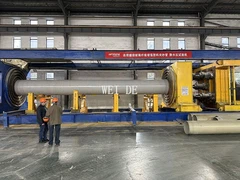
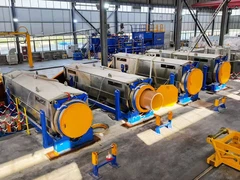
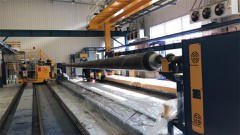
Pressure Cylinder Winding Machines are sophisticated pieces of equipment designed to wind filaments around a mandrel to create high - strength pressure cylinders. These machines play a crucial role in industries such as aerospace, automotive, and energy storage, where reliable and efficient pressure cylinders are essential. The winding process involves precisely controlling the tension, speed, and angle of the filaments to ensure the structural integrity and performance of the final product.
There are different types of pressure cylinder winding machines, including Type 3 Cylinder Winding Machine and Pressure Vessal Winding Machine. Each type is tailored to specific requirements, such as the size, shape, and material of the pressure cylinder being produced.
Factors Affecting the Minimum Winding Diameter
The minimum diameter of the cylinder that a Pressure Cylinder Winding Machine can wind is influenced by several factors.
1. Machine Design and Mechanics
The mechanical structure of the winding machine is a primary determinant. The size and configuration of the mandrel holder, filament guides, and other components limit the smallest diameter that can be accommodated. For example, if the mandrel holder has a certain minimum inner diameter to ensure stability during the winding process, it will restrict the minimum size of the mandrel and, consequently, the cylinder diameter.
2. Filament Properties
The properties of the filaments used in the winding process also play a significant role. Filaments with larger diameters or stiffer materials may require a larger winding diameter to prevent breakage or improper winding. For instance, carbon fiber filaments, which are commonly used in high - performance pressure cylinders, have different handling requirements compared to glass fiber filaments. The stiffness of carbon fiber may make it more difficult to wind around a very small diameter mandrel without causing damage to the fibers.
3. Winding Technique
The winding technique employed by the machine can affect the minimum winding diameter. Some winding techniques, such as helical winding, may be more suitable for smaller diameters as they allow for a more continuous and uniform application of the filaments. On the other hand, polar winding may require a larger diameter to achieve the desired coverage and strength distribution.
Typical Minimum Diameters in the Industry
In the industry, the minimum diameter of the cylinder that a Pressure Cylinder Winding Machine can wind can vary widely depending on the machine's design and intended application. Generally, for standard industrial - grade Pressure Cylinder Winding Machines, the minimum diameter can range from 50 mm to 150 mm.
However, for specialized machines designed for small - scale or high - precision applications, the minimum diameter can be as low as 20 mm. These specialized machines often incorporate advanced technologies and design features to overcome the challenges associated with winding small - diameter cylinders.
Case Studies
Let's take a look at some real - world examples to illustrate the concept of minimum winding diameters.
Case Study 1: Aerospace Application
In the aerospace industry, where lightweight and high - strength pressure cylinders are required, a company needed to produce small - diameter cylinders for a specific aircraft component. They used a Type 3 Cylinder Winding Machine with a minimum winding diameter of 30 mm. By carefully selecting the filament material and optimizing the winding process, they were able to achieve the desired strength and performance requirements for the cylinders.
Case Study 2: Automotive Application
In the automotive industry, for applications such as hydrogen storage, a manufacturer used a Pressure Cylinder Winding Machine to produce cylinders with a minimum diameter of 80 mm. The machine was designed to handle carbon fiber filaments and employed a helical winding technique to ensure uniform stress distribution in the cylinders.
Importance of Determining the Minimum Winding Diameter
Determining the minimum winding diameter is crucial for several reasons.
1. Product Design
It allows product designers to accurately plan the dimensions of the pressure cylinders based on the capabilities of the winding machine. This ensures that the final product meets the required performance and space constraints.
2. Cost - Efficiency
By understanding the minimum winding diameter, manufacturers can optimize their production processes. Producing cylinders with the smallest possible diameter that still meets the requirements can reduce material usage and production costs.
3. Market Competitiveness
In a competitive market, the ability to produce small - diameter pressure cylinders can give a company a competitive edge. It allows them to cater to niche markets and applications that require compact and lightweight pressure cylinders.
Conclusion
In conclusion, the minimum diameter of the cylinder that a Pressure Cylinder Winding Machine can wind is a complex parameter influenced by machine design, filament properties, and winding techniques. While typical minimum diameters in the industry range from 50 mm to 150 mm, specialized machines can achieve much smaller diameters.
As a supplier of Pressure Cylinder Winding Machine, we understand the importance of providing machines that can meet the diverse needs of our customers. Whether you are looking to produce small - diameter cylinders for high - precision applications or larger cylinders for industrial use, our machines are designed to offer the flexibility and performance you require.
If you are interested in learning more about our Pressure Cylinder Winding Machines or would like to discuss your specific requirements, we encourage you to contact us for a detailed consultation. Our team of experts is ready to assist you in finding the best solution for your pressure cylinder production needs.
References
- "Filament Winding Technology" by F. L. Matthews and R. D. Rawlings
- "Advanced Composites in Aerospace Engineering" by P. K. Mallick
- Industry reports on pressure cylinder manufacturing and winding machine technology
Send Inquiry