



How to minimize the parasitic capacitance in Horizongtal winding?
Sep 11, 2025
Leave a message
Hey there! As a supplier of horizontal winding products, I've had my fair share of dealing with the pesky issue of parasitic capacitance. It can really mess up the performance of our horizontally wound components, and that's something we definitely don't want. So, in this blog, I'm gonna share some tips on how to minimize the parasitic capacitance in horizontal winding.
First off, let's understand what parasitic capacitance is. In simple terms, it's an unwanted capacitance that occurs between different parts of a circuit or a component. In horizontal winding, it can happen between the turns of the winding, between the winding and the core, or between the winding and other nearby conductors. This extra capacitance can cause all sorts of problems, like signal distortion, reduced efficiency, and even interference with other components.
One of the most effective ways to minimize parasitic capacitance is by adjusting the winding layout. When we wind the coils horizontally, the way we arrange the turns can have a big impact on the capacitance. For instance, we can try to increase the distance between adjacent turns. A wider spacing reduces the electric field coupling between the turns, which in turn lowers the capacitance. You know, it's like giving each turn its own personal space so they don't "bother" each other too much.
Another layout strategy is to use a multi - layer winding with proper insulation between the layers. By separating the layers with a good insulating material, we can break up the electric field paths and reduce the overall capacitance. For example, we can use high - quality insulating tapes or films. These materials act as a barrier, preventing the electric field from easily jumping between the layers.
The choice of materials also plays a crucial role. When it comes to the wire used for horizontal winding, we should opt for wires with a low dielectric constant. The dielectric constant affects how much capacitance is formed. A lower dielectric constant means less capacitance. There are special types of wires available on the market that are designed to have low dielectric properties, and using them can significantly reduce the parasitic capacitance.
In addition to the wire, the core material is also important. Some core materials have higher dielectric constants than others. By selecting a core material with a relatively low dielectric constant, we can minimize the capacitance between the winding and the core. It's all about making smart material choices to keep that unwanted capacitance in check.
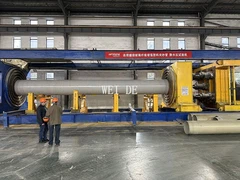
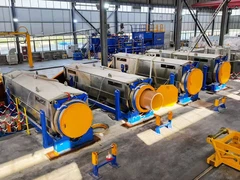
Now, let's talk about the manufacturing process. During the winding process, we need to make sure that the winding is as tight and uniform as possible. Any loose turns or uneven winding can create irregular electric field distributions, which will increase the parasitic capacitance. We use advanced winding machines, like the Epoxy Filament Winding Machine and Epoxy Pipe Winding Machine, to ensure precise and consistent winding. These machines are equipped with state - of - the - art technology that allows us to control the tension and speed of the winding, resulting in a more uniform and compact winding structure.
Proper grounding is another key factor. By grounding the horizontal winding correctly, we can divert the unwanted electric charges and reduce the electric field build - up. A good grounding system provides a path for the charges to flow safely to the ground, preventing them from contributing to the parasitic capacitance.
We also need to pay attention to the surrounding environment. Any nearby conductors or components can interact with the horizontal winding and increase the parasitic capacitance. So, when designing the overall system, we should keep a proper distance between the horizontal winding and other conductive elements. And if possible, we can use shielding materials to isolate the winding from external electric fields. For example, we can use metal shields around the winding. These shields act as a Faraday cage, blocking the external electric fields and reducing the interference.


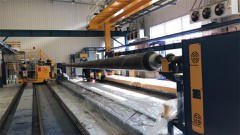
When it comes to large - scale production, like in a Marine Fiberglass Pipeline Production Line, we need to have strict quality control measures in place. Regular testing and inspection of the horizontally wound components can help us detect any issues related to parasitic capacitance early on. We use specialized capacitance measurement equipment to accurately measure the capacitance of each component. If we find that the capacitance is higher than the acceptable range, we can take corrective actions, such as adjusting the winding parameters or replacing faulty materials.
In conclusion, minimizing parasitic capacitance in horizontal winding is a multi - faceted task. It involves careful consideration of the winding layout, material selection, manufacturing process, grounding, and the surrounding environment. By implementing these strategies, we can significantly reduce the parasitic capacitance and improve the performance of our horizontally wound components.
If you're in the market for high - quality horizontal winding products with minimized parasitic capacitance, I'd love to have a chat with you. Whether you're working on a small - scale project or a large - scale production line, we have the expertise and the products to meet your needs. Don't hesitate to reach out for a purchase negotiation. We can discuss your specific requirements and find the best solutions together.
References
- "Electromagnetic Field Theory Fundamentals" by Bhag Singh Guru and Hüseyin R. Hiziroglu
- "Handbook of Electrical Design Calculations" by Stephen L. Herman
Send Inquiry