



How to improve the heat - transfer performance of epoxy pipes in production?
Sep 11, 2025
Leave a message
As a supplier in the epoxy pipe production industry, I've witnessed firsthand the importance of heat-transfer performance in epoxy pipes. In various industrial applications, from marine to high-pressure petroleum sectors, efficient heat transfer can significantly enhance the functionality and longevity of these pipes. In this blog, I'll share some practical strategies and insights on how to improve the heat-transfer performance of epoxy pipes during production.
Understanding the Basics of Heat Transfer in Epoxy Pipes
Before delving into improvement strategies, it's crucial to understand the basic principles of heat transfer in epoxy pipes. Heat transfer occurs through three main mechanisms: conduction, convection, and radiation. In the context of epoxy pipes, conduction is often the primary mode of heat transfer, where heat is transferred through the pipe material itself.


The heat-transfer performance of epoxy pipes is influenced by several factors, including the thermal conductivity of the epoxy resin, the thickness of the pipe wall, and the presence of any additives or reinforcements. Epoxy resins typically have relatively low thermal conductivity compared to metals, which can limit their heat-transfer capabilities. However, by carefully selecting materials and optimizing the production process, we can enhance the heat-transfer performance of epoxy pipes.
Selecting High-Thermal-Conductivity Materials
One of the most effective ways to improve the heat-transfer performance of epoxy pipes is to select high-thermal-conductivity materials. While epoxy resins alone may have low thermal conductivity, adding fillers or reinforcements with high thermal conductivity can significantly enhance the overall thermal performance of the pipe.
For example, carbon nanotubes (CNTs) and graphene are known for their excellent thermal conductivity properties. Incorporating these materials into the epoxy resin matrix can create a network of conductive pathways, allowing heat to transfer more efficiently through the pipe. Additionally, metal powders such as aluminum or copper can also be used as fillers to improve thermal conductivity.
When selecting high-thermal-conductivity materials, it's important to consider their compatibility with the epoxy resin and the manufacturing process. The materials should be evenly dispersed throughout the resin to ensure uniform heat transfer. Additionally, the amount of filler or reinforcement added should be carefully controlled to avoid compromising the mechanical properties of the pipe.
Optimizing the Pipe Wall Thickness
The thickness of the pipe wall plays a crucial role in heat transfer. A thicker pipe wall can provide more insulation, reducing heat loss but also decreasing the overall heat-transfer rate. On the other hand, a thinner pipe wall can increase the heat-transfer rate but may compromise the structural integrity of the pipe.
To optimize the pipe wall thickness for heat transfer, it's necessary to balance the thermal and mechanical requirements of the application. In some cases, a multi-layered pipe design may be beneficial, where an inner layer with high thermal conductivity is combined with an outer layer for structural support. This approach allows for efficient heat transfer while maintaining the necessary strength and durability of the pipe.
Improving the Surface Finish
The surface finish of the epoxy pipe can also affect its heat-transfer performance. A smooth surface can reduce the resistance to heat transfer, allowing heat to flow more easily between the pipe and the surrounding fluid or environment. On the other hand, a rough surface can create turbulence and increase the boundary layer thickness, reducing the heat-transfer coefficient.
To improve the surface finish of epoxy pipes, various techniques can be employed during the production process. For example, polishing or sanding the pipe surface can remove any roughness or irregularities, resulting in a smoother finish. Additionally, applying a thin coating of a high-thermal-conductivity material on the pipe surface can further enhance heat transfer.
Enhancing the Manufacturing Process
The manufacturing process of epoxy pipes can have a significant impact on their heat-transfer performance. By optimizing the winding and curing processes, we can ensure that the pipe structure is uniform and the materials are properly bonded, resulting in improved thermal conductivity.
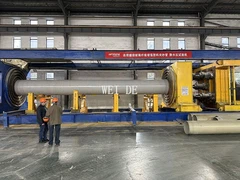
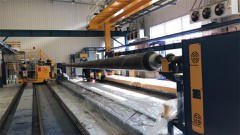
For example, using advanced winding techniques such as Epoxy Pipe Winding Machine can ensure that the fibers or reinforcements are evenly distributed throughout the pipe, creating a more efficient heat-transfer pathway. Additionally, controlling the curing temperature and time can help to optimize the cross-linking of the epoxy resin, improving its thermal and mechanical properties.
Applications in Different Industries
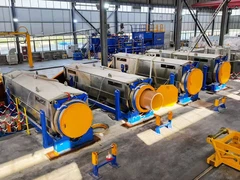
Epoxy pipes with improved heat-transfer performance have a wide range of applications in various industries. In the marine industry, for example, Marine Fiberglass Pipeline Production Line can produce pipes that are used for cooling systems, where efficient heat transfer is essential for maintaining the optimal operating temperature of the equipment.
In the high-pressure petroleum industry, High-pressure Petroleum Pipeline Production Line can manufacture pipes that are capable of withstanding high temperatures and pressures while providing efficient heat transfer. These pipes are used in oil and gas production, transportation, and refining processes, where heat transfer plays a critical role in ensuring the safety and efficiency of the operations.
Conclusion
Improving the heat-transfer performance of epoxy pipes is a complex but achievable goal. By selecting high-thermal-conductivity materials, optimizing the pipe wall thickness, improving the surface finish, and enhancing the manufacturing process, we can produce epoxy pipes that offer superior heat-transfer capabilities.
As a supplier in the epoxy pipe production industry, I'm committed to providing high-quality products that meet the specific needs of our customers. If you're interested in learning more about our epoxy pipes or have any questions regarding heat-transfer performance, please don't hesitate to contact us for a purchase negotiation. We look forward to working with you to find the best solutions for your applications.
References
- Zhang, X., & Wang, Y. (2018). Thermal conductivity enhancement of epoxy composites with carbon nanotubes and graphene. Composites Science and Technology, 163, 18-24.
- Wang, L., & Li, J. (2019). Optimization of heat transfer performance in composite pipes. Journal of Thermal Science and Engineering Applications, 11(3), 031007.
- Chen, Y., & Liu, Z. (2020). Effect of surface finish on heat transfer in epoxy pipes. International Journal of Heat and Mass Transfer, 152, 119432.
Send Inquiry