



Can a continue filament winding machine be used for composite material production?
Sep 11, 2025
Leave a message
Hey there! As a supplier of continue filament winding machines, I often get asked if these machines can be used for composite material production. The short answer is yes, and in this blog, I'll dive deep into how and why.
What are Composite Materials?
Composite materials are made by combining two or more different materials with significantly different physical or chemical properties. When these materials are combined, they create a new material with characteristics that are superior to the individual components. For example, fiberglass is a composite material made of glass fibers embedded in a polymer resin. It's lightweight, strong, and corrosion - resistant, making it ideal for a wide range of applications.
How Does a Continue Filament Winding Machine Work?
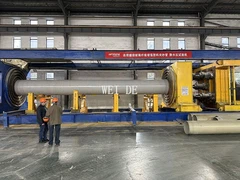
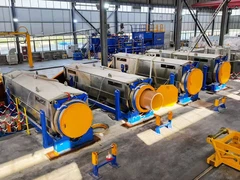
A continue filament winding machine is designed to wind continuous fibers, such as glass, carbon, or aramid fibers, around a rotating mandrel. The fibers are usually pre - impregnated with a resin, which is then cured to form a solid composite structure. The machine can control the winding pattern, tension, and speed, allowing for the production of complex and customized composite parts.
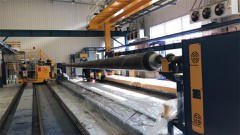
The process starts with the fibers being pulled from spools and passed through a resin bath. This ensures that the fibers are thoroughly coated with the resin. Then, the machine winds the resin - coated fibers onto the mandrel in a specific pattern. Once the winding is complete, the part is cured, either by heat or chemical reaction, to harden the resin and form a strong composite structure.
Advantages of Using a Continue Filament Winding Machine for Composite Material Production
1. High Strength - to - Weight Ratio
Composite materials produced by continue filament winding machines have an excellent strength - to - weight ratio. The fibers provide high strength, while the resin matrix distributes the load evenly. This makes them perfect for applications where weight is a critical factor, such as aerospace and automotive industries. For instance, in aircraft manufacturing, using composite parts can significantly reduce the overall weight of the aircraft, leading to lower fuel consumption and increased efficiency.
2. Customization
One of the biggest advantages of using a continue filament winding machine is the ability to customize the composite parts. The machine can control the winding pattern, fiber orientation, and thickness of the composite structure. This allows manufacturers to produce parts with specific mechanical properties tailored to their needs. Whether it's a high - pressure vessel or a lightweight pipe, the machine can be programmed to create the desired part.
3. Cost - Effective
In the long run, using a continue filament winding machine for composite material production can be cost - effective. The machine can automate the winding process, reducing labor costs and increasing production efficiency. Additionally, composite materials are often more durable than traditional materials, which means less maintenance and replacement costs over time.


4. Corrosion Resistance
Composite materials produced by continue filament winding machines are highly resistant to corrosion. This makes them suitable for applications in harsh environments, such as chemical processing plants and offshore oil rigs. For example, Continue Filament Winding FRP Pipe Produciton Line can produce pipes that are resistant to a wide range of chemicals, ensuring long - term performance in corrosive conditions.
Applications of Composite Materials Produced by Continue Filament Winding Machines
1. Pipes and Tubes
Continue filament winding machines are commonly used to produce pipes and tubes for various industries. The CFW Continuous Pipe Winding Machine can produce high - quality fiberglass pipes that are used in water treatment, oil and gas, and chemical industries. These pipes are strong, lightweight, and corrosion - resistant, making them a better alternative to traditional metal pipes.
2. Pressure Vessels
Composite pressure vessels are widely used in industries such as aerospace, automotive, and energy. A continue filament winding machine can produce pressure vessels with high strength and reliability. The winding pattern can be optimized to withstand high internal pressures, ensuring the safety of the vessel. For example, in the hydrogen fuel cell industry, composite pressure vessels are used to store hydrogen gas safely.
3. Sporting Goods
Composite materials are also popular in the sporting goods industry. Items such as golf clubs, tennis rackets, and bicycle frames are often made using continue filament winding machines. The high strength - to - weight ratio of composite materials allows for the production of lightweight and high - performance sporting equipment. For instance, a carbon fiber golf club shaft produced by a continue filament winding machine can provide better control and longer distance.
Challenges and Considerations
1. Resin Selection
The choice of resin is crucial in composite material production. Different resins have different properties, such as curing time, viscosity, and chemical resistance. The resin must be compatible with the fibers and the intended application. For example, in high - temperature applications, a heat - resistant resin should be used.
2. Quality Control
Ensuring the quality of composite parts produced by continue filament winding machines requires strict quality control measures. Factors such as fiber alignment, resin content, and voids can affect the mechanical properties of the composite. Regular testing and inspection are necessary to ensure that the parts meet the required standards.
3. Environmental Impact
The production of composite materials involves the use of resins, which can have an environmental impact. Some resins contain volatile organic compounds (VOCs), which can be harmful to the environment and human health. It's important to choose environmentally friendly resins and implement proper waste management practices.
Conclusion
In conclusion, a continue filament winding machine can definitely be used for composite material production. It offers many advantages, such as high strength - to - weight ratio, customization, cost - effectiveness, and corrosion resistance. With the ability to produce a wide range of composite parts for various industries, it's a valuable tool for manufacturers.
If you're interested in using a continue filament winding machine for your composite material production needs, don't hesitate to reach out. We can provide you with more information about our CFW Continuous Pipe Winding Machine and Continuous Fiberglass Pipe Winding Machine, as well as offer solutions tailored to your specific requirements. Let's start a conversation and see how we can help you take your composite production to the next level.
References
- Gibson, R. F. (2012). Principles of Composite Material Mechanics. CRC Press.
- Mallick, P. K. (2007). Fiber - Reinforced Composites: Materials, Manufacturing, and Design. CRC Press.
Send Inquiry