



How to select the appropriate winding material for the CFW Continuous Pipe Winding Machine?
Sep 12, 2025
Leave a message
Hey there! As a supplier of the CFW Continuous Pipe Winding Machine, I often get asked about how to select the appropriate winding material for this awesome piece of equipment. In this blog, I'm gonna share some tips and insights to help you make the right choice.
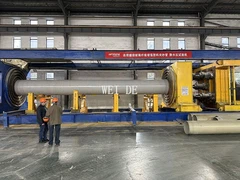
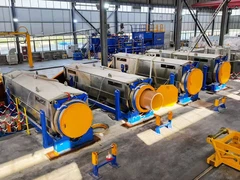
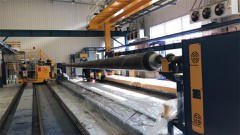
First off, let's understand what the CFW Continuous Pipe Winding Machine is all about. It's a state - of - the - art CFW Continuous Pipe Winding Machine that can produce high - quality pipes with continuous winding technology. This machine is widely used in various industries, including construction, chemical, and oil & gas, because it can create pipes that are strong, durable, and corrosion - resistant.
Factors to Consider When Selecting Winding Materials
1. Mechanical Properties
The mechanical properties of the winding material are super important. You need to think about the strength and stiffness requirements of the final pipe. For example, if the pipe is going to be used in high - pressure applications, like in an oil pipeline, you'll need a material with high tensile strength. Fiberglass is a popular choice in many cases because it has excellent strength - to - weight ratio. Carbon fiber is another option for applications where extreme strength and stiffness are needed, but it's usually more expensive.
2. Chemical Resistance
Depending on the environment where the pipe will be used, chemical resistance is a key factor. If the pipe is going to come into contact with corrosive chemicals, you need a material that can withstand those substances. Epoxy resin is often used as a matrix material because it has good chemical resistance. It can protect the fibers from chemical attacks and ensure the long - term performance of the pipe.
3. Cost
Let's face it, cost matters. You want to get the best value for your money. While high - performance materials like carbon fiber offer great properties, they can be quite pricey. Fiberglass is a more cost - effective option for many general applications. You need to balance the cost with the performance requirements of your project. Sometimes, a combination of different materials can be used to achieve the right balance.
4. Processability
The material should be easy to process with the CFW Continuous Pipe Winding Machine. Some materials may be difficult to handle during the winding process, which can lead to production issues and lower quality pipes. The viscosity of the resin, for example, is an important factor. If the resin is too thick, it may not impregnate the fibers properly, resulting in weak spots in the pipe.
Common Winding Materials
Fiberglass
Fiberglass is one of the most commonly used winding materials. It's made up of fine glass fibers, usually E - glass or S - glass. E - glass is more widely used because it's relatively inexpensive and has good mechanical properties. S - glass has higher strength and stiffness, but it's more costly. Fiberglass can be combined with different resin systems, like polyester, vinyl ester, or epoxy, to create pipes with different properties.
Carbon Fiber
Carbon fiber is known for its high strength and stiffness. It's used in high - end applications where weight reduction and high performance are crucial. For example, in aerospace and high - tech automotive industries, carbon fiber pipes are used to reduce weight and improve fuel efficiency. However, as I mentioned earlier, it's more expensive than fiberglass, so it's not suitable for every application.
Kevlar
Kevlar is a synthetic fiber that has high tensile strength and good impact resistance. It's often used in applications where the pipe may be subject to physical impacts, like in military or ballistic protection applications. Kevlar can be a good choice when you need a material that can absorb energy and prevent damage.
Resin Systems
The resin system is just as important as the fibers. It holds the fibers together and transfers the loads between them.
Epoxy Resin
Epoxy resin is a popular choice for winding applications. It has excellent adhesion to the fibers, good chemical resistance, and high mechanical properties. It can be cured at room temperature or elevated temperatures, depending on the formulation. Epoxy resin is often used in high - performance applications where long - term durability is required.
Polyester Resin
Polyester resin is more affordable than epoxy resin. It's commonly used in general - purpose applications where cost is a major consideration. It has good processability and can be easily cured at room temperature. However, it may not have the same level of chemical resistance and mechanical properties as epoxy resin.
Vinyl Ester Resin
Vinyl ester resin is a compromise between epoxy and polyester resins. It has better chemical resistance than polyester resin and is more cost - effective than epoxy resin. It's often used in applications where moderate chemical resistance and good mechanical properties are needed.
Selecting the Right Combination
In most cases, you'll need to select the right combination of fibers and resin systems. For example, a fiberglass pipe with an epoxy resin matrix is a common and reliable choice for many industrial applications. You can also use hybrid materials, which combine different types of fibers, to achieve a combination of properties.
When you're selecting the materials, it's a good idea to work closely with your CFW Continuous Pipe Winding Machine supplier. We can provide you with more information about the machine's capabilities and how different materials perform during the winding process.
Conclusion
Selecting the appropriate winding material for the CFW Continuous Pipe Winding Machine is a complex but important task. You need to consider factors like mechanical properties, chemical resistance, cost, and processability. By carefully evaluating these factors and choosing the right combination of fibers and resin systems, you can ensure the production of high - quality pipes that meet the requirements of your project.


If you're interested in our Continuous Fiberglass Pipe Winding Machine or Composite Material Winding Equipment, or if you have any questions about material selection, feel free to reach out to us for more details and to start a procurement discussion. We're here to help you make the best choices for your business.
References
- Callister, W. D., & Rethwisch, D. G. (2014). Materials Science and Engineering: An Introduction. Wiley.
- Strong, A. B. (2008). Plastics: Materials and Processing. Pearson Prentice Hall.
Send Inquiry