



What is the floor space required for a continue filament winding machine?
Oct 14, 2025
Leave a message
When it comes to the manufacturing of composites, a continue filament winding machine plays a crucial role. As a well - established supplier of continue filament winding machines, I've received numerous inquiries regarding the floor space required for these machines. In this blog post, I'll delve into the factors that affect the floor space needs of a continue filament winding machine and provide some guidelines to help you plan your production area effectively.
Factors Affecting Floor Space Requirements
Machine Size and Configuration
The physical dimensions of the continue filament winding machine itself are the most obvious factor. Different models of continue filament winding machines come in various sizes, which are determined by their design and intended applications. For example, a machine designed for winding small - diameter pipes will generally be more compact than one used for large - scale industrial components.
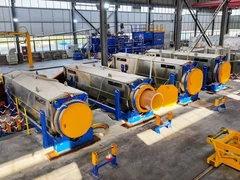
The configuration of the machine also matters. Some machines are single - spindle, while others may have multiple spindles to increase production efficiency. A multi - spindle machine will naturally require more floor space to accommodate all the spindles and associated components. Additionally, machines with advanced features such as automatic fiber feeding systems, robotic arms for precise winding, and integrated quality control systems will take up more room due to the additional equipment.
Workpiece Size and Length
The size of the workpieces that the machine is designed to produce has a significant impact on the required floor space. If you plan to manufacture long pipes or large composite structures, you need to ensure that there is enough space for the workpiece to be wound without obstruction. For instance, a continuous pipe winding machine used for producing pipes several meters in length will need a long, linear space to allow the pipe to extend during the winding process. This means that the floor space must be long enough to accommodate the maximum length of the workpiece plus some additional clearance for loading and unloading operations.
Auxiliary Equipment
In addition to the main winding machine, there are often several auxiliary pieces of equipment that are necessary for the operation. These may include resin mixing and delivery systems, fiber pre - treatment stations, curing ovens, and material storage areas. Resin mixing systems need space for the mixing tanks, pumps, and piping, and they should be located close to the winding machine for efficient resin supply. Fiber pre - treatment stations, which may involve processes like sizing or surface treatment, also require dedicated space. Curing ovens, depending on their type and size, can take up a substantial amount of floor area, especially if they are large enough to accommodate the entire workpiece. Material storage areas for fibers, resins, and other consumables need to be nearby to ensure a smooth production flow, further adding to the overall floor space requirements.


Operator Movement and Safety Clearance
Adequate space must be provided for operators to move around the machine safely. This includes access to control panels, maintenance points, and areas for loading and unloading materials. Safety regulations typically require a certain amount of clearance around the machine to prevent accidents and allow for easy evacuation in case of an emergency. For example, there should be a clear path for operators to reach the emergency stop buttons in a timely manner. Moreover, the space should be designed to prevent operators from getting caught between moving parts or coming into contact with hot surfaces.
Typical Floor Space Requirements for Different Types of Continue Filament Winding Machines
Composite Material Winding Equipment
For Composite Material Winding Equipment, which is often used for a variety of composite products such as aerospace components, automotive parts, and sports equipment, the floor space requirements can vary widely. A basic, small - scale composite material winding machine for producing relatively small parts may require a floor area of around 10 - 20 square meters. This includes space for the machine itself, a small resin mixing area, and some clearance for operator movement.
However, for larger, industrial - scale composite material winding systems with advanced features and the ability to produce large - sized components, the floor space can range from 50 to 100 square meters or more. These machines may be equipped with multiple spindles, automated fiber handling systems, and large - capacity resin delivery systems, all of which contribute to the increased space requirements.
CFW Continuous Pipe Winding Machine
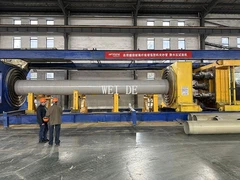
The CFW Continuous Pipe Winding Machine is specifically designed for the production of continuous pipes. The floor space needed for this type of machine is highly dependent on the pipe length and diameter. For a machine producing pipes with a diameter of up to 1 meter and a length of 6 - 12 meters, a floor area of approximately 30 - 50 square meters may be sufficient. This space accounts for the machine itself, the pipe winding area, and some room for resin handling and operator access.
If the production involves larger - diameter pipes or longer lengths, the floor space can increase significantly. For example, for pipes with a diameter of over 2 meters and lengths of 20 meters or more, the required floor space can exceed 100 square meters. This is because more space is needed for the pipe to extend during winding, and there may also be additional equipment for handling the heavier and larger pipes, such as cranes or conveyors.
Continue Filament Winding FRP Pipe Produciton Line
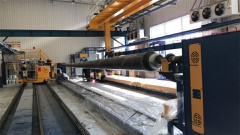
A Continue Filament Winding FRP Pipe Produciton Line is a more comprehensive setup that includes not only the winding machine but also other processes in the pipe production chain, such as pipe cutting, end - finishing, and quality inspection. This type of production line generally requires a larger floor space compared to a single - function winding machine.
A medium - scale FRP pipe production line may need a floor area of 100 - 200 square meters. This allows for the placement of all the necessary equipment in a logical sequence, from raw material storage at one end to the finished pipe storage at the other. Larger - scale production lines with high - speed winding capabilities and multiple production lanes can require even more space, potentially over 300 square meters.
Planning Your Floor Space
When planning the floor space for a continue filament winding machine, it's essential to take a systematic approach. First, determine the specific requirements of your production, including the type of products you want to make, the production volume, and the level of automation you desire. Then, consult with the machine supplier to get detailed information about the dimensions of the machine and any recommended clearances.
Create a layout plan that shows the placement of the main winding machine, auxiliary equipment, and work areas. Make sure to leave enough space for future expansion if your business is expected to grow. Consider the flow of materials and operators within the space to ensure smooth and efficient operations. For example, materials should be able to move easily from the storage area to the pre - treatment station, then to the winding machine, and finally to the curing and finishing areas.
Contact Us for More Information
As a leading supplier of continue filament winding machines, we have extensive experience in helping customers plan their production facilities. If you are considering purchasing a continue filament winding machine and need assistance in determining the appropriate floor space for your specific needs, or if you have any other questions about our products, please feel free to contact us. We are committed to providing you with the best solutions for your composite manufacturing requirements.
References
- "Filament Winding Technology" by R. F. Gibson. This book provides in - depth knowledge about the principles and equipment used in filament winding, including information on machine design and space requirements.
- Industry standards and guidelines from organizations such as the American Composites Manufacturers Association (ACMA), which offer recommendations on the layout and safety requirements for composite manufacturing facilities.
Send Inquiry