



What is the role of a winding machine in the communication industry?
Sep 18, 2025
Leave a message
In the fast - paced world of the communication industry, there are countless components and machines that play crucial roles in keeping the networks up and running. You might be thinking about high - tech servers, advanced routers, or super - fast fiber - optic cables. But today, I want to shine a light on something that might not be on your radar at first glance: the winding machine. And as a winding machine supplier, I'm pretty stoked to share how these machines are making a big difference in the communication game.
First off, let's talk about what a winding machine actually does. In simple terms, a winding machine is used to wind various materials, like wires, cables, or fibers, onto a spool or a core. This might sound like a basic task, but it's super important in the communication industry.
One of the main applications of winding machines in communication is in the production of fiber - optic cables. Fiber - optic cables are the backbone of modern communication networks. They carry huge amounts of data at incredibly high speeds over long distances. And guess what? Winding machines are essential in making these cables.
When manufacturing fiber - optic cables, the delicate glass fibers need to be wound onto a spool in a precise and uniform manner. Any kinks or uneven winding can lead to signal loss or interference, which is a big no - no in the communication world. Our winding machines are designed to handle these fragile fibers with care. They can wind the fibers at a consistent tension, ensuring that the cables have optimal performance.
Another area where winding machines come into play is in the production of coaxial cables. Coaxial cables are still widely used in many communication systems, especially for cable TV and some broadband connections. These cables consist of a central conductor, an insulating layer, a metallic shield, and an outer jacket. Winding machines are used to wind the metallic shield around the insulating layer. This shield helps to protect the signal from external electromagnetic interference, which can degrade the quality of the communication.


Now, let's talk about some of the features of our winding machines that make them a great fit for the communication industry. Firstly, they are highly customizable. Different communication applications may require different winding patterns, tensions, and speeds. Our machines can be easily adjusted to meet these specific requirements. Whether you need a slow and precise winding for a high - end fiber - optic cable or a faster winding for a standard coaxial cable, we've got you covered.
Secondly, our winding machines are equipped with advanced control systems. These systems allow for real - time monitoring and adjustment of the winding process. For example, if the tension of the wire or fiber starts to deviate from the set value, the machine can automatically make the necessary adjustments. This ensures that the quality of the winding remains consistent throughout the production process.
In addition to fiber - optic and coaxial cables, winding machines are also used in the production of other communication - related components. For instance, they can be used to wind the coils in transformers and inductors, which are important parts of many communication devices. These coils need to be wound accurately to ensure proper electrical performance.
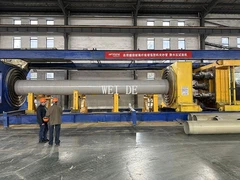
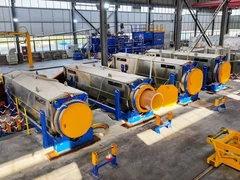
Now, I'd like to introduce some of our specific winding machine models that are well - suited for the communication industry. One of our popular models is the Epoxy Filament Winding Machine. This machine is great for winding filaments in the production of composite materials that are used in some communication equipment enclosures. The epoxy filament winding process can create strong and lightweight structures, which are ideal for protecting sensitive communication components.
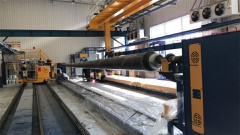
Another model is the Epoxy Pipe Winding Machine. While it might seem a bit off - topic at first, these pipes can be used in the infrastructure of communication networks. For example, they can be used to protect underground cables from physical damage. Our epoxy pipe winding machine can produce high - quality pipes with precise dimensions and excellent mechanical properties.
And if you're in the oil and gas industry, which also has some communication needs for monitoring and control systems, our High - pressure Petroleum Pipeline Production Line might be of interest. Although it's mainly for pipeline production, the winding technology used in it can also be related to the precision winding required in communication component manufacturing.
The winding machine also plays a role in the maintenance and repair of communication equipment. When a cable needs to be replaced or repaired, the old cable may need to be unwound from the spool, and the new cable wound on. Our winding machines can make this process quick and easy, reducing the downtime of the communication system.
In conclusion, the role of a winding machine in the communication industry is far more significant than you might initially think. From making fiber - optic and coaxial cables to producing other communication - related components, these machines are an integral part of the communication manufacturing process.
If you're in the communication industry and are looking for a reliable winding machine supplier, we'd love to hear from you. Whether you're a small - scale manufacturer or a large - scale production facility, our winding machines can meet your needs. Feel free to reach out to us to discuss your specific requirements and see how we can help you improve your communication product manufacturing.
References
- Communication Cable Manufacturing Handbook
- Principles of Fiber - Optic Communication Systems
Send Inquiry