



How to improve the chemical resistance of 3D printed GRP pipes?
Sep 18, 2025
Leave a message
As a supplier of 3D printed GRP (Glass Reinforced Plastic) pipes, I understand the critical importance of chemical resistance in various industrial applications. GRP pipes are widely used in sectors such as chemical processing, water treatment, and oil and gas, where they are often exposed to harsh chemical environments. Improving the chemical resistance of these pipes is not only a technical challenge but also a key factor in enhancing their performance and longevity. In this blog post, I will share some effective strategies to improve the chemical resistance of 3D printed GRP pipes.
Understanding the Basics of GRP Pipes and Chemical Resistance
GRP pipes are composed of a matrix resin reinforced with glass fibers. The matrix resin plays a crucial role in determining the chemical resistance of the pipes. Different types of resins, such as polyester, vinyl ester, and epoxy, have varying levels of resistance to different chemicals. For example, epoxy resins generally offer excellent resistance to a wide range of chemicals, including acids, alkalis, and solvents, while polyester resins may be more suitable for less aggressive chemical environments.
The glass fibers in GRP pipes provide mechanical strength and stiffness. However, they can also be affected by certain chemicals, especially in high concentrations or at elevated temperatures. Therefore, it is essential to select the appropriate resin and fiber combination based on the specific chemical exposure conditions.
Selecting the Right Resin
One of the most important steps in improving the chemical resistance of 3D printed GRP pipes is selecting the right resin. As mentioned earlier, epoxy resins are often the preferred choice for applications requiring high chemical resistance. They have excellent adhesion to glass fibers, good mechanical properties, and resistance to a wide range of chemicals.
When selecting an epoxy resin, it is important to consider its chemical composition, curing system, and viscosity. The chemical composition determines the resin's resistance to specific chemicals, while the curing system affects the resin's curing time, temperature, and mechanical properties. The viscosity of the resin is also important, as it affects the ease of processing during 3D printing.
In addition to epoxy resins, vinyl ester resins are another option for improving chemical resistance. They offer a good balance between chemical resistance and mechanical properties, and are often used in applications where a high level of corrosion resistance is required. Polyester resins, on the other hand, are generally less expensive but have lower chemical resistance compared to epoxy and vinyl ester resins.
Optimizing the Fiber Reinforcement
The type and orientation of the glass fibers in GRP pipes can also affect their chemical resistance. Continuous glass fibers are often preferred over chopped fibers, as they provide better mechanical strength and resistance to chemical attack. The orientation of the fibers can also be optimized to improve the pipe's resistance to specific chemicals. For example, fibers oriented in the circumferential direction can provide better resistance to internal pressure and chemical corrosion.
In addition to glass fibers, other types of fibers, such as carbon fibers or aramid fibers, can also be used to enhance the chemical resistance of GRP pipes. These fibers have different properties compared to glass fibers, and can be used in combination with glass fibers to achieve specific performance requirements.
Surface Treatment
Surface treatment is another effective way to improve the chemical resistance of 3D printed GRP pipes. A protective coating can be applied to the surface of the pipes to prevent chemical penetration and reduce the risk of corrosion. There are several types of coatings available, including epoxy coatings, polyurethane coatings, and ceramic coatings.
Epoxy coatings are often used for their excellent adhesion, chemical resistance, and mechanical properties. They can be applied in multiple layers to provide a thick and durable protective barrier. Polyurethane coatings, on the other hand, offer good flexibility and abrasion resistance, and are often used in applications where the pipes are exposed to mechanical stress. Ceramic coatings are known for their high hardness and chemical resistance, and can be used in applications where the pipes are exposed to high temperatures and aggressive chemicals.
Process Optimization
The 3D printing process itself can also have an impact on the chemical resistance of GRP pipes. It is important to optimize the printing parameters, such as temperature, pressure, and speed, to ensure proper bonding between the resin and the fibers. A well-bonded structure can provide better resistance to chemical attack.
In addition, post-processing steps, such as curing and annealing, can also be used to improve the chemical resistance of the pipes. Curing the pipes at a higher temperature for a longer time can help to fully crosslink the resin and improve its chemical resistance. Annealing the pipes can also relieve internal stresses and improve their mechanical properties.
Quality Control
Finally, quality control is essential to ensure the chemical resistance of 3D printed GRP pipes. Regular testing and inspection should be carried out to verify the pipe's performance and compliance with relevant standards and specifications. This can include chemical resistance testing, mechanical testing, and non-destructive testing.
By implementing these strategies, we can significantly improve the chemical resistance of 3D printed GRP pipes and meet the demanding requirements of various industrial applications. At our company, we are committed to providing high-quality 3D printed GRP pipes with excellent chemical resistance. We use advanced materials and manufacturing processes to ensure the reliability and performance of our products.


If you are interested in learning more about our 3D printed GRP pipes or have specific requirements for chemical resistance, please feel free to contact us for a consultation. We look forward to working with you to find the best solutions for your needs.
Related Equipment
For those interested in the manufacturing process of GRP pipes, we recommend checking out the following equipment:
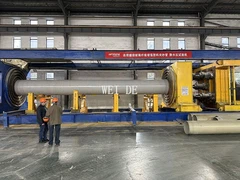
- Continuous Fiberglass Pipe Winding Machine: This machine is designed for the continuous production of fiberglass pipes, offering high efficiency and precision.
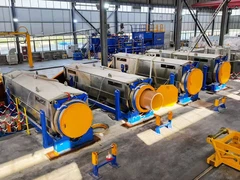
- CFW Continuous Pipe Winding Machine: A state-of-the-art machine for winding composite pipes, ensuring consistent quality and performance.
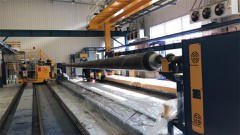
- Composite Material Winding Equipment: Ideal for winding various composite materials, providing flexibility and versatility in pipe manufacturing.
References
- [1] "Handbook of Polymer Composites for Engineers" by Suresh K. Goyal
- [2] "Advanced Composite Materials for Engineering Applications" by Rajeshwar Dayal
- [3] "Fiber-Reinforced Polymer Composites: Materials, Manufacturing, and Design" by David Hull and T. W. Clyne
Send Inquiry