




Applications And Industrial Value Of Continuous Filament Winding Machines
Jun 11, 2025
Leave a message
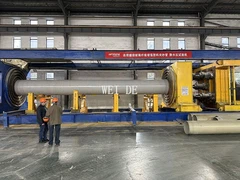
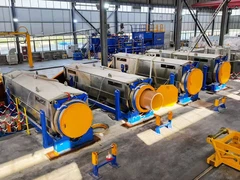
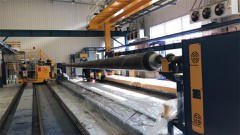
Continuous filament winding machines are highly efficient and precise composite molding equipment widely used in aerospace, automotive, energy pipelines, and high-end equipment manufacturing.
Their core function is to combine continuous fibers (such as carbon fiber and glass fiber) with a resin matrix by precisely controlling the fiber winding path and tension, creating high-strength, lightweight composite products.
In the aerospace sector, continuous filament winding machines are used to manufacture critical components such as rocket engine casings and satellite mounts. These components must withstand extreme heat and pressure, and the winding process ensures that the fibers are oriented in the direction of stress, thereby maximizing the material's mechanical properties. For example, carbon fiber-wound composite casings are over 30% lighter than traditional metal structures while maintaining excellent fatigue and corrosion resistance.
The energy industry is another key application area, particularly for natural gas and oil pipelines. Continuous filament winding technology can be used to produce high-pressure hydrogen storage tanks and composite pipelines. Its corrosion resistance and lightweight properties significantly reduce transportation costs and improve safety. Furthermore, in wind turbine blade manufacturing, the winding process optimizes fiber distribution, improving blade stiffness and wind load resistance.
The automotive industry utilizes continuous filament winding machines to produce lightweight components such as drive shafts and battery housings, reducing vehicle weight and improving energy efficiency. Compared to traditional metal parts, composite products can reduce weight by over 40% while still meeting stringent crash safety standards.
With the advancement of intelligent manufacturing technology, modern continuous filament winding machines have integrated automated control and real-time monitoring systems, further improving production efficiency and product quality. As demand for composite materials grows, this technology will demonstrate its irreplaceable industrial value in even more areas.
Send Inquiry