



How to ensure the quality of 3D printed GRP pipes?
Jan 20, 2026
Leave a message
Hey there! As a supplier of 3D printed GRP (Glass Reinforced Plastic) pipes, I know how crucial it is to ensure top - notch quality. In this blog, I'll share some key tips on how to make sure the 3D printed GRP pipes we produce meet the highest standards.
1. Material Selection
First off, the materials we use are the foundation of quality. For GRP pipes, we need to pick the right glass fibers and resin. The glass fibers should have high tensile strength and good chemical resistance. There are different types of glass fibers, like E - glass and S - glass. E - glass is more common and cost - effective, while S - glass offers higher strength but comes at a higher price.
When it comes to resin, we've got options like polyester, vinyl ester, and epoxy. Polyester resin is widely used because it's affordable and easy to work with. Vinyl ester resin has better chemical resistance and mechanical properties compared to polyester, making it a great choice for more demanding applications. Epoxy resin, on the other hand, offers the highest performance in terms of strength and adhesion, but it's also the most expensive.
We need to test the materials regularly to ensure they meet our specifications. This can involve checking the fiber diameter, resin viscosity, and other physical and chemical properties. By starting with high - quality materials, we're already on the right track to producing excellent 3D printed GRP pipes.
2. 3D Printing Process Optimization
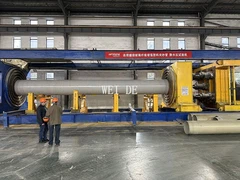
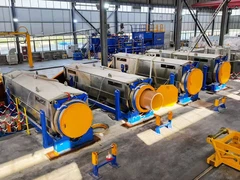
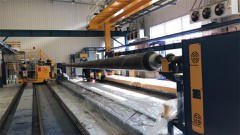
The 3D printing process for GRP pipes is a bit different from traditional 3D printing. We often use techniques like filament winding. For this, having the right equipment is essential. Tools like the CFW Continuous Pipe Winding Machine and Continuous Fiberglass Pipe Winding Machine can make a huge difference.
We need to optimize the winding speed, tension, and angle. The winding speed affects the production rate and the quality of the pipe. If it's too fast, the fibers might not be properly embedded in the resin, leading to weak spots in the pipe. The tension of the fibers also matters. Too much tension can break the fibers, while too little can result in a loose and less - strong structure.
The winding angle determines the mechanical properties of the pipe. Different applications may require different winding angles. For example, a pipe that needs to withstand high internal pressure might need a different winding angle compared to a pipe used for drainage.
We also have to control the temperature and humidity during the 3D printing process. Resin curing is highly affected by these environmental factors. If the temperature is too low, the resin might not cure properly, and if it's too high, it can cause the resin to degrade. Similarly, high humidity can introduce moisture into the resin, which can weaken the final product.
3. Quality Control During Production
Throughout the production process, we need to have strict quality control measures in place. This includes in - process inspections. We can use non - destructive testing methods like ultrasonic testing and X - ray inspection to check for internal defects in the pipes. Ultrasonic testing can detect voids, delaminations, and other flaws in the GRP pipes without damaging them.
We should also measure the dimensions of the pipes regularly. The diameter, wall thickness, and length of the pipes need to be within the specified tolerances. Any deviation from the design dimensions can affect the performance of the pipes in their intended applications.


Sampling is another important part of quality control. We can take random samples from each production batch and perform more detailed tests. These tests can include mechanical property tests like tensile strength, flexural strength, and impact resistance tests. By doing this, we can ensure that each batch of pipes meets our quality standards.
4. Post - Production Treatment
Once the 3D printed GRP pipes are produced, post - production treatment is necessary to enhance their quality. This can involve additional curing. Sometimes, the initial curing during the 3D printing process might not be complete, and a post - curing step can help the resin reach its full strength.
We can also apply surface treatments to the pipes. This can improve their corrosion resistance and appearance. For example, we can apply a gel coat to the outer surface of the pipes. The gel coat acts as a protective layer, preventing the glass fibers and resin from being exposed to the environment and reducing the risk of corrosion.
5. Staff Training and Expertise
The people working on the production line play a crucial role in ensuring the quality of 3D printed GRP pipes. We need to provide comprehensive training to our staff. They should understand the materials, the 3D printing process, and the quality control measures.
Our operators should be able to troubleshoot any issues that arise during the production process. For example, if there's a problem with the winding machine, they should know how to adjust it or identify the root cause of the problem.
Continuous learning is also important. The field of 3D printing and GRP pipe production is constantly evolving, and our staff should stay updated with the latest technologies and best practices. We can encourage them to attend industry seminars, workshops, and training courses.
6. Supplier and Customer Feedback
We should maintain good communication with our material suppliers. They can provide valuable insights into the quality of the materials and any new developments in the industry. For example, they might inform us about a new type of resin that has better performance or a more cost - effective option.
Customer feedback is equally important. Our customers are the ones using the pipes in real - world applications, and they can tell us about any issues they encounter. We should take their feedback seriously and use it to improve our products and processes. If a customer reports a problem with the corrosion resistance of a pipe, we can investigate and make the necessary changes to our production process or material selection.
Conclusion
Ensuring the quality of 3D printed GRP pipes is a multi - faceted process. It starts with material selection, continues with process optimization, strict quality control during production, post - production treatment, and is supported by well - trained staff and good communication with suppliers and customers. By following these steps, we can produce high - quality 3D printed GRP pipes that meet the needs of our customers.
If you're interested in purchasing 3D printed GRP pipes or want to discuss your specific requirements, feel free to reach out to us. We're always happy to talk about how our products can fit into your projects.
References
- “Handbook of Fiberglass and Advanced Plastics Composites” by Donatas S. Paulauskas
- “Filament Winding Technology” by Lawrence T. Drzal and Richard M. Pipes
Send Inquiry