



How to ensure the stability of the winding process in a Pressure Vessal Winding Machine?
Jan 20, 2026
Leave a message
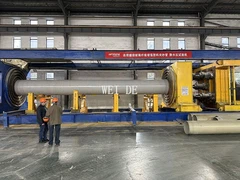
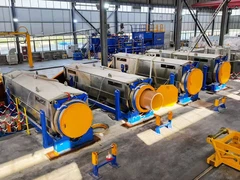
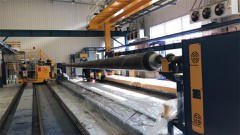
Hey there! As a supplier of Pressure Vessel Winding Machines, I've seen firsthand how crucial it is to ensure the stability of the winding process. A stable winding process not only guarantees the quality of the pressure vessels but also boosts production efficiency and cuts down on costs. So, in this blog, I'm gonna share some tips on how to make that happen.
1. Machine Maintenance and Calibration
First things first, regular maintenance of the Pressure Vessel Winding Machine is a must. Just like your car needs an oil change and tune - up, this machine needs proper care too. Over time, parts can wear out, and if not replaced or fixed, they can mess up the winding process. For example, the tensioning system, which controls the tightness of the fibers during winding, is a critical component. If the tensioning rollers are worn or misaligned, the fiber tension won't be consistent, leading to uneven winding.
Calibration is another key aspect. All the sensors and controls in the machine need to be calibrated regularly. This ensures that the machine is operating within the specified parameters. For instance, the speed sensors need to be accurate so that the rotation speed of the pressure vessel and the feed rate of the fibers are in sync. If the calibration is off, you might end up with a vessel that's either over - wound or under - wound.
2. Quality of Raw Materials
The raw materials used in the winding process play a huge role in stability. The fibers, such as carbon fiber or glass fiber, should be of high quality. Low - quality fibers may have inconsistent diameters, which can cause problems during winding. For example, if the fiber diameter varies, the tension required to wind it evenly will also change, making it difficult to maintain a stable winding process.
The resin used to bind the fibers together is also important. It should have the right viscosity and curing properties. If the resin is too thick, it might not spread evenly over the fibers, and if it's too thin, it might drip off before it can properly bond the fibers. This can lead to weak spots in the pressure vessel and affect the overall stability of the winding process.
3. Operator Training
Even the best - maintained machine and highest - quality raw materials won't do much good if the operators don't know what they're doing. Proper operator training is essential. Operators should be familiar with the machine's controls, safety procedures, and troubleshooting techniques.
They need to understand how to set up the machine for different types of pressure vessels. For example, a Type 4 Cylinder Winding Machine might require different settings compared to a Pressure Cylinder Winding Machine or a Type 3 Cylinder Winding Machine. Knowing the right settings for each type of vessel ensures a stable winding process.
Operators should also be trained to detect early signs of problems. For example, if they notice an unusual noise or vibration during the winding process, they should know how to stop the machine and troubleshoot the issue before it gets worse.
4. Environmental Factors
The environment in which the winding process takes place can have an impact on stability. Temperature and humidity are two important factors. High temperatures can cause the resin to cure too quickly, while low temperatures can slow down the curing process. This can affect the bonding of the fibers and the overall strength of the pressure vessel.
Humidity can also be a problem. If the humidity is too high, the resin might absorb moisture, which can change its properties and lead to poor bonding. On the other hand, very low humidity can cause the fibers to become brittle. So, it's important to control the temperature and humidity in the production area to ensure a stable winding process.
5. Process Monitoring and Control
Implementing a process monitoring system is a great way to ensure stability. This system can continuously monitor parameters such as fiber tension, winding speed, and resin flow rate. If any of these parameters deviate from the set values, the system can alert the operator or even automatically adjust the machine to correct the issue.
For example, if the fiber tension drops below the set value, the monitoring system can increase the tensioning force to bring it back to the correct level. This real - time monitoring and control help to maintain a stable winding process and prevent defects in the pressure vessels.
6. Design Optimization
The design of the pressure vessel itself can affect the stability of the winding process. The shape and size of the vessel should be carefully considered. Complex shapes might be more difficult to wind evenly compared to simple cylindrical shapes. If the vessel has sharp corners or irregularities, it can cause the fibers to bunch up or break during winding.
The winding pattern also needs to be optimized. Different winding patterns can be used depending on the requirements of the pressure vessel. For example, a helical winding pattern might be more suitable for some applications, while a hoop winding pattern might be better for others. Choosing the right winding pattern ensures that the fibers are distributed evenly and the vessel has the required strength.
7. Backup and Redundancy
In any manufacturing process, things can go wrong. That's why having backup systems and redundancy in place is important. For example, if the main power supply fails, having a backup generator can prevent the machine from stopping abruptly. This is crucial because an abrupt stop can cause the fibers to break or the resin to start curing in an uneven way.
Redundancy can also be built into the control systems. If one sensor fails, there should be a backup sensor that can take over and keep the machine running smoothly. This helps to minimize downtime and ensure the stability of the winding process.
Conclusion
Ensuring the stability of the winding process in a Pressure Vessel Winding Machine is a multi - faceted task. It involves proper machine maintenance and calibration, using high - quality raw materials, training operators, controlling environmental factors, implementing process monitoring, optimizing the design, and having backup systems. By paying attention to these aspects, you can improve the quality of your pressure vessels, increase production efficiency, and reduce costs.


If you're in the market for a Pressure Vessel Winding Machine or need more information on how to ensure a stable winding process, feel free to reach out for a procurement discussion. We're here to help you get the best results for your business.
References
- "Filament Winding Technology" by Daniel E. Adams
- "Composite Materials: Design and Applications" by David Hull and T. W. Clyne
- Industry reports on pressure vessel manufacturing and winding processes
Send Inquiry